Ajai Chowdhry Says ‘Make in India’ is Not Successful Yet
By Mohit Pandey ·
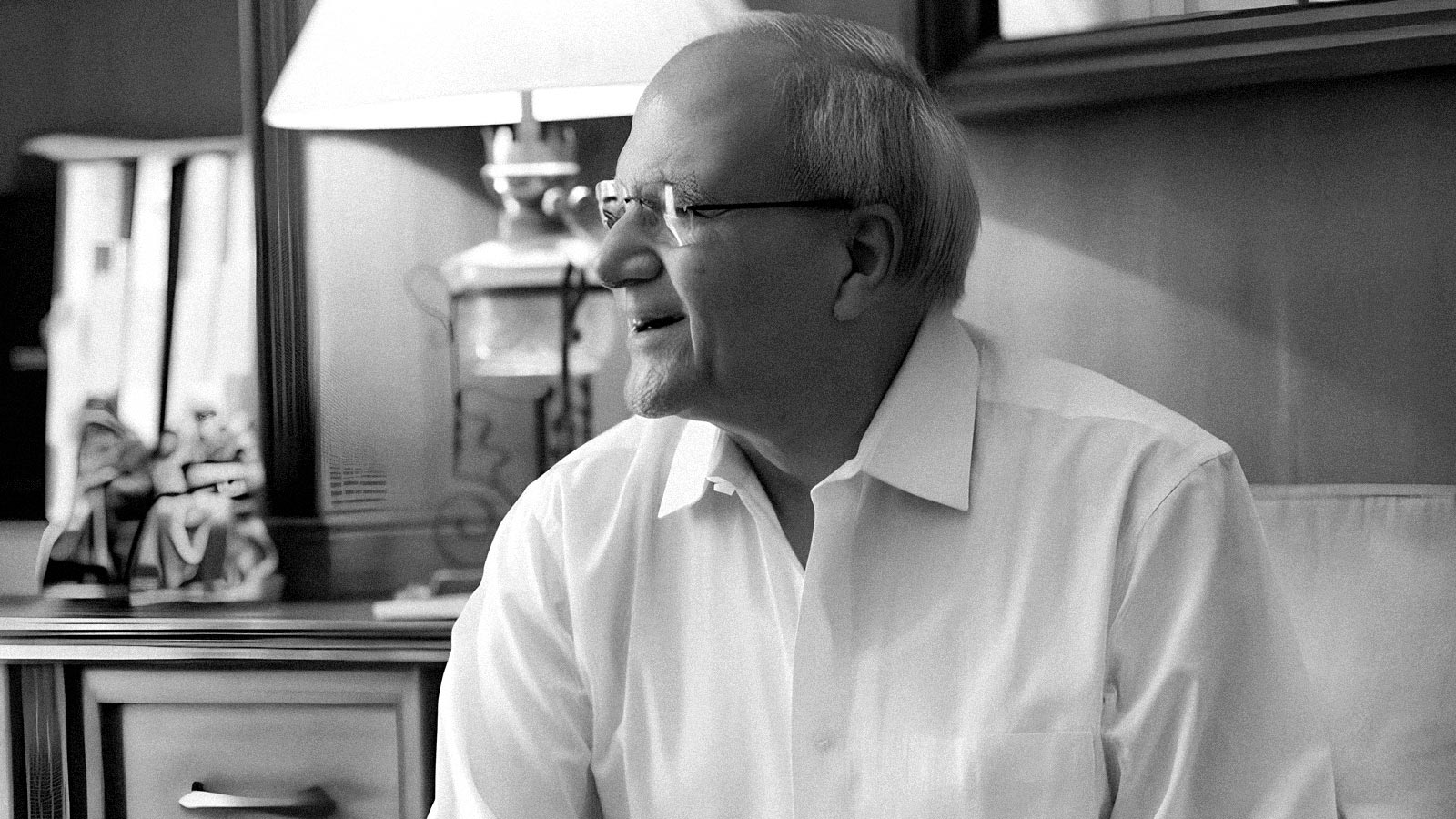
Ajai Chowdhry does not speak like a startup founder. He speaks like someone who has already seen India miss one technology wave.
As a co-founder of HCL, Chowdhry helped build one of India’s earliest computing companies in a time when capital was scarce, licences were mandatory, and even assembling a computer required state backing. Decades later, as India once again stands at the edge of multiple technology shifts, from AI to quantum, his assessment is blunt.
India still isn’t thinking big enough.
When Chowdhry looks back at the early days of HCL, he does not see just a success story. He sees a moment of global relevance that India could not fully scale.
Six founders, ₹1.86 lakhs in savings. His team was designing computers around the same time Apple introduced its first PC. It was a global moment unfolding inside a closed economy.
That tension between capability and constraint continues to define Chowdhry's view of India’s technology journey. The country, he argues, has never lacked the ability to build. What it has lacked is the ecosystem to scale, protect, and capitalise on that capability.
HCL itself began modestly, not with computers, but with calculators.
“We started a marketing company and began by selling calculators. In the meantime, we worked on how to get a licence and how to design and make computers,” Chowdhry says.
The shift came through a joint sector model. The Uttar Pradesh government took a 26% stake, giving HCL both legitimacy and access. Even the name was strategic.
He says they always felt, as pioneers, that they wanted India in their name. “People assumed we were a very big company. In a sense, we were global pioneers, but we did not know it at the time. We were a closed country,” Chowdhry says.
That early limitation would shape the trajectory of Indian tech for decades.
The Opportunities that India Let Go
For Chowdhry, India’s first big miss was hardware. If HCL were starting today, the outcome would be very different. “We would have scaled to be a global hardware company,” he says.
Instead, policy timing worked against domestic players. India opened its hardware markets under World Trade Organisation (WTO) commitments before local companies were ready.
“The world could come into India and sell hardware products at zero duty. The entire electronics industry died in the next five years,” he says.
HCL survived because of its scale. Most others did not.
The industry pivoted, first to system integration, then to software, and eventually to exports. That pivot built India’s dominance in IT services. But it also locked the country into a model that now faces structural limits.
For Chowdhry, the next phase is unavoidable. India must move beyond services.
“It is very critical for us to be a product nation,” he says.
Services, he says, helped India build foreign exchange reserves and global credibility. But they are not enough to take the country to the next level of economic growth. “Our per capita income is around $2,600. To get out of this middle-income trap, we need to create our own IP, our own designs,” he says.
Instead, many Indian companies still operate as assemblers or resellers.
“Large corporations do not do design work. They go to China, pick up a product, put a logo on it and sell it. We become a trading country,” Chowdhry says.
Why “Make in India” Isn’t Enough
Chowdhry draws a clear distinction between manufacturing and value creation. “We should no longer look at manufacturing in India. We should look at design and make it in India,” he says.
Assembly delivers limited value. Design captures the margins.
“If you look at Apple, the value addition in India is maybe 8% to 10%. But its global margins are around 70% because it does the design,” he says.
India’s policy push through R&D funding is beginning to address this gap. But Chowdhry believes the private sector must move faster. If hardware was India’s missed opportunity, quantum could be its reset.
“Quantum technology is where AI was five years ago,” he says. Chowdhry is also the Chairman of the Mission Governing Board of the National Quantum Mission of India.
Unlike AI, quantum computing is not consumer-facing. Its applications lie deep within infrastructure, from drug discovery and climate modelling to advanced simulations. That distance from everyday use may explain why it has not yet captured wider attention.
India, through its National Quantum Mission, is already making progress.
“When we started, we had a seven-qubit system. Today we are at 64 qubits,” he says.
The target is a 1,000-qubit system within eight years. India is also investing across multiple approaches, including superconducting systems, photonics, semiconductors, and trapped ions.
“We do not know which technology will finally succeed. So we are working on all of them,” he says.
“In quantum communication, the country is further ahead. Our target was to create a 2,000-kilometre quantum secure network,” he says. “ We have already achieved 1,000 kilometres.”
The Real Risk: Breaking the Internet
For Chowdhry, the urgency around quantum is not just about computing power. It is about security.
Modern cybersecurity relies on encryption standards such as RSA, which have held firm against classical computing. Quantum computing changes that.
Citing a Bain study, he says the transition window is between 3 and 5 years. Google estimates the tipping point around 2029. The consequences are significant. Financial systems, telecom networks, and defence infrastructure could all become vulnerable.
“This is very dangerous for the country if we do not implement it fast enough,” he says.
Why India Still Doesn’t Build Enough
On AI, Chowdhry takes a contrarian view. India does not need to chase large language models, he argues. As LLMs are already available globally, he says the focus should be on applied AI through smaller, domain-specific models.
In his view, the real use of AI will be in enterprises, in health, education, and agriculture. We need small language models for these sectors. The opportunity is not in building the next ChatGPT. It lies in solving India’s own problems.
Despite the support from policies and capital, one remaining challenge is demand.
“Companies create products, but it takes one year to place an order. These things do not work,” he says. His solution is direct. “The government must create a quota. Let’s say 50% of what we buy will be Indian products. The moment that happens, the product business will take off.”
For Chowdhry, the larger issue is ambition. India has the capability. What it still needs is the intent to build, design, and own.