‘The World Needs 1000x More Software,’ Says Fractal CEO
By Siddharth Jindal ·
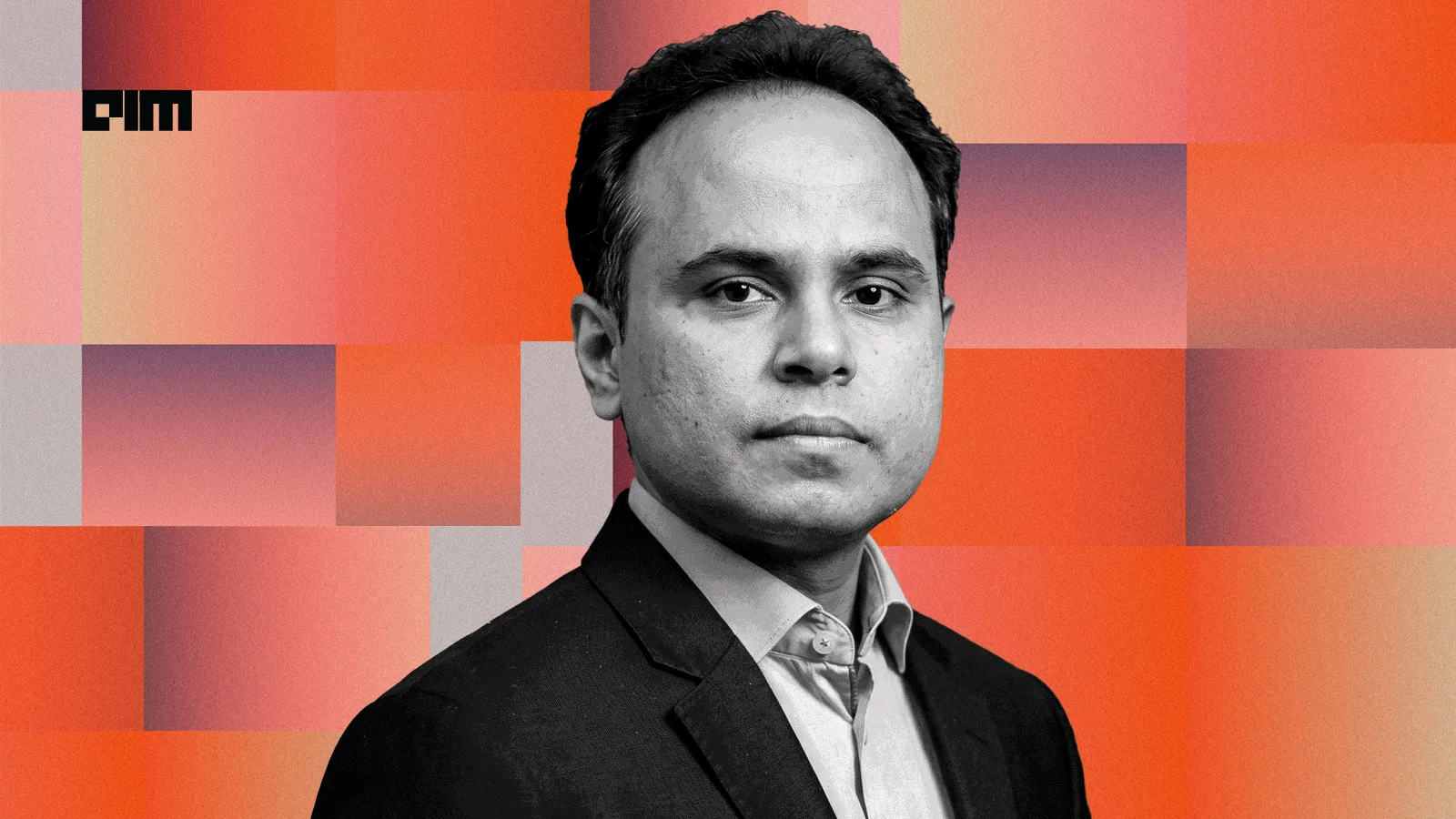
Fractal Analytics, which staked its identity on AI, reported strong growth in Q4 FY26. It was led by demand across healthcare, banking, and AI-led enterprise platforms.
The Mumbai-based AI and data science company reported a net profit of ₹115.8 Crore in Q4 FY26, representing a more than twofold increase from ₹55.5 crore in the same period the previous year. It reflects a 109% year-on-year growth. Revenue from operations rose 17% to ₹886.3 crore from ₹757.5 crore. For the full year FY26, the company’s revenue grew 19% to ₹3,300 crore.
In FY26, Fractal’s healthcare and life sciences business emerged as the fastest-growing vertical, expanding 66% year over year, and becoming the company’s second-largest business on a quarterly run rate basis. Banking and financial services experienced a healthy 32% growth. Meanwhile, the consumer packaged goods and retail sector, Fractal’s biggest area, accounting for 37% of revenue, also expanded by 12%.
The company went public earlier this year. In 2025, the IndiaAI mission selected the AI company to build India’s sovereign Large Reasoning Models (LRMs), with a special focus on healthcare and advanced STEM reasoning.
Focus on agentic AI
Fractal co-founder and CEO Srikanth Velamakanni says AI is reshaping how software is built, deployed and consumed. “By my estimate, the world needs 1000x more software than what exists today,” he said during the company’s earnings call on May 12, noting that most software is clunky and unintelligent. “We are entering the era of Software 2.0: responsive, agentic, and far more capable.”
According to him, AI may reduce the effort required to build software by nearly 90%, effectively creating a “10x compression” in development effort. But because demand for intelligent software is expected to explode, he believes the net opportunity becomes far larger.
“That still leaves a 100x net opportunity,” he said.
Fractal’s AI Products
During the earnings call, Velamakanni highlighted Fractal’s AI progress. He said Vaidya 2.0, the healthcare foundation model, is now available on major mobile platforms with API access.
The model remains “the world’s first to cross 50 on OpenAI’s HealthBench Hard,” a benchmark for clinical reasoning.
PiEvolve, Fractal’s autonomous ML engine, has been rolled out internally and to clients, ranking among the top agents on OpenAI’s MLE-bench.
The Fractal Alpha segment, featuring Asper.ai and Analytics Vidhya, grew 41% in FY 2026.
Asper.ai is a platform for revenue growth and supply-and-demand decisioning. “Annualised recurring revenue (from Asper.ai) is roughly up 77% year over year for the last three years,” Velamakanni said.
The platform, the company notes, currently serves around 15 consumer packaged goods and FMCG clients, and the customer base continues to expand.
Velamakanni said that Analytics Vidhya is also working with a range of enterprise customers across healthcare, banking, and other industries. According to him, many of these clients resemble Fractal’s existing large enterprise customer base.
“These companies are of the size and shape of the companies that we regularly serve, the must-win clients,” he said.
Besides that, the company launched Flyfish.ai, its new agentic sales platform. Unlike traditional sales software that only recommends actions, Velamakanni says Flyfish uses 35 coordinated agents to research accounts, draft outreach, and manage pipelines autonomously.
Fractal also offers Cogentiq, an agentic AI platform designed to improve enterprise performance. The platform uses pre-built agents, connectors, governance tools, and a low-code framework to help companies turn data into actions rather than just dashboards and reports.
Outcome-Based Pricing
Velamakanni says Fractal is steadily shifting toward more AI-native commercial models tied to outcomes and platform usage rather than traditional services billing. “ We expect to get to 60% of our revenue to be output-based or license-based, output, outcome, or license-based in the next two to three years.”
He said the company plans to raise license-driven revenue from 3% to 20% by 2030, likely boosting Fractal’s margins. Velamakanni noted many enterprises are early in AI adoption, leaving room for growth.
“The last two years of AI were about AI infrastructure. That race was decisively won by the frontier AI labs and AI infrastructure providers,” he says, adding that the next few years will be about AI-led transformation, driven by companies that can translate AI excitement into outcomes within complex organisations.