Key takeaways
- COVID-19 has significantly accelerated the shift towards digitalisation in personal and professional realms.
- The rise in digital interactions is enhancing data generation, which supports data science adoption across various industries.
- Remote working has proven effective for many sectors, including banking, education, and healthcare.
- Businesses are adapting to digital processes for hiring and performance monitoring without face-to-face interactions.
- Rapid digital transformation is becoming commonplace, allowing for swift adaptation to new working models.
Last weekend, while I was welcoming the arrival of the monsoons in Pune with a cup of tea in my balcony, I thought about the changes that COVID-19 has brought into my life. My home is my new office, the newspaper is going digital, and I have taken a fancy to online streaming services like Amazon Prime, Netflix, or Disney+Hotstar as a staple for leisure.
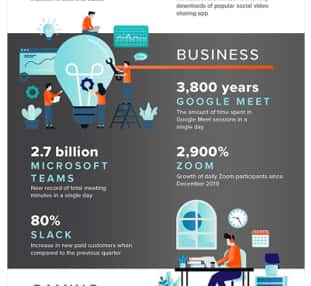
Digitalisation is generating an enormous amount of data, which will prove to be a tailwind for data science adoption across industries in these times. According to OpenVault’s Broadband Insights Report for Q1 2020, digital interactions for both personal and professional use increased sharply.
Six months back, some of these aspects of the 'new normal' in the business world would have been unimaginable:
a. Digital workspace: Remote working works well for most of the industries, including banking, education, healthcare, etc.
b. Digital business processes: You can hire and onboard employees in your workforce without any face-to-face interaction. You can track the performance of a team member/team by building digital monitoring processes.
c. Digital work-life integration: Digital transformation can happen in a matter of a day or a week. The office space used to be one of the most important spaces for us to socialise.
In the pre-COVID-19 world, we would spend months, or even years, to bring about any one of these transformations. Now, digital transformation is happening within a matter of weeks. Sceptical as some may be, most of these changes are here to stay.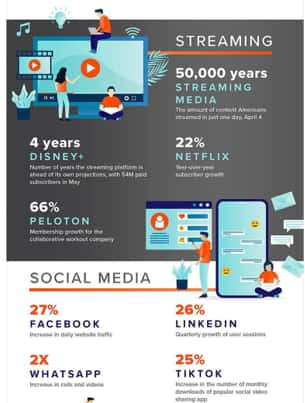
Now, let’s understand the digital transformations happening in our personal lives.
a. Digital learning: Digital schooling takes precedence over the physical learning environment for our children.
b. Digital entertainment: OTT (over-the-top) streaming services are gaining popularity
c. Social meetups using online platforms and digital wellness/healthcare: Wellness coaching and counselling can happen via fitness apps
Data science to scale new heights, faster
When we throw a ball, it is fairly easy to estimate how much it will bounce first. What is more interesting is to estimate the second, third and subsequent bounces of the ball. Digital transformation is only the first bounce of the ball thrown by COVID-19. There is one common thread in our hyper-digital lives. We have started generating more data. To cite an example, in the pre-COVID-19 world, your transaction for an online movie booking for your family or friends would leave a trail of 5-10 digital transactions.
Each weekend, on average now, we are spending several more hours on OTT (over the top media) platforms like Netflix or Amazon Prime. In the initial weeks, we generated hundreds of transactions via clicks on these platforms while browsing for shows or movies. Now, we expect these platforms to understand our consumption preferences and recommend a watchlist to us. The only way to fulfil this need is by using data science models behind the scenes.
Increasingly, content would not be the prime differentiator for OTT platforms. The platform that understands my preferences and caters to my need will win my mindshare. Similarly, in our professional lives, collecting data about time spent by employees in meetings would have been a laborious task in the pre-COVID-19 world. Today, with a surge in remote working and online meetings, it is easy to review the backend data from office collaborations tools like MS Teams.
The moment the data is readily available and reliable, the journey for data science adoption starts. Processes such as sales, which used to happen in the physical world, typically generated bits and pieces of information in an asynchronous manner. Now, most of the interactions with potential prospects are happening via a digital medium like email, MS Teams call or Zoom Video conference. As more data points become available from such interactions, it will be easier to predict the chances of closing a deal using data science.
In the first leg of digitalisation post-COVID-19, only a few businesses could quickly adapt to the digital transformation compared to others. Organisations will have to make concerted efforts to get ready for the second leg of data science adoption. It will involve three to six months of programmes to be transformation ready. Only generating data via digital transactions is not enough. We need meaningful and reliable data, which requires proactive effort. The formation of a separate data science task force could be the first step in this preparation, followed by access to data science talent that understands the business processes.
Spotted an error? Tell our editors. Read our editorial standards and corrections.