Why Enterprise AI Needs to Move Beyond Traditional RAG
By Merin Susan John ·
As enterprises push AI agents beyond pilots and into core operations, Automation Anywhere, which specialises in robotic process automation, is making a case that the next bottleneck will not be context for the intelligence.
The US company, with major hubs in Bengaluru and Vadodara, recently launched Context Intelligence Graph, a capability designed to help AI agents understand not just enterprise data, but the relationships, workflows and execution history behind it.
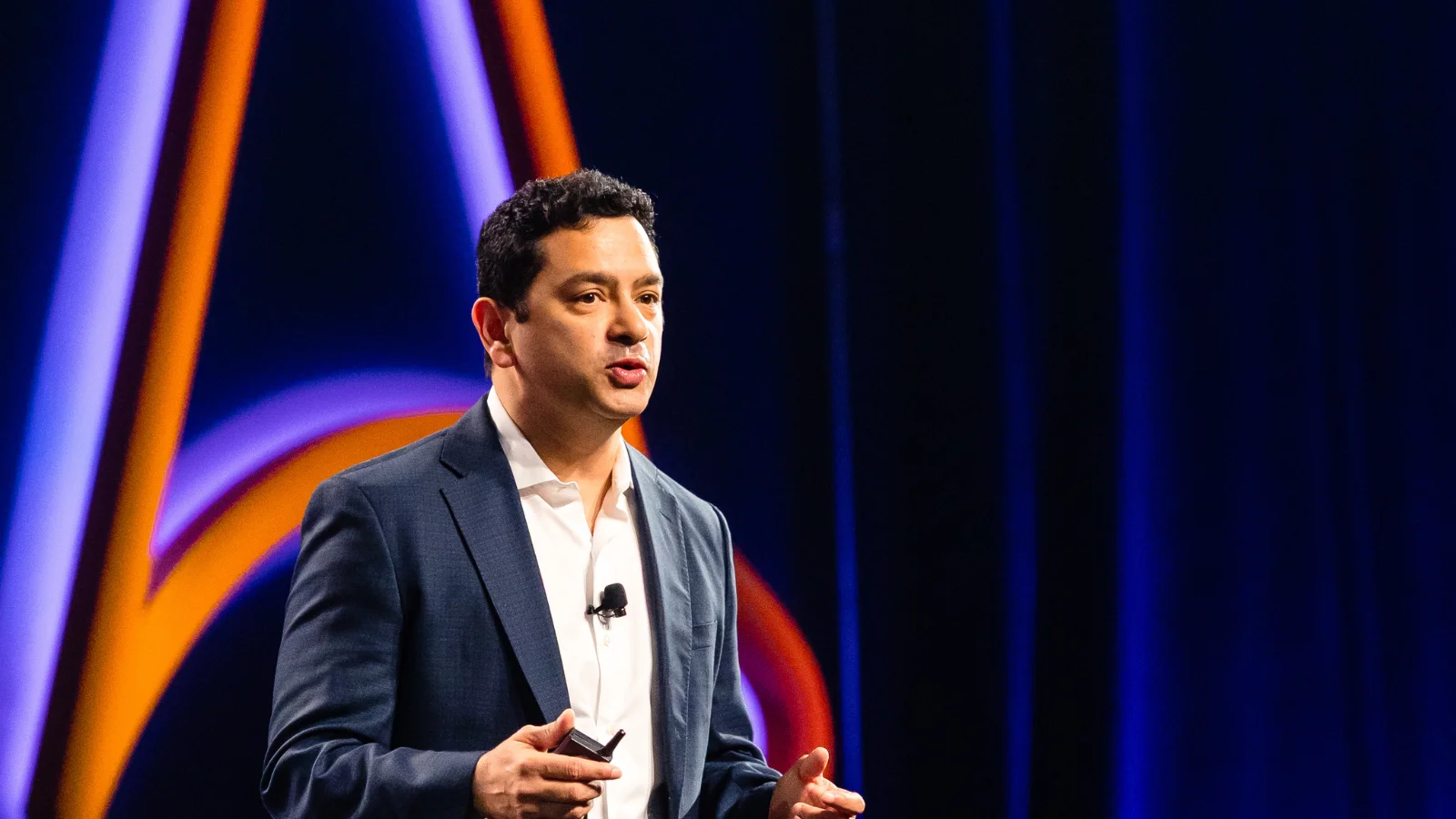
Speaking to AIM, Adi Kuruganti, Chief AI and Development Officer at Automation Anywhere, says most enterprise AI deployments still rely too heavily on traditional retrieval-augmented generation, or RAG.
“RAG primarily was about a knowledge base,” Kuruganti notes. “It was about looking at unstructured data, creating embeddings and vector databases, and then doing better search.”
That model works well when an AI system needs to retrieve a policy document, summarise a report, or answer a question from an internal knowledge base. But enterprise workflows rarely depend on one set of documents. A loan approval, insurance claim, IT service request or order-to-cash process often spans structured data in enterprise systems, policy documents, approval rules, customer history, prior exceptions, and human decision-making.
“If RAG was only the knowledge base and searching, now you have a hybrid search combining systems of record,” he adds. “You have the ontology, and then you have the context graph. All those three combined are our context intelligence.”
Beyond RAG
Traditional RAG typically retrieves relevant text from a vector database and supplies it to a large language model as context. Automation Anywhere’s Context Intelligence Graph expands that approach in three directions.
First, it brings structured enterprise data into the retrieval layer. Rather than relying only on documents, the system can pull information from applications such as ServiceNow, SAP, Salesforce, SharePoint, cloud platforms, and internal databases.
Second, it builds an ontology, or a map of relationships between enterprise systems, data sources, people, policies, and workflows.
Kuruganti uses IT service management as an example. A service ticket may be created in ServiceNow, but resolving it could require access to a Confluence knowledge article, an employee record, a device management platform, a SharePoint policy document, and customer information stored in Salesforce.
“For a service ticket, what is the relationship with ServiceNow, what are the knowledge bases, and what are the other systems that it interacts with? That is an ontology,” he explains.
The third layer is execution history. This is what Automation Anywhere believes differentiates the Context Intelligence Graph from a more conventional enterprise search or RAG system.
“The context graph is saying, ‘when this agent ran as part of this process, this is how it achieved its goal’,” Kuruganti elaborates. “That operational data is as important for the agent to learn the next time.”
In other words, the system does not merely retrieve information. It records how an agent approached a task, which tools it used, what sequence of actions worked, where exceptions occurred, and whether the workflow achieved its intended outcome.
That allows agents to reuse proven execution plans instead of reasoning from scratch every time. Reusing successful plans can reduce token consumption, improve latency, and make agent behaviour more consistent. It can also help enterprises move closer to the reliability expected from traditional automation systems.
Automation Anywhere said its Context Intelligence Graph is built on insights from more than 400 million automation executions across its platform. In internal evaluations across multiple business domains, the company said agents using its Process Reasoning Engine and Context Intelligence Graph delivered more than 30% higher accuracy than agents operating without it.
Why Context Matters More
Kuruganti argues that even the most capable foundation models lack the operational understanding needed to execute enterprise processes safely.
“Large language models do not understand business processes,” he claims. “They do not understand what an order-to-cash is. They do not understand what a prior authorisation is. They do not understand what a claims adjudication is.”
A model may understand the general concept of a loan application or insurance claim, but it does not know how a specific enterprise handles approvals, exceptions, risk thresholds, system handoffs, or compliance requirements.
That is where Automation Anywhere sees its defensibility. The company is building around three layers: universal orchestration, context intelligence, and enterprise governance.
Universal orchestration coordinates work across legacy applications, cloud platforms, APIs, AI agents, bots, and human approvals. Context Intelligence Graph supplies the relevant information, relationships, and historical execution patterns needed to make decisions. Governance and observability ensure that agents can be monitored, tested, and controlled before and after deployment.
EnterpriseClaw
Beyond Context Intelligence Graph, Automation Anywhere also announced EnterpriseClaw, a platform for deploying claw-style AI agents across cloud environments, desktops, on-premises systems, and secure enterprise networks.
The company is collaborating with Cisco, NVIDIA, Okta, and OpenAI on the platform. Cisco will provide agent-focused security, NVIDIA will contribute runtime infrastructure and models for on-premises deployment, Okta will handle identity and access controls, and OpenAI models will support enterprise-grade workflows.
EnterpriseClaw is designed to allow agents to work across applications, browsers, terminals, and local systems while remaining centrally governed. The Context Intelligence Graph will play a key role by giving these agents the process context required to make more reliable decisions.
“With EnterpriseClaw, it is planning, reasoning, access to tools, but also the ability to create new tools,” Kuruganti notes. “That is a whole new level of autonomy.”
Agents Aren’t Everything
Despite the company’s agentic AI push, Kuruganti says enterprises should not use agents where deterministic automation will do.
“If you have an RPA bot that needs to go to SAP and get information about a certain product, you do not need an agent for that,” he said. “If you need an API call into Salesforce to get information about a customer and their orders, you do not need an agent for that.”
Those tasks are structured, repeatable, and cheaper to execute through scripts or APIs.
Agents become useful when the workflow is variable and cannot be hard-coded. Kuruganti points to competitive research, where an agent may need to navigate different websites, interpret product catalogues, compare configurations and identify pricing.
“That is impossible to do with traditional deterministic automation,” he says. “You do not know what that product catalogue is going to look like.”
Autonomous Functions
The company also launched Autonomous IT, with more than 45 AI agents supporting over 70 tasks across IT service management, cloud operations, security operations, identity, and access management, compliance and FinOps.
It also introduced Autonomous Finance, with more than 55 AI agents supporting over 100 tasks across quote-to-cash, procure-to-pay, record-to-report, financial planning, treasury, payroll, tax and controls.
Its Autonomous Service Desk has now fulfilled more than 1 billion IT service requests, according to the company. Automation Anywhere said its agents resolve more than 80% of employee service requests on average, with organisations reporting 50% fewer call volumes.
Still, Kuruganti acknowledges that the enterprise agent market remains in its early stages.
“The harder part is learning from the executions, to say this is what good looks like, and not repeating the mistakes the last time it was executed,” he notes.
The company’s goal is to bring agent reliability closer to deterministic automation. “There is a lot more work to actually get that to be like you would run a deterministic workflow, like 99.99% accuracy,” he said.