LTTS Says AI-Native Workflows Could Shrink Middle Layers in Engineering Teams
By C P Balasubramanyam ·
For decades, India’s IT and engineering services industry has operated on a familiar structure: a broad base of junior engineers, layers of middle management, and a small leadership layer at the top.
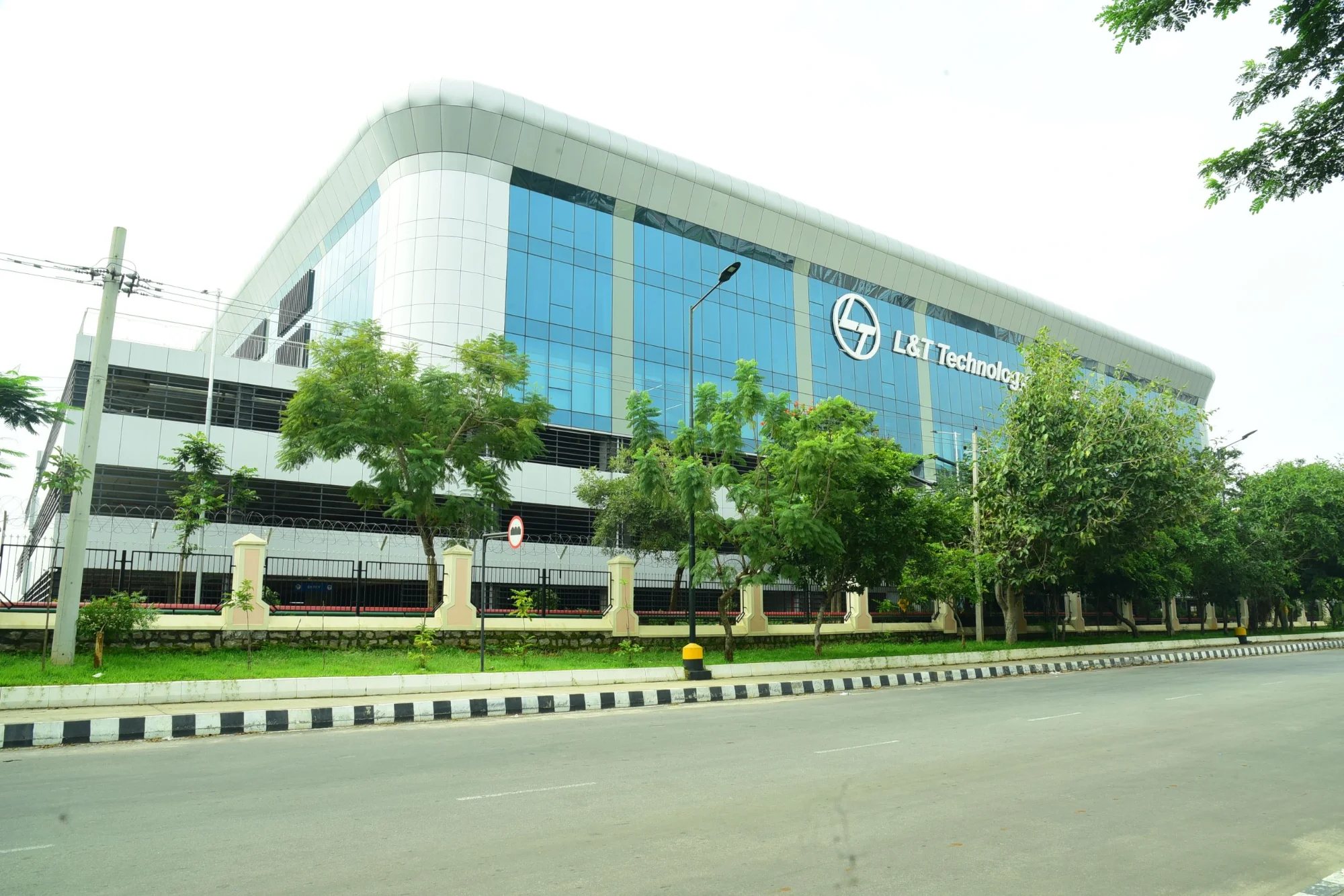
L&T Technology Services (LTTS) now believes artificial intelligence could fundamentally reshape that model.
Mritunjay Kumar Singh, Chief Operating Officer at LTTS, said that the middle tier of engineering teams is shrinking. He described an emerging “hourglass” workforce model, where companies retain domain experts at the top and AI-enabled execution teams at the bottom, while the middle management and coordination layers become more compressed.
“We’ll have experts at the top and a lot of people at the bottom who will be orchestrators of problem solvers. The middle layer will become thinner,” he says.
The Hourglass Workforce
The comments come at a time when India’s technology sector is grappling with growing questions around AI-led productivity gains, shrinking project cycles, and the long-term sustainability of the traditional pyramid structure that powered outsourcing growth for over two decades.
Singh argues that AI-native workflows could reduce the need for large managerial hierarchies because smaller teams would require fewer layers of communication.
He said that when you have a team of three or four people, there's no need for overhead. Singh explained that he needs someone who understands the business, another who understands technology and can build with the given tools, and a third to connect these components together.
He says future engineering teams could evolve towards smaller, agile structures as AI tools become more deeply integrated into software development and engineering workflows.
The LTTS executive also pushes back against broader fears that generative AI could severely damage Indian IT and engineering services firms.
“The hype around Anthropic and their impact on Indian IT is overhyped,” Singh says, arguing that AI-generated code will dramatically increase the volume of software that still needs orchestration, maintenance, and domain expertise.
“Today I may have one trillion lines of code. Tomorrow I may have 30 trillion lines of code. Who is going to run this? Who is going to orchestrate? Who is going to maintain it?” he says.
Rather than positioning itself as a traditional AI services provider, LTTS is increasingly framing its strategy around what it calls “engineering intelligence”, the application of AI within engineering, manufacturing, and industrial systems.
“We are building a pure-play next-generation engineering intelligence company,” Singh says. “The tech has come to a tipping point where you can build systems at scale in engineering.”
That positioning is increasingly visible across the company’s strategy, investments, and internal transformation efforts.
Next Phase of Growth
Rajeev Gupta, Executive Director and Chief Financial Officer at LTTS, says the company is moving “from services to technology solutions” as AI becomes embedded across engineering workflows rather than existing as a standalone offering.
“A large part of what we do will have AI in it,” Gupta says. “We don’t need to track it separately anymore.”
Gupta mentions that LTTS has pinpointed six key strategic focus areas for the upcoming growth phase: software-defined mobility; plant build-out and modernisation; energy, industrial automation, and digital manufacturing; next-generation computing and AI infrastructure; software platforms and engineering intelligence medtech.
According to him, these focus areas currently contribute less than 50% of the company’s revenue, but their share could rise to more than 75% over the next five years. LTTS has also outlined a five-year revenue CAGR target of 13–15%.
LTTS executives repeatedly emphasise that the next AI wave will move beyond copilots and chatbots into industrial and physical systems.
Gupta describes “physical AI” as one of the biggest upcoming opportunities for engineering-focused companies, particularly in factories, vehicles, industrial plants, and edge computing systems.
“Think factories, think buildings, think cars,” Gupta says. “There’s a lot of feel and touch that receives data that can get analysed and can accordingly make adjustments.”
He cites examples ranging from AI-enabled quality inspection systems on factory assembly lines to smart seating systems that automatically adjust based on posture and usage.
The company is already deploying AI-led industrial use cases beyond proof-of-concept environments, Gupta says, citing a US-based customer project in which LTTS engineers integrated automotive LiDAR technology into industrial log-cutting machinery to improve worker safety.
Gupta explains that as soon as the hand enters, the machine stops within milliseconds, illustrating a system that establishes a 360-degree safety zone around industrial machinery.
The company’s leadership also believes India’s engineering talent pipeline will rapidly become AI-native.
Meanwhile, Ashish Khushu, Chief Technology Officer at LTTS, tells AIM that most engineers entering the workforce are already using AI tools organically, even without formal enterprise intervention.
Khushu says that in the next two years, every engineer will know what AI can do in their respective field.
“I do not foresee a situation where talent in India will have to be trained on AI,” he adds. “They will be AI-ready on their own, or through colleges, or through interventions that happen.”
Khushu compares AI adoption to earlier technology waves, such as Java, arguing that some technologies disseminate so rapidly that awareness and proficiency become widespread naturally.
Why Domain Expertise Still Matters
At the same time, LTTS executives argue that domain expertise will become even more important in the AI era.
“When I am working on aircraft wire design, I need to know what an aircraft wire design looks like, how it functions and what the design guidelines are,” Singh says. “Just because there is a tool doesn’t mean it will work.”
The company is also attempting to cultivate that engineering-focused AI culture early through a long-running innovation platform for students called Techgium.
Khushu describes the initiative as a months-long engineering programme rather than a conventional hackathon, where students work on real-world industrial problem statements, build prototypes, and interact with external mentors and jury members.
“This is our way of creating and fostering an innovation culture,” he says, citing that participating students have gone on to file patents, pursue research opportunities, and build larger commercial solutions from their projects.
LTTS has filed “240-odd patents” in core AI technologies and aims to double that number over time. “We are among the highest patent filers in India in our segment,” he says.
Even as the company outlines long-term ambitions around engineering intelligence and physical AI, LTTS executives acknowledge the volatility of the current technology cycle and the need for constant recalibration.
“Companies which are stuck in a way of doing things will collapse,” Singh says. “These are times to be flexible, agile, fast and decisive.”