
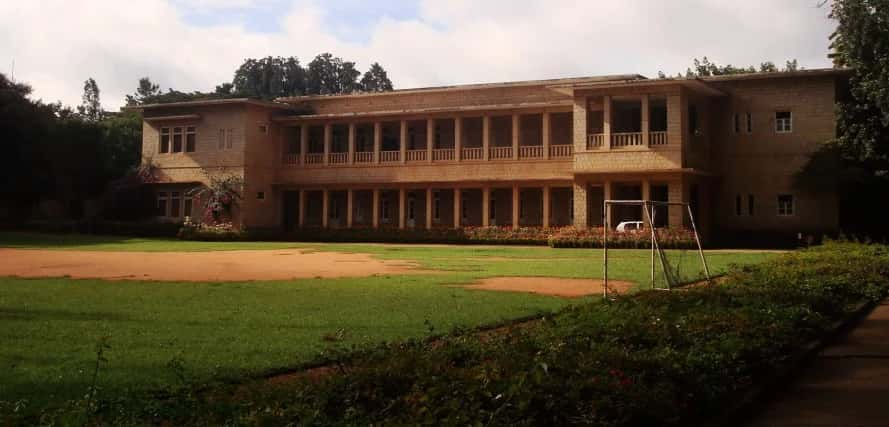
A team of researchers from the Raman Research Institute (RRI), Bangalore, demonstrated the transfer of a quantum distribution key between two buildings using an atmospheric channel. This is the first instance where the underlying technique-- entanglement-based quantum-key distribution--has been demonstrated between ground stations (buildings) separated by 50m.
The team said this breakthrough has the potential to revolutionise cybersecurity in critical sectors such as banking and defence.
Prof Urbasi Sinha, who also heads RRI’s Quantum Information and Computing (QuIC) lab, led the experiment. Prof Sinha said, “This is the country’s first free-space quantum key distribution experiment. This experiment can be done and demonstrated only during the night.” She said the atmospheric channel based experiment would further the Indian government’s endeavour to connect different nodes in the country through free space and fibre-based channels and build a secure quantum-based communication network.
The team said leveraging this capability can help detect unauthorised break-in immediately and protect encrypted information from threats that might arise from future computational advances.
The experiment was conducted at the Quantum Experiments Using Satellite Technology (QuEST), a lab set up under RRI and ISRO.
- Bihar Partners with IT Cos to Train Government School Teachers In AI
- Meta Wants $95 Billion Through Stock Sales to Fund AI Infrastructure
- Pronto Founder Enters Physical AI Space With Provision Labs
- HCLTech Taps NVIDIA Simulation Tools to Automate Software-Defined Vehicle Testing
- Tata Communications Plans $450 Mn Investment to Build 10,000 Km AI Network
- Telangana Unveils AI-Powered Digital Twin of IT Minister at DevFest 2026