
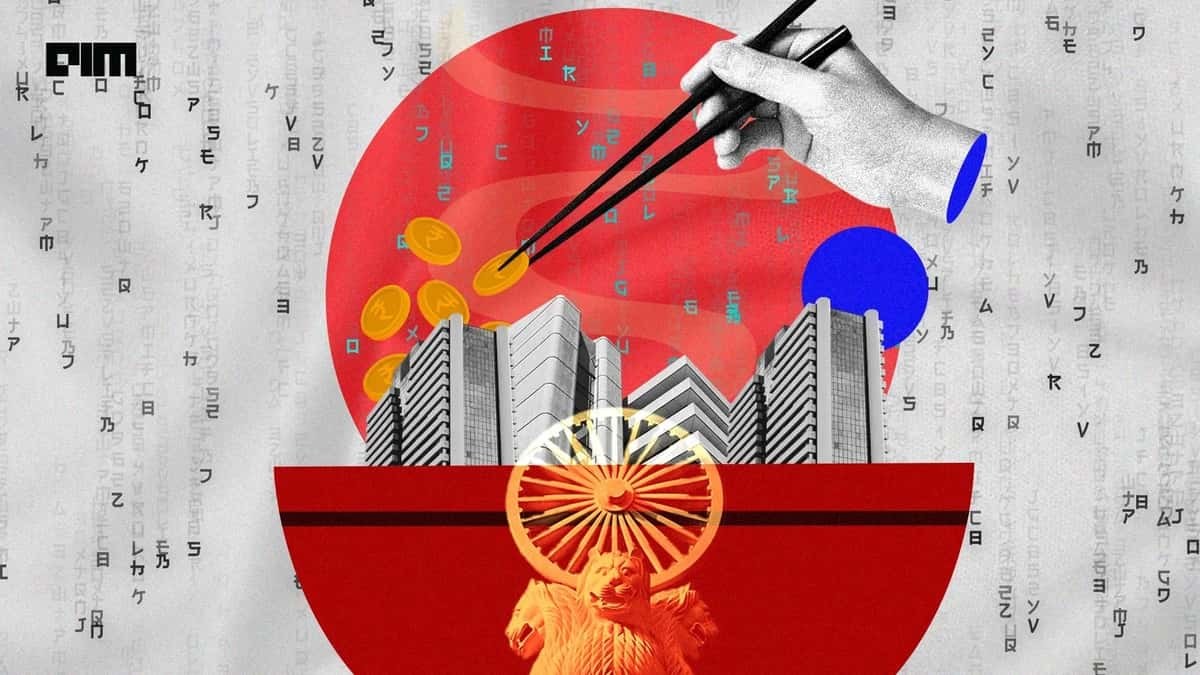

India and Japan are moving beyond a traditional investment relationship to build what could become one of Asia’s most important technology partnerships—one anchored in artificial intelligence, semiconductors and global capability centres (GCCs).
During the recent summit between Prime Minister Narendra Modi and Japanese Prime Minister Shigeru Ishiba, the two leaders committed to strengthening AI cooperation between India and Japan, alongside like-minded countries, to support resilient and inclusive AI development across the Indo-Pacific and the Global South.
The partnership extends beyond policy announcements. Both countries agreed to deepen collaboration among governments, industry and academia to develop multilingual, open-source, domain-specific and vertical AI models, including foundation models for native languages and public-interest applications.
Among the major announcements was a memorandum of understanding between IIT Bombay, the BharatGen Technology Foundation, and Japan’s National Institute of Informatics (NII/ROIS) for joint research and development of large language models.
AI startup Sarvam also signed an agreement with Preferred Networks to collaborate across the AI technology stack, while IndiaAI and Japan’s Ministry of Economy, Trade and Industry (METI) entered into a cooperation agreement to support AI companies from both countries.
India Emerges as Japan’s Trusted Technology Partner
Kathir Thandavarayan, Partner, Deloitte India, tells AIM that Japan’s strategic shift towards India has been years in the making.
“Since the COVID-19 pandemic, Japan has been looking to diversify its supply and has even prioritised economic security over market efficiency through policy interventions as a part of its decision-making process,” he says.
Japan launched a $2 billion Supply Chain Diversification Programme to encourage companies to move manufacturing either back home or into trusted partner countries. India was included in the programme’s second phase, enabling financial assistance for Japanese firms expanding manufacturing operations in the country.
The numbers underscore the growing relationship. Japan is now India’s fifth-largest source of foreign direct investment (FDI), contributing roughly 6% of cumulative FDI since 2000. Tokyo initially committed ¥5 trillion in public and private investments through 2027 before doubling the target to ¥10 trillion by 2035, with investments increasingly flowing into semiconductors, electronics, renewable energy and advanced materials.
Yet, Thandavarayan believes India still has work to do.
“However, India needs to proactively enable Japanese companies on their investments by addressing regulatory complexities, standardising procedures across states, enhancing logistics efficiency and compliance requirements such as the Bureau of Indian Standards (BIS). Building confidence among the industry and mutual recognition of each other’s technical standards wherever possible would reduce costs and approval times and improve India’s position as a trusted partner in advanced technology and manufacturing,” he states.
Japan Could Become Critical to India’s Semiconductor Ambitions
The AI partnership also intersects with India’s ambitions to become a semiconductor manufacturing hub.
Rather than focusing solely on fabs, experts believe the next phase of the India Semiconductor Mission will require building an entire materials and equipment ecosystem—an area where Japan remains a global leader.
“A successful semiconductor ecosystem is not necessarily built by fabs and OSATs but by a strong equipment and material ecosystem supporting it,” Thandavarayan states.
He further explains that the second phase of the India Semiconductor Mission (ISM) is expected to focus on developing the end-to-end semiconductor ecosystem. Japanese companies could play a pivotal role in developing the India ecosystem by providing access to globally competitive technologies and enabling manufacturing investments in the value chain either directly or through joint ventures (JV).
He adds that growing demand from India’s expanding OSAT ecosystem, coupled with incentives under ISM 2.0, could encourage Japanese materials companies to establish manufacturing bases in India, further strengthening the country’s semiconductor value chain.
AI Collaboration Could Accelerate Japanese GCC Expansion
The bilateral partnership is also expected to reshape India’s GCC landscape.
Alouk Kumar, Founder and CEO, Inductus Group, tells AIM, Japanese enterprises remain significantly underrepresented despite India’s dominance as the world’s GCC destination.
“India’s GCC ecosystem is entering a defining phase of its evolution, transitioning from a global delivery destination to a strategic hub for innovation, product ownership and enterprise transformation,” Kumar says.
India is expected to add 1,100–1,300 new GCCs by 2030. Yet, Japanese companies currently operate only around 80–90 centres, representing barely 3% of India’s GCC ecosystem.
“If current market trends continue, the number of Japanese GCCs in India could realistically grow to 240–270 centres by 2030, marking one of the most significant shifts in the bilateral technology partnership,” Kumar notes.
He believes the newly announced AI cooperation initiative could become a major catalyst.“The landmark decision made by India and Japan to enhance cooperation through the new initiative ‘Japan-India AI Cooperation Initiative’ is a breakthrough decision for the global technology ecosystem,” Kumar states.
“Integrating advanced AI with resilient hardware systems, such as shared GPU computing resources and next-generation semiconductor manufacturing, creates a very secure and dependable foundation that will greatly help GCC and enterprise consulting,” he states.
From Delivery Centres to Strategic Innovation Hubs
Sukanya Roy, Partner, Zinnov, tells AIM that Japanese companies are increasingly using India not merely as a delivery destination but as an innovation engine.
“Japanese enterprises are solving a fundamental problem through India: how to innovate at the speed their markets demand, rather than the speed their home organisations allow,” she says.
According to Zinnov, more than 100 Japanese companies now operate GCCs in India, accounting for roughly 5–6% of India’s 2,117 GCCs.
Technology firms represent the largest share at 20%, followed by industrial companies (15%), while automotive and healthcare each contribute around 11%.
“India offers what Japan’s home organisations cannot: proximity to Asia-Pacific markets, dense engineering talent, English-speaking workforce, young demographics, cost optimisation, and a large manufacturing ecosystem,” Roy mentions.
She noted that over 81% of Japan-headquartered GCCs belong to enterprises generating more than $1 billion in annual revenue.
Companies such as Denso, Sony, NEC, Mitsubishi Electric, Renesas Electronics, Honda and Toyota are establishing strategic engineering hubs, while firms including MUFG, Mercari, Takeda and Socionext are using India for fintech innovation, AI research and semiconductor design.
“As Japan commits JPY 10 trillion in India investments, the enterprises that move fastest from capability execution to strategic ownership will determine whether Japan’s GCC base becomes foundational to how they compete in a software-defined, AI-driven global economy,” Roy says.
NTT DATA Sees India Becoming an AI Hub
For Japanese technology major NTT DATA, India has evolved from a delivery centre into one of its most important global markets.
“India is a big market for us locally. It’s a big domestic market. And then we use India also for global delivery,” Rajeev Singh, Senior Vice President, NTT DATA, tells AIM.
The company currently considers India among its top 10 global markets and aims to make it its fifth-largest market within three years.
“India is slowly starting to become an AI hub. We have a lot of traction... especially in the North American and European market,” Singh says.
He revealed that NTT DATA is expanding AI centres of excellence in collaboration with partners including OpenAI while growing its India workforce by 8–10% to support rising demand from North America.
The company has also announced an investment of $1.5 billion in India spanning AI, applications, business process services, data platforms and data centre infrastructure.
“We are building AI platforms, and those are being built here in India, in Bangalore and Noida,” Singh adds.
The India-Japan AI partnership reflects a broader geopolitical and economic realignment. While AI cooperation, multilingual foundation models and semiconductor partnerships form the immediate agenda, industry leaders see the collaboration evolving into something much larger—a technology corridor combining Japan’s manufacturing excellence with India’s software, AI talent and digital innovation capabilities.
- Smaller Language Models Could Reshape How Enterprises Deploy AI
- Enmovil Plans to Quadruple FDE Team as Enterprise AI Hiring Moves Beyond Coding
- Does the World Need a New GitHub?
- Can India’s AI Boom Reach Bharat?
- AI's Next Agritech Frontier Is India's Fragmented Supply Chain
- India’s Frontier AI Race Gets a 240M Model That Beats Liquid AI