Key takeaways
- A random forest model comprises multiple decision trees working together.
- Each tree in the random forest provides a class prediction based on input data.
- The final decision of the random forest is determined by the majority vote among trees.
- Random forests can be applied to both classification and regression tasks.
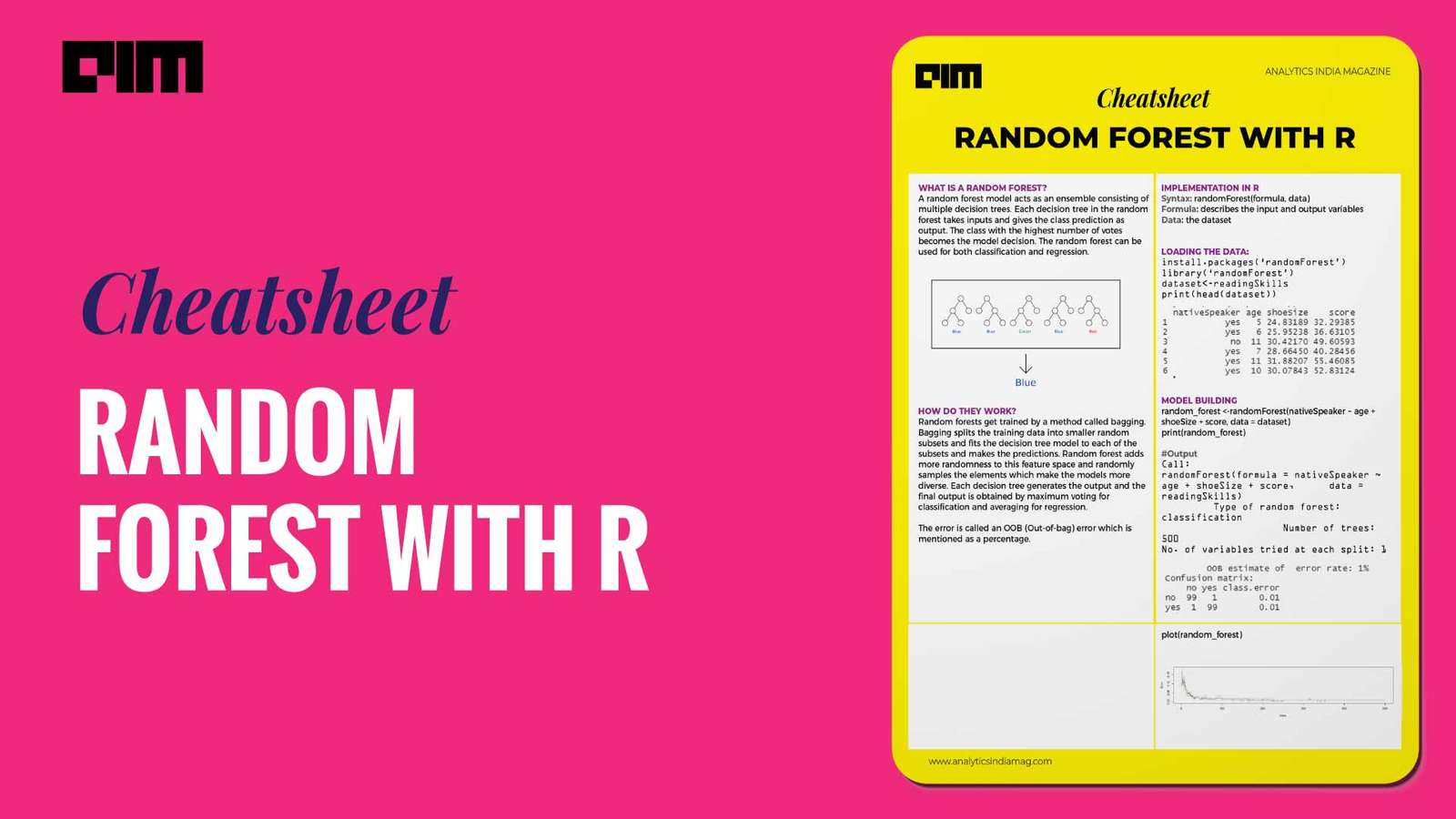
A random forest model acts as an ensemble consisting of multiple decision trees. Each decision tree in the random forest takes inputs and gives the class prediction as output. The class with the highest number of votes becomes the model decision. The random forest can be used for both classification and regression.
To download the cheatsheet, please login below and follow us on Instagram.
Spotted an error? Tell our editors. Read our editorial standards and corrections.