
AI has the potential to truly revolutionise how we work, with many calling generative AI a true enabler, meaning it can give productivity a significant boost. Asana, which is based in San Francisco, helps teams organise, track, and manage their work. Now, the company wants to leverage the power of AI.
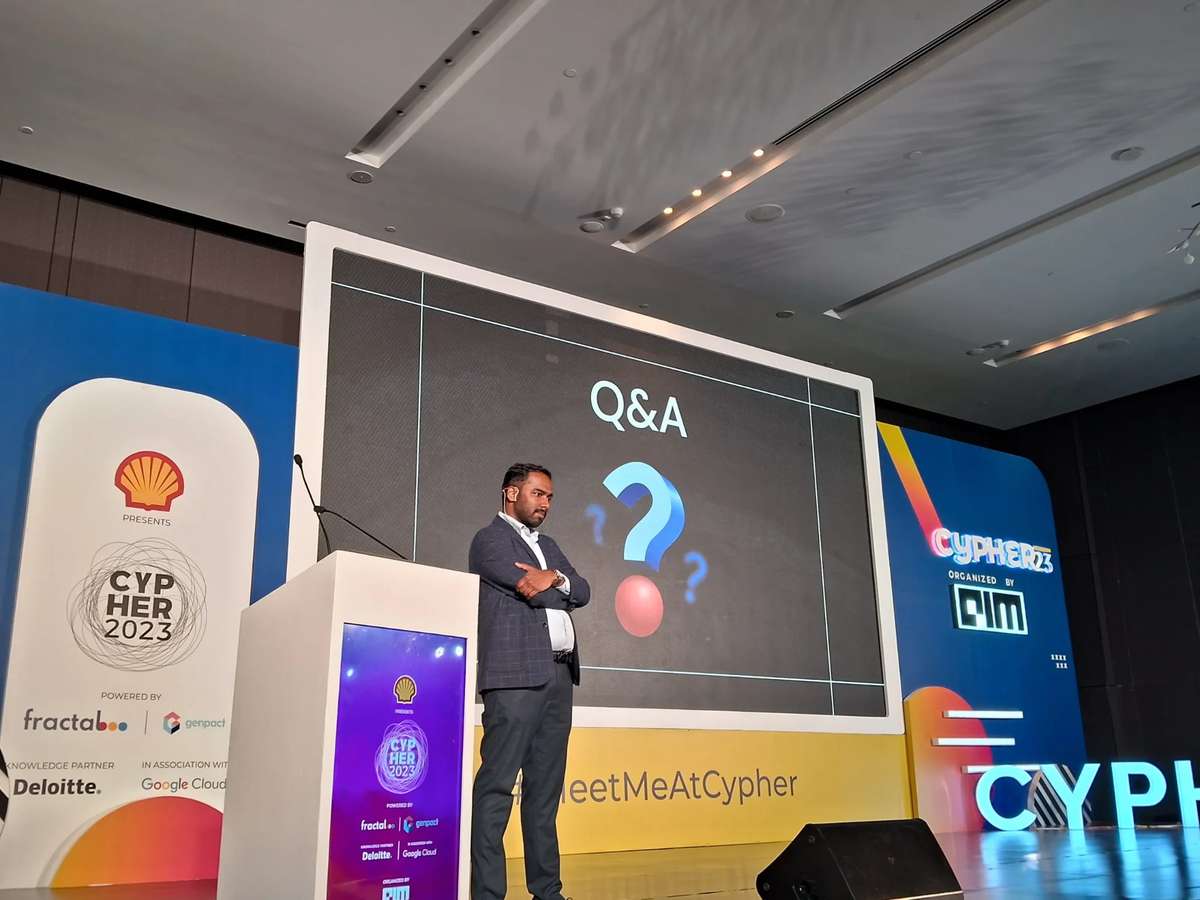
During the ongoing Cypher2023, India’s biggest AI conference, Vishnu Prasad, South Asia Lead at Asana, discusses the challenges faced in work management and how Asana aims to address them using AI. The focus is on enhancing productivity and collaboration by eliminating redundant tasks and streamlining workflows.
“We have a mission. We want to help the world’s teams work together effortlessly and Asana is the company that created this modern work management platform that actually came out of Facebook. Co-founder Dustin Moskovitz, who also co-founded Facebook, realised that, work, when you think about it intuitively, it's all interconnected teams. It’s like a neural network of different connections. It's like a social network. So the aim was what can be done to create a better work system.”
Digital Friction
Today, a lot of hurdles and inefficiencies arise in work processes and are often caused by redundant tasks, such as sending status updates and transferring information between different platforms. These seemingly small issues collectively result in a significant reduction in productivity and hinder progress.
A major problem with locomotive work is that it consumes a substantial amount of time and effort, offering minimal value in return. Employees find themselves swamped with tasks, yet the impact and outcomes of their work remain obscured.
“When you have different Excel sheets, different emails sitting in different systems, stuff does not happen very fast,” Prasad said.
The Asana Solution
To counter this, Asana proposes a solution to this pervasive issue. Prasad asserts that their innovative platform leverages AI to bridge the gap between humans and technology. Asana has created a unique work management system, which is founded on the concept of a "world graph." It ensures that every unit of work within an organisation is interconnected, eliminating duplication and enhancing collaboration. It's not just about automation; it's about creating a comprehensive work ecosystem.
“What Asana has done is created a work management system where there is no duplication of work. The underlying data architecture is what is driving this. So what I mean is if you are an individual contributor, open Asana and you can actually see what the task that you need to attend to on the day. There is a clear dashboard which tells what you need to do and when.”
What sets Asana apart is its ability to implement AI effectively within its platform. AI-driven features enable users to generate automated status reports, streamline complex tasks and create sub-tasks. Asana's neural network-type architecture facilitates the development of AI tools that can analyse data beyond specific projects.
These AI tools open up exciting possibilities for identifying problem areas and providing detailed feedback. The "future of work" that Prasad envisions involves pinpointing interdependencies within teams, fostering collaboration, and achieving organisational goals more efficiently.
Humans+AI
Prasad says we should be working collaboratively, making the best use of AI. For example, on Asana, if something is created by AI, users will see a small tab that says ‘generated by AI’ to help differentiate between AI-generated or human work.
He further states it’s important to make the distinction and this is our grounding principle. This alliance between humans and AI is not about replacing one with the other; it's about harnessing the strengths of both to achieve unprecedented productivity and innovation.
In summary, Asana's approach to removing digital friction is a testament to the power of combining human ingenuity with AI. By adopting their platform, Prasad says we can envision a future where work becomes more efficient, productive, and ultimately more meaningful. This union of humans and AI offers the perfect mix to propel us into an era of seamless, frictionless work experiences.
- AI Can Be Cyborg or Centaur. But Can Enterprises Monetise It?
- AMD’s Server CPU Business Faces a New AI Boom
- How an Engineer Is Using AI to Bridge the Accessible Education Gap
- AI Agents are Making Human Customer Service a Specialist Job
- Why Nandan Nilekani-Backed F2A Believes India's Investment Opportunity Lies in Edge AI
- India Needs to Build the AI 'Brain' for Robotics, Not Just Import Hardware