
The induction stove has never been as popular. The LPG crisis in India, stoked by the West Asia conflict, pushed millions of households to buy induction stoves—in shops, online, wherever they could find one.
The numbers were staggering. Amazon India reported that induction cooktop sales jumped more than 30-fold within two days in March. Flipkart saw volumes quadruple in 4–5 days in the early days of the crisis compared to the preceding weeks. On quick commerce platforms like Blinkit, Zepto, and Swiggy Instamart, the electric stoves went out of stock within hours across Bengaluru, Chennai, Kolkata, and Mumbai.
Croma's MD and CEO Shibashish Roy said the chain's average daily run rate had surged to nearly 3x the usual levels, with customers buying multiple units at a time, "indicating some precautionary buying," he told Business Today. TTK Prestige, India's largest kitchenware company, confirmed demand had surged far beyond supply.
It was a remarkable demand signal. But, within days, an uncomfortable realisation emerged: India's induction cooktop industry is largely an assembly operation dependent on components it cannot yet make.
The Four Parts Problem
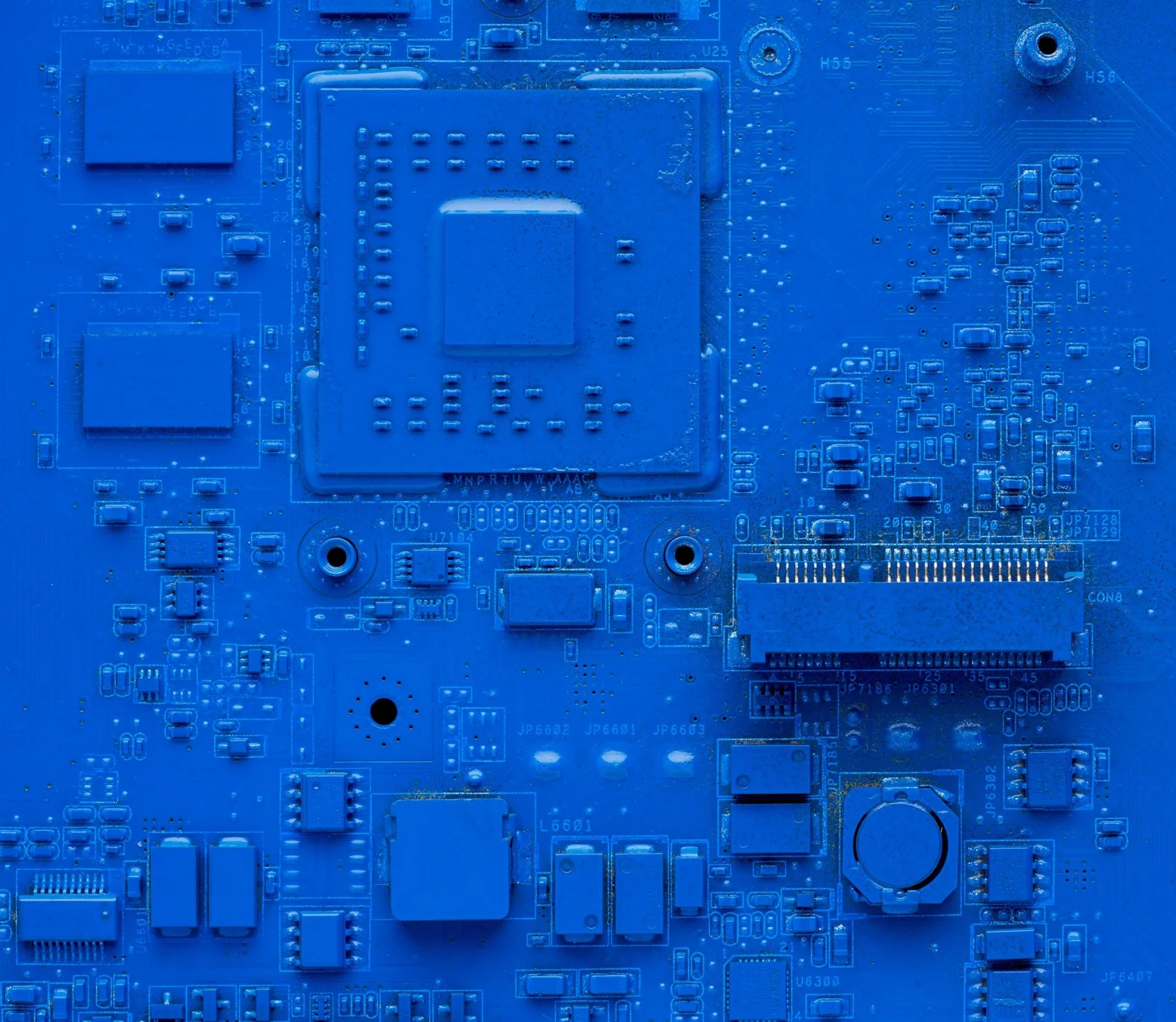
An induction cooktop has four critical components, and India makes almost none of them.
The first is the IGBT (insulated-gate bipolar transistor), the power semiconductor that generates the electromagnetic field that actually heats. India imports them from Infineon in Germany, or from Fuji Electric and Mitsubishi in Japan.
The second critical component is the printed circuit board (PCB), which controls power, temperature, and safety. It is almost entirely imported, with China dominating supply.
The third is microcrystalline glass, the ceramic surface on which the pot sits. It is also largely imported, with no meaningful domestic production.
The only bright spot is the copper induction coil itself, the actual heating element, where Indian manufacturers retain some local capability.
Prasanna Viswanathan, an industry observer, put it plainly on X, "one out of four isn't nothing, but it isn't manufacturing independence either."
The demand surge had an immediate operational consequence in procurement. TTK Prestige announced it would switch from sea freight to airlifting components sourced from China and Southeast Asia, absorbing higher costs to keep shelves stocked.
Raghav Wadhwa, Co-Founder of research analyst firm Legacis Capital, notes that lead times on crystalline glass had already stretched from 25–30 days to 40–45 days. "The import dependency is concentrated in two to three high-tech components," he tells AIM, pointing specifically to IGBTs, microcrystalline glass, and PCBs.
This is not a niche problem. Around 40% of essential components are imported according to industry estimates, with some breakdowns placing the figure for critical electronic sub-assemblies even higher. The India Cellular and Electronics Association confirmed to AIM that the domestic small appliances manufacturing base "remains limited," with constraints in component sourcing directly influencing how fast anyone can scale production.
The Demand Signal
On April 10, the Department for Promotion of Industry and Internal Trade called in manufacturers, including Epack Durable, TTK Prestige, and Havells, and asked them to ramp up commercial induction cooktop production for restaurants and hotels, where LPG supply had effectively dried up.
The companies were asked to share production timelines and constraints. The government also began reviewing a temporary relaxation of Bureau of Indian Standards (BIS) import certification requirements for certain components, simply to let supply catch up with demand.
From an investor's lens, Wadhwa says the near-term play won’t be about components at all. "Stove Kraft has about 49% revenue from induction, TTK Prestige is at about 11%," he says. "They benefit from every unit sold regardless of where components come from."
On the manufacturing side, he flags Epack Durable as a direct play. Meanwhile, electronics OEM provider Amber Enterprises' joint venture Ascent-K Circuit secured ₹3,215 crore under the Electronics Component Manufacturing Scheme for advanced PCB manufacturing in Uttar Pradesh, plus another ₹500 crore through subsidiary Shogini Technoarts.
"That's ₹4,700 crore committed to PCB localisation," Wadhwa says. "If that scales, Amber is probably the closest listed company to the upstream component opportunity."
On IGBTs, he is more measured: domestic production is realistically a five-to-seven-year horizon.
A Familiar Pattern
Wadhwa draws an analogy to mobile phones. In 2014, India imported nearly every handset. Today, over 95% are assembled domestically, and the country is moving up the component chain.
The induction cooktop supply chain, he argues, will likely trace a similar curve, but the question is whether each new demand shock simply deepens one dependency while trying to escape another. Meanwhile, the market in India is expected to register steady growth, scaling from nearly $800 million in 2025 to $1.63 billion in 2026, according to IMARC.
"There is no doubt it is a huge structural gap," observes Abhishek Srivastava, General Partner at Kae Capital. On energy sovereignty specifically, he points to Kae Capital portfolio companies like Arkahub, which is automating legacy transmission and distribution grids.
"In the next five to ten years, we should become a very resilient engine in specific sectors," he says.
When it comes to the semiconductor components, there’s already a visible shift. Micron's facility in Sanand, Gujarat, began commercial production in March 2026. The Tata-PSMC fab at Dholera, representing a ₹91,000 crore investment, targets mid-2027. ISM 2.0, announced in Budget 2026, has pivoted specifically to domestic semiconductor equipment and materials, the upstream layer where IGBT capability would eventually sit.
But realistically, none of this helps a restaurant owner in India today, whose gas supply has dried up and whose induction cooktop manufacturer is airlifting parts from Shenzhen.
The flame may be switching to electricity. The supply chain question has only just begun to heat up.

Your reaction
Discussion
What's your take on this story?
No comments yet — be the first to share your view.