
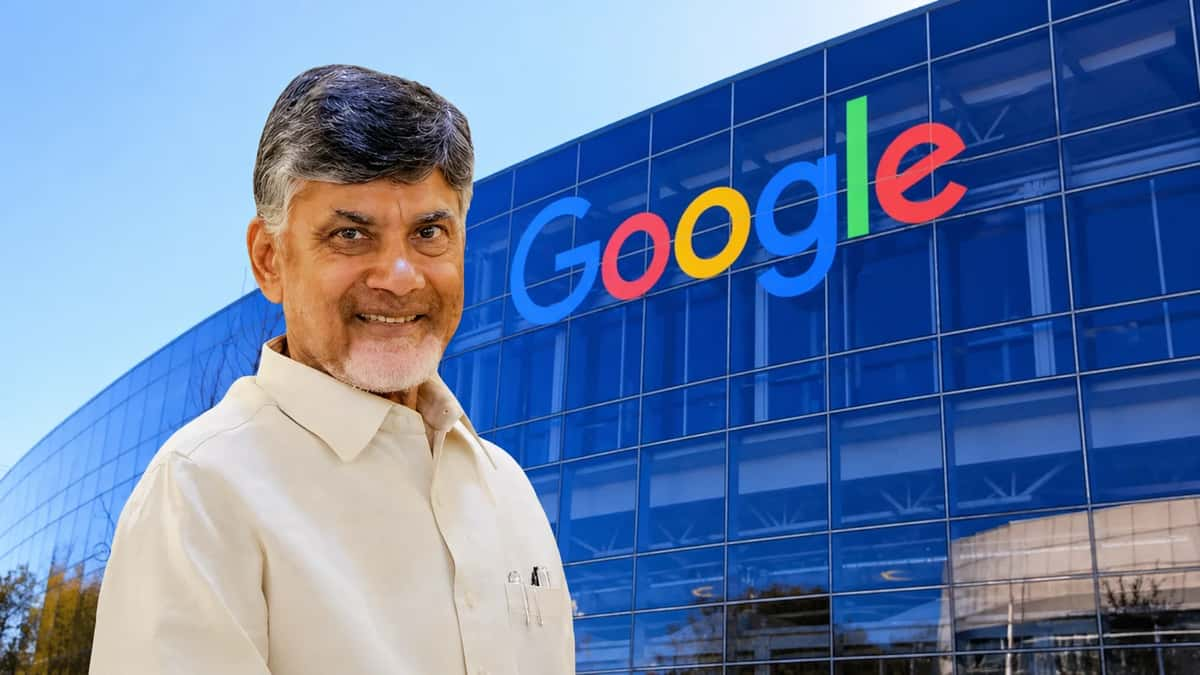

Google has started construction on an AI infrastructure hub in Vishakhapatnam, Andhra Pradesh, that is expected to play a role in the company’s long-term plans for India’s digital economy.
Developed in partnership with data centre companies AdaniConneX and Nxtra by Airtel, the project involves a gigawatt-scale buildout of AI infrastructure spanning data centres, connectivity systems, and energy networks.
At the centre of the initiative is a multi-campus AI hub comprising three data centre facilities designed to support high-performance computing workloads. AdaniConneX and Nxtra by Airtel are responsible for constructing the physical infrastructure and connectivity layers, while Google deploys its AI and cloud systems.
The initiative is part of Google’s previously announced $15 billion investment in India between 2026 and 2030. The project also involves the America-India Connect initiative, announced by Google earlier this year to expand fibre-optic connectivity, as well as a long-term clean energy strategy.
Speaking with AIM at the Google Cloud Next Summit, Bikesh Koley, Vice President of Global Infrastructure at Google, says such projects reflect that AI infrastructure is evolving beyond individual facilities. He says that large-scale deployments require coordination across multiple layers, noting that “resiliency starts with the data centre, but… comes with energy and network and compute.”
Koley adds that Google typically plans these investments over long horizons. “When we’re going to Vizag, we’re likely going to be there for 20+ years,” he says, indicating the need to align infrastructure development with long-term regional considerations.
Why Vizag, and What It Enables
The selection of Visakhapatnam reflects a combination of geographic, infrastructural, and policy factors. “Connectivity is a big one. The right kind of energy is a big one. Access to scale, workforce becomes big [factors],” Koley says, adding that Vizag offers proximity to Asia-Pacific markets and potential advantages in latency.
At the same time, the region requires additional investment to meet the needs of a large-scale AI hub. Koley notes that Vizag was “not necessarily the most connected” location initially, but the project includes efforts to strengthen connectivity through partnerships with companies such as Airtel and Sify.
“Our full stack of best-in-class data centres, use of green power, pan-India ultra‐low latency fibre, and a next‐gen cable landing station will enable large‐scale, world‐class AI infrastructure in Vizag,” Gopal Vittal, Executive Vice Chairman, Bharti Airtel, said in a statement.
Part of this effort involves developing Vishakhapatnam as a subsea cable landing point. Koley suggests this could help improve India’s global connectivity footprint. “The goal has been to ensure that we can serve the world from India,” he says.
The city is now benefiting from the cascading effects of Google’s investment. Reliance Industries will invest ₹1.6 lakh crore ($17 billion) to set up a 1.5 GW data centre cluster and a captive solar battery storage system in Vishakhapatnam, per an ET report. Andhra Pradesh’s Investment Promotion Committee has reportedly approved the project.
Designing for Resilience and Connectivity
Resilience is a recurring theme in the project’s design. Koley points to recent disruptions in global subsea cable networks—including outages in the Red Sea, Taiwan, and the Strait of Hormuz—as examples of risks that infrastructure needs to account for.
“We always account for both the geopolitical and the natural failures that can happen,” he says, describing how network architecture is designed to maintain continuity even during disruptions.
The America-India Connect initiative is part of this approach, creating alternative routing paths that reduce reliance on traditional chokepoints and improve redundancy. As Vishakhapatnam becomes part of this network, it is expected to strengthen India’s connectivity with global digital systems. However, the extent of this impact will depend on how the broader ecosystem develops.
Energy, Sustainability, and Scale
Energy remains a key constraint for large-scale AI infrastructure. Koley says that data centre development must be paired with efforts to add grid capacity, particularly through renewable sources.
“We have always ensured that we add energy to the grid… whether it is directly investing into projects or… co-developing power generation,” he says, noting that Google has contributed over 22 gigawatts of power globally through its infrastructure investments.
In India, the company is working with local developers to incorporate solar, wind, and pumped hydro energy sources. Koley describes the Vizag facility as one of the company’s more green energy-efficient projects once operational.
India’s interstate power grid also provides flexibility, allowing electricity to be sourced from multiple regions, which and supporting scaling requirements over time.
Meanwhile, the country aims to achieve 500 GW of non-fossil fuel energy capacity by 2030, 50% of the goal already met. This aligns with the long-term goal of net-zero emissions by 2070.
Ecosystem Development
While the infrastructure itself is central, Google has positioned the project as part of a broader ecosystem effort. The AI hub is intended to support not only Google’s own workloads but also enterprise and research use cases.
Bharat AI Shakti, an initiative by Google, the Andhra Pradesh government, and the central government, includes efforts to integrate local small and medium enterprises into supply chains and encourage local procurement for infrastructure components.
Koley notes that the Vizag facility is expected to operate at a scale comparable to some of Google’s largest global data centres. “It is going to be the second largest data centre that we’re going to have outside of the US,” he says, adding that it will incorporate recent advances in computing and cooling technologies.
Speaking at the foundation-laying event, held in Andhra Pradesh’s Tarluvada village, Google Cloud CEO Thomas Kurian described the investment as “an inflexion point for the country’s AI-native future,” highlighting in a statement the role infrastructure could play in enabling broader AI adoption.
Local Impact
According to the company, the project features several community-focused initiatives to support local development. These range from watershed management programmes and water access initiatives to training programmes for coastal communities and small businesses.
Google is also introducing workforce development initiatives, such as the STAR (Skilled Trades and Readiness) programme, which focuses on training local workers in construction and infrastructure roles, as well as partnerships to build skills in cloud computing and AI.
On employment, Koley suggests that the broader economic impact extends beyond direct hiring within data centres. “One should not look at the number of people that work inside the data centre,” he asserts, pointing instead to supply chain activity and associated industries.
Data centres typically have low on-site headcount due to remote management, abstraction layers, and a focus on security. However, Koley estimates that such projects can generate significant economic activity, including indirect employment across sectors such as manufacturing, logistics, and services.
He notes that the facility will support both cloud workloads and Google’s consumer applications, marking a shift in how services are delivered within the country.
Google’s Vishakhapatnam AI hub reflects a wider trend in how AI infrastructure is being deployed globally. As demand for compute increases, companies are investing in regions that can support integrated systems combining energy, connectivity, and large-scale computing.
For India, the project aligns with ongoing efforts to expand digital infrastructure and position the country within global technology supply chains.
- Smaller Language Models Could Reshape How Enterprises Deploy AI
- Enmovil Plans to Quadruple FDE Team as Enterprise AI Hiring Moves Beyond Coding
- Does the World Need a New GitHub?
- Can India’s AI Boom Reach Bharat?
- AI's Next Agritech Frontier Is India's Fragmented Supply Chain
- India’s Frontier AI Race Gets a 240M Model That Beats Liquid AI