
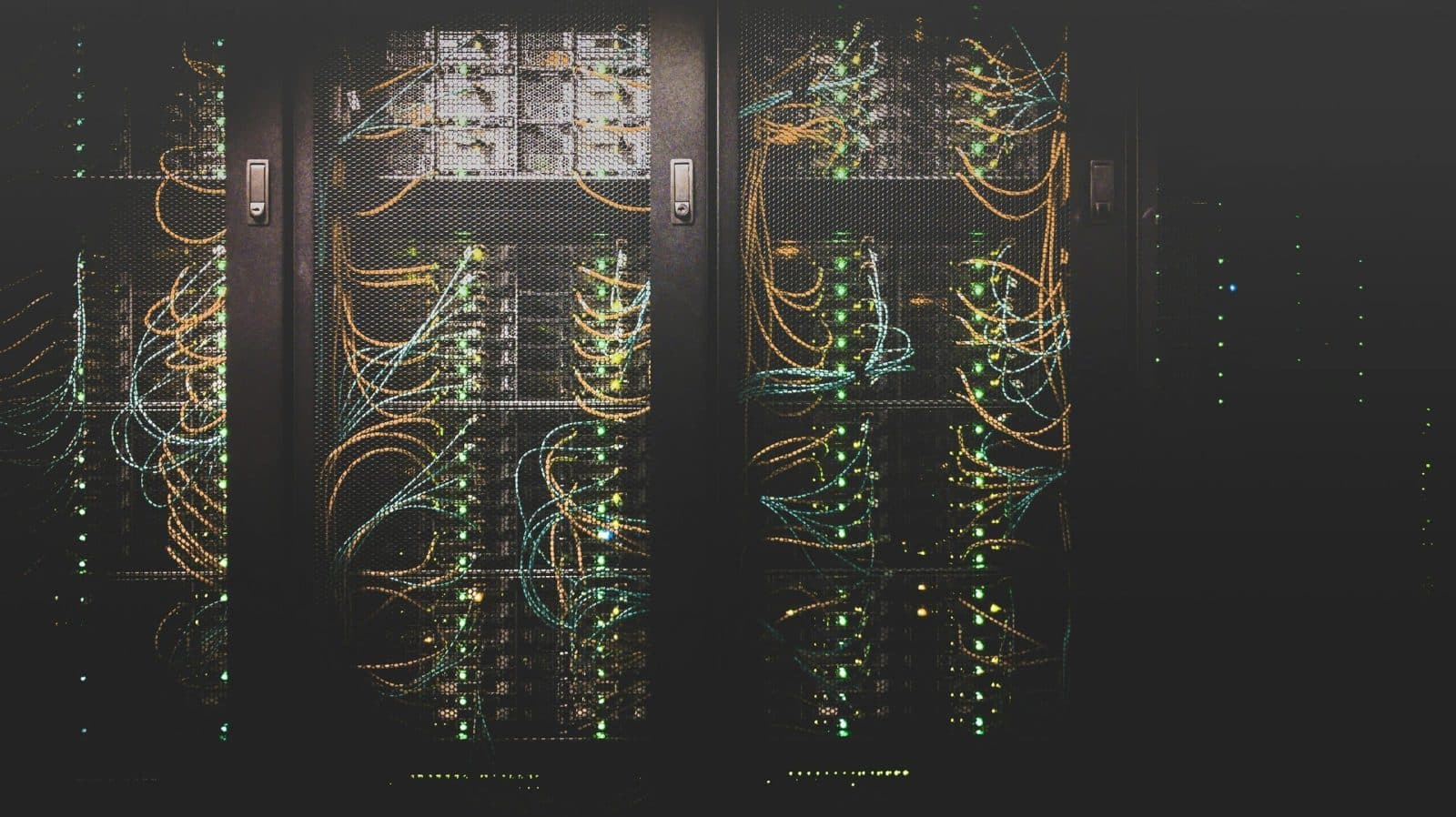
The servers never sleep. Somewhere beneath the air-conditioned hum of a hyperscale data centre, thousands of processors churn through terabytes of data every second, training artificial intelligence models, streaming video, settling financial trades, and running the digital scaffolding of modern life. All of that computation demands one thing above everything else: a continuous, uninterrupted supply of electricity. Increasingly, the technology of choice for delivering that electricity is the combined cycle gas turbine (CCGT).
To understand why CCGT plants have become so central to the data centre industry, it helps to understand how they work and why they outperform virtually every other dispatchable generation technology available today.
Two Cycles, One Machine
At its core, a CCGT power plant is an exercise in thermodynamic ingenuity. It combines two separate energy-conversion processes—the Brayton cycle and the Rankine cycle—within a single facility, extracting far more electricity from each unit of fuel than a conventional power station could manage.
The first stage begins in the gas turbine itself, which operates on principles similar to those of a jet engine. Ambient air is drawn in and compressed to high pressure, increasing its energy potential. The compressed air then enters a combustion chamber, where it is mixed with natural gas and ignited. The resulting high-temperature, high-pressure gases expand rapidly through a turbine, spinning its blades and generating electricity.
The process is known as the Brayton cycle—the ‘topping’ cycle—and, on its own, it achieves thermal efficiency of roughly 35% to 40%. That means a significant proportion of the energy locked in the fuel is still lost as heat in the exhaust gases.
In a conventional simple-cycle gas turbine plant, those exhaust gases—still carrying enormous thermal energy at temperatures exceeding 500°C—are simply vented to the atmosphere. In a CCGT plant, that waste heat is captured and reused.
The exhaust is channelled through a heat recovery steam generator (HRSG). Inside the HRSG, water is heated to produce high-pressure steam. That steam is then directed to a secondary steam turbine—the Rankine cycle, or ‘bottoming’ cycle—which generates an additional tranche of electricity before the steam is condensed and recycled.
By capturing and converting heat that would otherwise be discarded, the CCGT configuration pushes overall thermal efficiency to between 58% and 64%. In the most advanced modern plants, it can climb even higher. That is roughly double the efficiency of a traditional coal-fired power station and significantly better than nuclear, which typically achieves around 33% thermal efficiency.
Why Data Centres Need This Technology
Data centre operators have an unusually demanding set of requirements when it comes to electricity supply. The load is massive—a modern hyperscale facility may require 500 megawatts or more of the continuous power—and largely constant, running at high utilisation day and night.
Interruptions are commercially devastating. Even a brief outage can corrupt transactions, disrupt services, and trigger contractual penalties. At the same time, operators are under mounting pressure to reduce their carbon footprint and demonstrate credible environmental credentials to clients and regulators.
CCGT plants meet these requirements with a combination of attributes few other technologies can match.
Their superior efficiency directly reduces carbon dioxide emissions per megawatt-hour generated, emitting two to three times less CO₂ than coal-fired equivalents for the same output. They can also start up and ramp to full power relatively quickly, allowing operators to respond to fluctuations in demand. More importantly, they provide firm, dispatchable power. Unlike wind or solar generation, a CCGT plant can be relied upon to produce electricity on demand, regardless of weather conditions or time of day.
Dhinagaran Ramachandran, Chief Technical Officer at TurboTech Defence & Aerospace, argued that data centre electricity consumption would roughly double from 18.7 GW in 2024 to approximately 36 GW by 2030, the equivalent of adding the entire Netherlands’ annual power consumption to the grid.
“The conversation has moved from ‘if’ to ‘how much CCGT capacity do we need to build’,” he tells AIM.
The Supply Chain Crunch
That urgency has collided with a harsh market reality. The surge in demand for CCGT equipment has overwhelmed global supply chains, with consequences now being felt across the entire industry.
According to data cited in a report by the GridLab research group and corroborated by industry surveys, the cost of constructing a new CCGT plant in the United States has risen from under $1,500 per kilowatt of generating capacity in 2023 to approximately $2,157 per kilowatt—a 66% increase in just two years. Construction timelines have stretched by 23%, while CCGT equipment in the United States is reportedly backlogged until around 2030.
Matthew Swinamer, a Technical Sales Engineer at Collicutt Energy Services who has extensively modelled behind-the-meter power configurations for data centres, highlighted the reliability mathematics that make CCGT planning so complex.
“For a fully islanded 250 MW data centre, simple turbine solutions require significant overbuild to reach the 99.9% uptime that operators demand. Just building 250 MW isn’t enough—you must account for maintenance downtime, forced outages, and probabilistic availability,” he says. He added that modular approaches could reduce overbuild by around 18% compared to large turbine configurations.
David McAuley, Director at Bitpower, pointed to the wider implications for grid policy. “Irish grid connection rules require large data centres to bring their own dispatchable generation. The CCGT-and-battery-storage mix was now a central variable in viability modelling for new facilities. Slide the MIC and adjust the CCGT/BESS mix—the numbers update in real time,” he says.
The Road Ahead
Despite mounting supply chain pressures, investment in new CCGT capacity continues to accelerate.
“Developers globally have plans to add substantial new combined-cycle capacity by the end of the decade, and manufacturers including GE Vernova, Siemens Energy, and Mitsubishi Power are designing next-generation turbines capable of burning hydrogen blends—a critical consideration as operators seek to future-proof their investments against tightening emissions regulations and evolving ESG commitments,” Ramachandran adds.
Carbon capture and storage systems are also being integrated into new CCGT designs, with early projects demonstrating the potential to reduce CO₂ emissions at the point of combustion by more than 90%.
Taken together, these innovations, combined with the fundamental thermodynamic advantages of the combined-cycle approach, suggest that CCGT technology will remain the backbone of dedicated data centre power generation for the foreseeable future, even as small modular nuclear reactors and large-scale renewables gradually claim a larger share of the mix.
The digital economy runs on data. And for now, data runs on gas—extracted from the ground, burned in turbines, and transformed with extraordinary efficiency into the electricity that keeps the servers running.

Your reaction
Discussion
What's your take on this story?
No comments yet — be the first to share your view.