
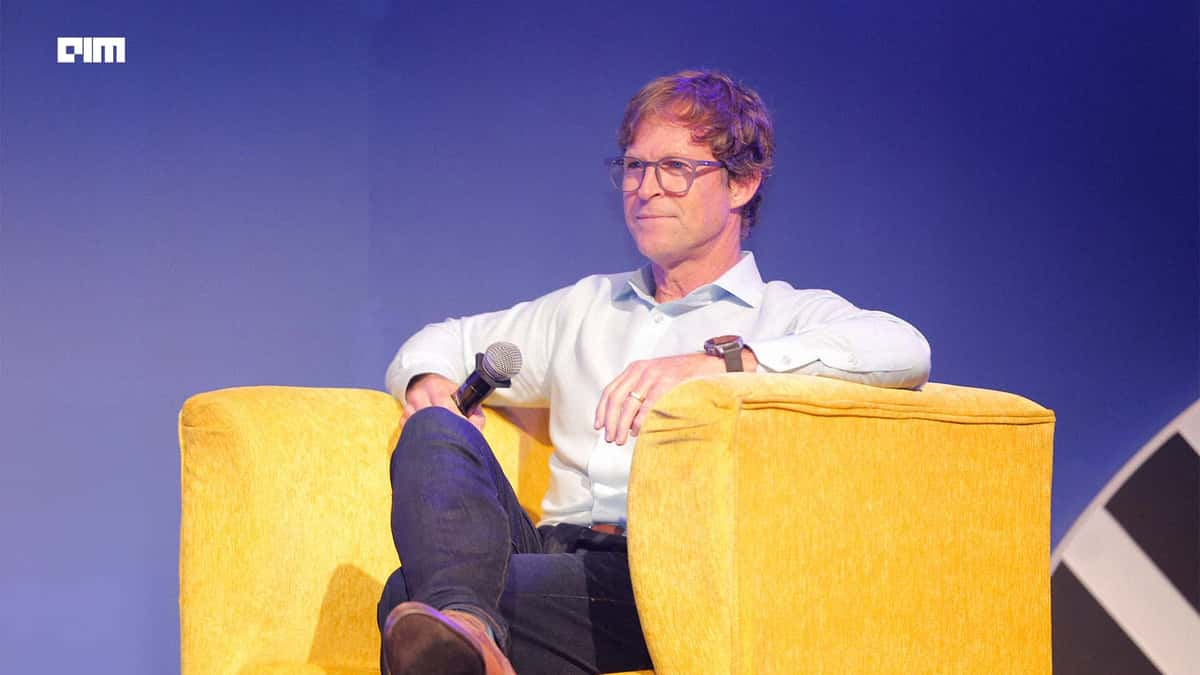
Ace cricketer Jonty Rhodes had a field day at Cypher 2023. The retired South African player and legendary fielder, who currently coaches IPL teams, was in high spirits reminiscing about the time he played the sport, comparing it with how the game has changed over the years.
“It is insane how the game has changed in most capacities. I remember Bob Woolmer was the first coach who used a laptop, he would flip it out and begin analysing the opposition,” he said. The beginning of technology in cricket was a very basic exercise then, but now the statistics and figures are used in everything from coaching to how players are chosen, he explained.
Using technology in sports isn’t new. In cricket, which has more pauses in between the game as compared to football, for example, technology has calculated the statistics of every aspect of the game, and more so now. Jonty said, “Cricket was not very driven by statistics until now, like when Virat Kohli comes up to bat, the opposition will employ a left arm bowler.” This is because of the statistics show that Virat gets out against left arm spin more often than not. That’s what the sport has become now.
AI and Coaching
The analytics in cricket has moved beyond looking at individual players to finding patterns within the team. As a part of the coaching staff, he said, “We look at the power play, the middle section and the death overs whose patterns we look at separately and together. The strike rate, number of runs scored and the number of wickets etc are considered, and that's how we build strategies for our players.”
For example, if a minimum score of 45-50 hasn’t been achieved in the powerplay with a loss of less than three wickets then it becomes incredibly difficult to make up for it in the middle section, he explained. The teams strategies are based on different factors, the conditions of the day, who the opposition team is, what is the condition of the team collectively and each of the players etc.
“I think there is still a lot of potential in tapping personal player data,” Jonty said. There is a lot of data on the player’s physical exertion, from the watches and vests which helps not only in the training but also analysing the recovery rate of each player.
“We especially saw that during the pandemic when players had to train in a bubble which is the worst way to train for a cricketer. And what's interesting for me is, I'm sort of seeing and reading technology that gives you neurological feedback of the player,” Rhodes said.
As a coach, he says, he is more interested in bringing out the best in the players for which it is essential to know where they stand. “The neurological feedback can change how we approach training the player. How to help them level their emotional ups and downs from the pressure of the game, is something we don’t have yet, but will take the game to the next level,” he said.
Allure of the game
Beyond the data and analytics, the game is about the instinct of the players who have more experience. The coach doesn’t have to constantly check the statistics of the players because a lot of factors are unknown. “When I first faced Inzamam-ul-Haq, I had never hit a wicket like that before but in that moment it felt right,” he said.
Frankly, there is indeed some fear of the whole thing becoming too analytical or dependent on technology in a way that it takes the charm away from the game. “When a surprise element pops up, which is quite often, what we depend upon is how prepared the team is. There are no substitutes for that,” Jonty explained.
The evolution of data from the first IPL in 2008-2009 to now is exponential. “But the thing to remember is that we only needed a couple of pieces of advice or information to make a difference to how we practise or approach the game and that is true even now,” he said.
Data and analytics can’t take away the human element. “When new players who don’t have the stats and career yet are chosen, they’re not done so with an excel sheet but an instinct of their potential,” he wrapped up.
- AI Can Be Cyborg or Centaur. But Can Enterprises Monetise It?
- AMD’s Server CPU Business Faces a New AI Boom
- How an Engineer Is Using AI to Bridge the Accessible Education Gap
- AI Agents are Making Human Customer Service a Specialist Job
- Why Nandan Nilekani-Backed F2A Believes India's Investment Opportunity Lies in Edge AI
- India Needs to Build the AI 'Brain' for Robotics, Not Just Import Hardware