
5 min
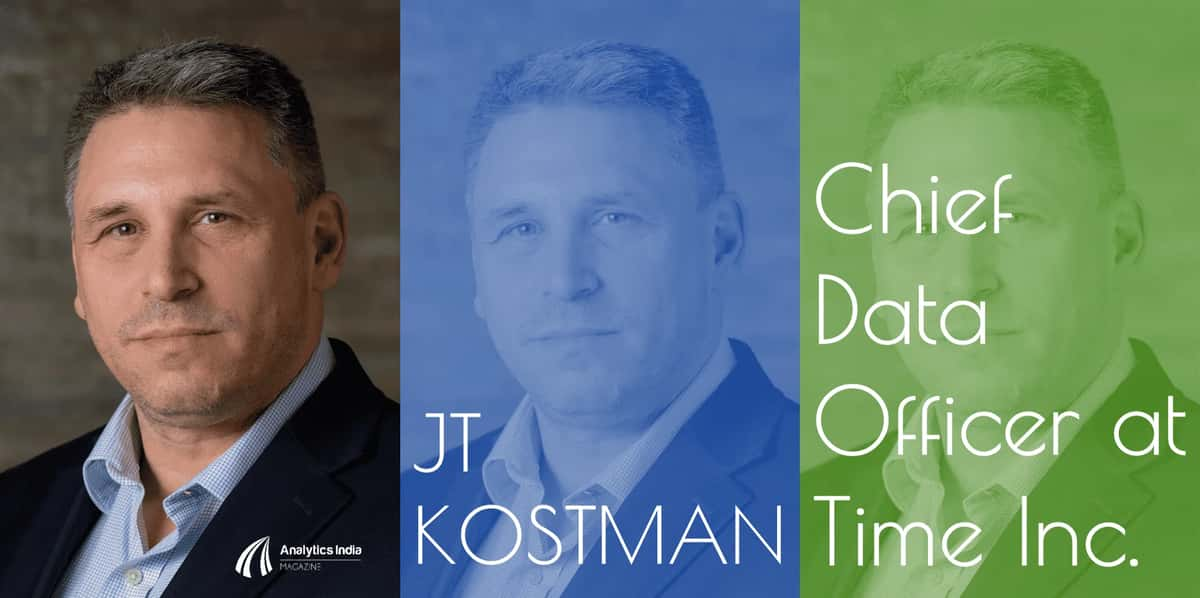
Dr. JT Kostman is a Data Scientist, Mathematician and Psychologist – and the Chief Data Officer for Time Inc. Over the past 20+ years JT has provided data-driven insights into human behavior for organizations ranging from Fortune 500 companies to U.S. Intelligence Agencies.
At Time Inc. he leads a rapidly growing global organization of Data Scientists, Data Miners, Strategic Analysts, and Digital Media Marketers who are developing cutting-edge capabilities that are revolutionizing Digital Media Marketing, Data Mining, Predictive Analytics and Consumer Insights.
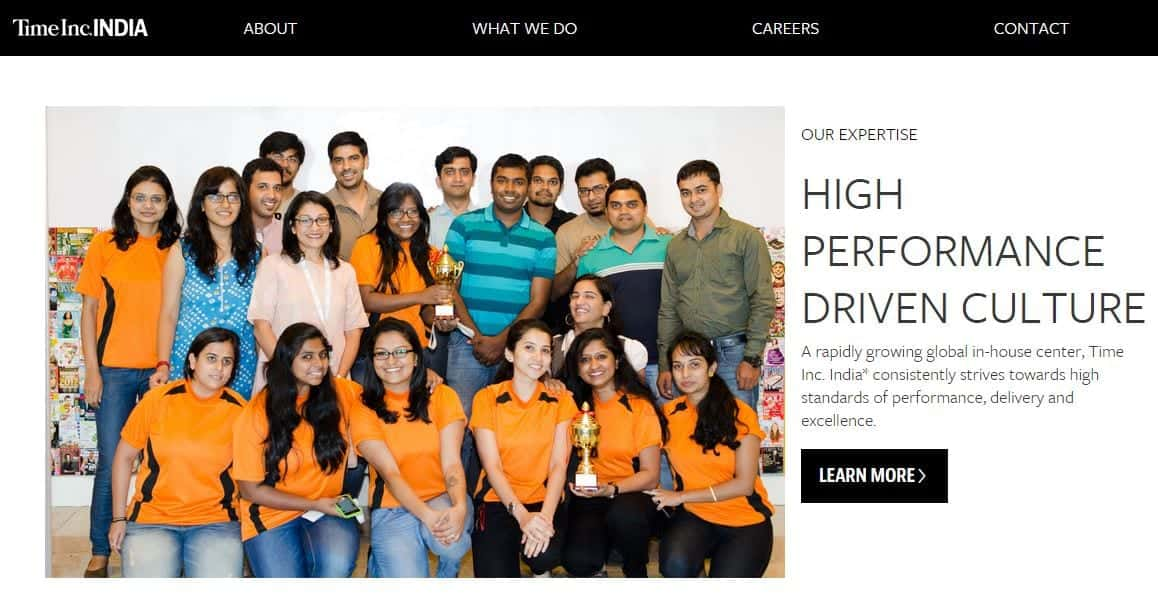
We talk to JT on how a leading publishing house has successfully adopted analytics and how is India being leveraged within this initiative.
[dropcap size="2"]AIM[/dropcap]Analytics India Magazine: Thanks JT for this interview with us. Tell us more about Analytics at Time Inc.?
[dropcap size="2"]JT[/dropcap]JT Kostman: Our CEO, Joe Ripp, has been steadfast in his championing of data and analytics at Time Inc. He has made quite clear to our executives, employees, and investors that data and analytics are central to our value proposition – and that data and analytics should be at the core of every decision we make and every action we take. Data is considered to be both one of our most valuable assets and also a catalyst for creating value in all areas of our business.
To avoid the frustrations and obstacles that are most common to cohering, integrating, and maximally leveraging data, our CEO likewise made clear to the organization that the CDO’s team owns all the data at Time Inc., including all data generated or provided by our various business units, partners, and vendors. Where in most organizations there is a constant battle for the CDO to be able to gain access to the data analysts need to succeed, at Time Inc. the CEO has resolved that challenge definitively.
AIM: Analytics at a leading publishing organization appears like a novel idea. What is the need of analytics at Time?
JT: Publishing has historically been a somewhat polarized profession, with an artificial demarcation between journalists on the one hand, and the business folks on the other; a structure we lovingly refer to in publishing as “Church and State”. When Joe Ripp became CEO of Time Inc. he changed that model – and as a result, we are fundamentally changing our industry. The only metrics publishers used to care about was circulation and profit on the one hand, and the number of Pulitzer prizes and similar awards on the other. [quote]By collecting vast amounts of data and predicating our decisions on analyses and not just opinions, we are able to make considerably more sound decisions – and continually shift our sails to take advantage of prevailing winds.[/quote]
AIM: ok, and what are some of the analytics solutions that you work on?
JT: Our group is intimately involved in nearly every critical aspect of the business. The areas we support include, but are not limited to:
 AIM: Anything else you wish to add?
JT: The future of analytics is still up for grabs. Given the remarkable progress India has made over the past few decades as a digital and data powerhouse, I firmly believe that future can be based in Bangalore and Hyderabad. Whether or not that comes to be will ultimately be decided by the next generation of Indian analysts – and the extent to which they accept the challenge and come to believe India is the future of analytics: Tat tvam asi. Though art that.
- Evolving our AdTech capabilities through sophisticated audience analyses, segmentation models, programmatic capabilities, and the ability to better understand the needs and interests of our audiences;
- We are presently developing a Data Driven Editorial capability that will help our editors and journalists better understand their audience and evaluate the extent to which our content resonates with various audience segments;
- Our team has done considerable work in modeling the behaviors and preferences of subscribers, newsstand purchasers, and online audiences to develop audience insights that transcend any that are otherwise available in the market;
- We have likewise developed metrics to help inform numerous operational aspects of the business for the purpose of increasing profitability and decreasing expenditures.
- The MapReduce paradigm and NoSQL approaches will continue to predominate as traditional RDB thinking continues to drive toward obsolescence.
- We will increasingly see what we now consider to be “advanced analytics” become fundamental to virtually all medium and large businesses that want to remain competitive. What is now seen as an analytic advantage will increasingly become a matter of survival.
- As much of an impact as Moore’s law will continue to have on processing power and speed over the next few years, those benefits will increasingly become asymptotic; and I suspect those benefits will continue to be dwarfed by the advances that are simultaneously being made in algorithm development. Solving a complex problem more simply will always trump the ability to race to a less elegant solution. Many of the techniques that are now part of the analyst’s basic toolkit would have been impossible even a few years ago, but for the speed at which the analyses can be conducted – but as fast as processing power continues to increase, the best tool in the analyst’s arsenal will always be that grey squishy wetware they keep between their ears.
AIM: Anything else you wish to add?
JT: The future of analytics is still up for grabs. Given the remarkable progress India has made over the past few decades as a digital and data powerhouse, I firmly believe that future can be based in Bangalore and Hyderabad. Whether or not that comes to be will ultimately be decided by the next generation of Indian analysts – and the extent to which they accept the challenge and come to believe India is the future of analytics: Tat tvam asi. Though art that.- Enmovil Plans to Quadruple FDE Team as Enterprise AI Hiring Moves Beyond Coding
- Does the World Need a New GitHub?
- Can India’s AI Boom Reach Bharat?
- AI's Next Agritech Frontier Is India's Fragmented Supply Chain
- India’s Frontier AI Race Gets a 240M Model That Beats Liquid AI
- The AI Slowdown Narrative Doesn’t Reflect Enterprise Reality