Key takeaways
- AI and machine learning are increasingly utilised in policing and defence to enhance surveillance and maintain order.
- There is a rising trend in global violence and conflict, as noted by the UN Secretary-General.
- AI and big data initiatives, such as those by UN Global Pulse, aim to support sustainable development goals in conflict-affected regions.
- The use of diverse data sources helps understand public sentiment and the impacts of humanitarian crises.
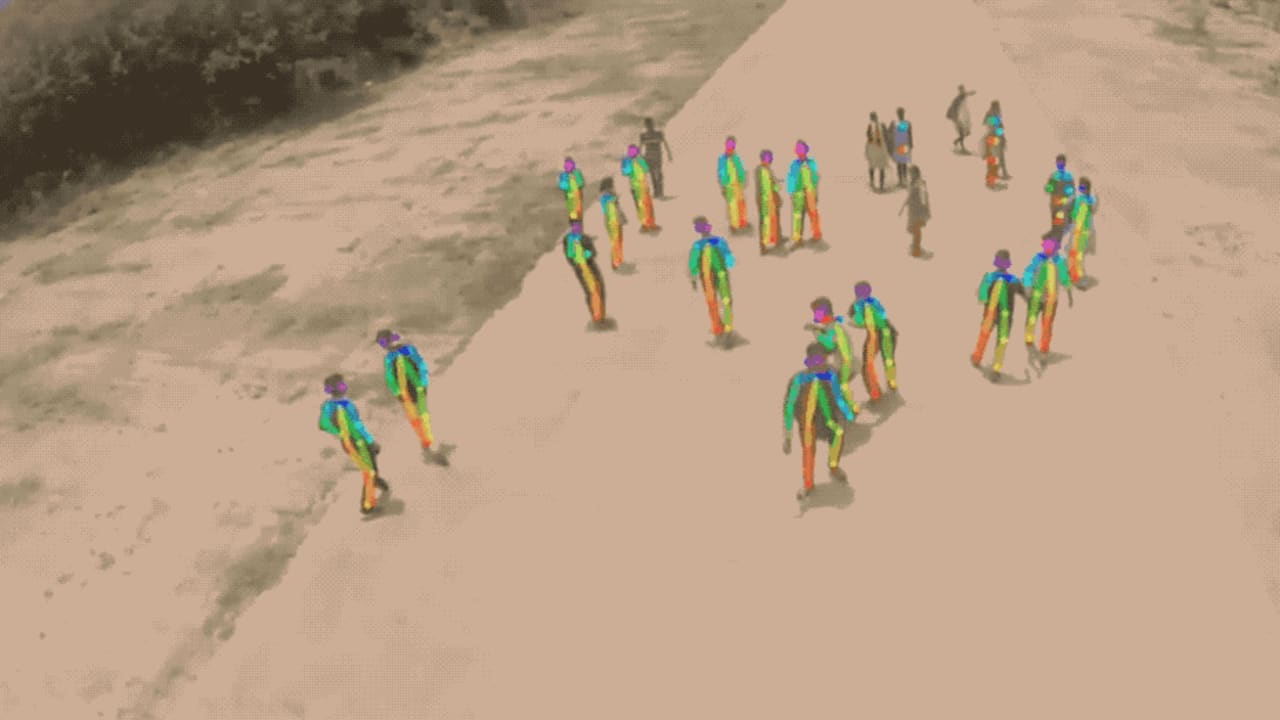 Later, the researchers applied estimates like accurate human pose estimation, real-time identification, aerial violent individual data sets, which combines the information of 5124 individuals engaged in violent activities to determine the outbreak.
The researcher further highlighted that the systems proved to be a success with 84. 44 per cent accuracy. It added that it in case of ATM theft, the systems were able to recognise robberies with 96 per cent. "The proposed DSS framework outperforms the state-of-the-art technique on the AVI dataset. This framework will be instrumental in detecting individuals engaged in violent activities in public areas or large gatherings," the researchers said in the paper.
Can AI Resolve India's Caste Discrimination Problem?
One of the biggest and most prevalent issues that India is facing even in the 21st century is the caste inequalities. For Dr BR Ambedkar's 127th birth celebrations at UN, the theme of the celebration was Artificial Intelligence for Humanity and the role of it in eradicating caste-based inequalities and violence that is prevalent across India. The commemoration saw the participation of top leadership from Google, Facebook, IBM and Microsoft to discuss how tech giants can use capabilities of AI and machine learning in determining caste-based violence and how they can tackle the issue. "AI if used properly can be the main driver to reduce inequalities as it has the ability to create and protect much-needed safe zone ie, the AI prediction of caste violence by zip code, or caste group can provide tools to develop preventive measures to stop caste violence similar to the western world where they are using 'crime maps' or 'diseases map'," said Deelip Mhaske of the Foundation for Human Horizon-USA, the primary organisers of the event. Mhaske also added that by combining Geographic Information System, census data and criminal data, AI can zero in on areas that are highly polarised and are likely to witness caste-based violence. Though it is too early to tell whether technology like AI can uproot caste-system, which is deeply intrinsic in the India society, ideas like this is a welcome change as we attempt to tackle such social-evils with the power of new-age technology.Spotted an error? Tell our editors. Read our editorial standards and corrections.