Key takeaways
- Amazon introduced the AWS Inferentia chip aimed at enhancing machine learning inference capabilities.
- The chip, developed by Annapurna Labs, targets larger workloads requiring low latency and high performance.
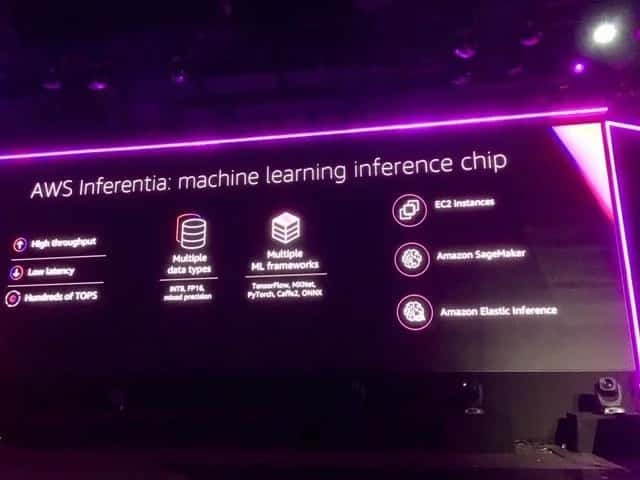
- AWS Inferentia supports various machine learning frameworks and data types, offering substantial processing power.
- The launch is not a move to compete with traditional chip manufacturers but signals Amazon's hardware ambitions.
- The decision to create specific workload chips raises questions about the need for general-purpose processors in cloud services.
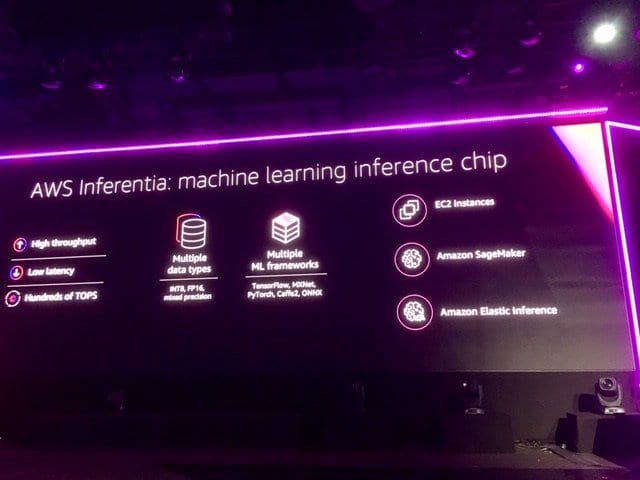 The biggest cloud provider Amazon launched a machine learning inference chip called AWS Inferentia at the AWS re:Invent conference last week. It has been designed by Annapurna Labs an Amazon-owned Israeli company which is at the forefront of building next-generation semiconductor systems. The industry cloud leader has claimed that the chip is geared at larger workloads which consume entire GPUs or require lower latency.
According to the news statement, the chip provides hundreds of teraflops per chip and thousands of teraflops per Amazon EC2 instance for multiple frameworks, including TensorFlow, Apache MXNet and PyTorch, and multiple data types, including INT-8 and mixed precision FP-16 and bfloat16.
The release of the chip is not a direct competition to NVIDIA, Intel or AMD, since Amazon will not sell the chips commercially, but only to their cloud customers. However, the release is an indication of Amazon’s intention of deepening its hardware muscle and their take on Google Cloud which released a third generation TPU.
Experts are wondering why Amazon has built chips which are designed for specific workloads when general-purpose processors can support a wider class of workloads. Hardware specialisation can help enterprises provide better services to their customers at a lower latency. It is also believed that the move will also help Amazon attract more developers to its AWS platform by broadening its range of tools and services.
The chip is aimed at inference — the part where the work actually gets done. While training has been receiving a lot of attention and has been pegged as a big part of the machine learning process, inference is what powers the core machine learning services — like object recognition in videos, recognising speech in speech recognition and text in text recognition. Inference drives core AWS ML services like Translate, Poly and Lex.