
5 min
 One of the questions marketing professionals (or campaign managers) ask quite often is “What’s a good open rate for an e-mail?” or “What open and click percentage should one aspire for ideally?” Marketing consultants dread this question as the usual answer is “It depends”, followed by an explanation that one should look at internal or industry benchmarks.
The marketer expects a definite number while the marketing consultants most often have none. The rationale behind such a reply stems from the fact that one should not look at open rates in isolation. One should look at whether the response rates are increasing/decreasing vis-à-vis last year/half year etc. How is it trending over a period of time? Imagine an acquired database that the marketer mails to, a 1% response might be a good one to get while a campaign say co-branded by an educational institute and sent to an alumni network, a 40% response rate will also be deemed low. Thus, the open rates work best as an in-house benchmark to track over time, because it can only signal a progress or problems with customer engagement.
Open rates tell half the story
The open rates tell a marketer half the story anyway. What the marketer must have in mind is to calculate the overall conversion or the desired outcome expected from an e-mail marketing campaign. So, one of the metrics that the marketer must have to define a successful e-mail marketing campaign entails both response and conversion (Response Rate% x Conversion Rate%). One cannot be seen independent of each other.Developing Key components of e-marketing strategy
The marketer, these days, is under constant pressure from the product or business teams of the organization as the cost and effort for sending direct e-mail communication has come down rather steeply over time. Since the cost of sending an e-mail is miniscule compared to the commercial benefit it can drive, why not send a mail? What the business may not realize is the impact of the ‘decay effect’ of e-mail marketing campaigns and thus the need to develop a contact policy by the companyGetting your strategy of Email marketing right
In order to maximize the chances of their e-mail marketing campaign, here are some pointers marketers must watch out for:-- CUSTOMERSINGLE VIEW
- CUSTOMER UNDERSTANDING
- BUILDING CUSTOMER PROFILES
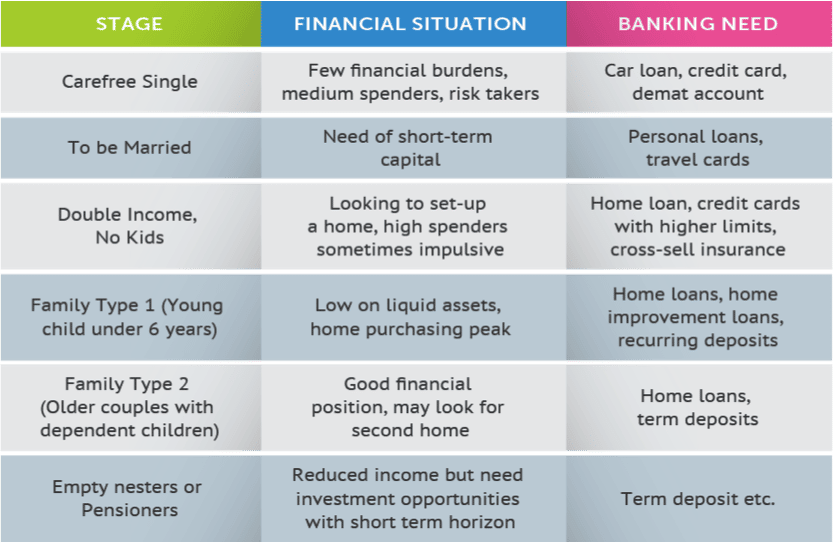 The marketer basis the customer-based understanding can create the lifecycle on say the risk appetite of the customer or maybe on the propensity to try newly launched product or offers. How these get weaved-in into the e-mail marketing campaign strategy is a critical part of the success of campaign itself.
- CONSISTENCY IN COMMUNICATION ACROSS CHANNELS
Summary
India is going through an interesting phase currently with Indian marketers believing in the power of marketing technology and marketing automation through e-mail marketing and thus increasing their marketing investments on such digital channels. E-mail campaign-led programs remain a significantly more effective and cost optimal way to acquire customers compared to any other digital channels of communication. Number of customers with e-mail is rising, however, the time spent per customer on e-mail shows a downward trend with alternate channels like mobile app and notifications on the rise. Thus the challenge for the current day marketer is to create an interest in the mind of customer right from pre-planning the e-mail campaign to the first touch point (when the e-mail lands in the inbox) to when the journey ends (marketing objective is achieved). Marketers need to look beyond clicks and at the entire life stage of the customer across such campaigns.- The AI Slowdown Narrative Doesn’t Reflect Enterprise Reality
- India’s Enterprises are Scaling AI. Is the Infrastructure Ready?
- Industry Wants Faster Approvals and Cheaper Power in India’s Data Centre Policy
- Inside Jio Platforms: Its Tech Bets, Loss-Making Subsidiaries and Hidden Risks
- India’s GCCs to Add 1.4 Million Jobs, Drive 170 Million Sq. Ft. Office Demand by 2031
- AI Can Be Cyborg or Centaur. But Can Enterprises Monetise It?