
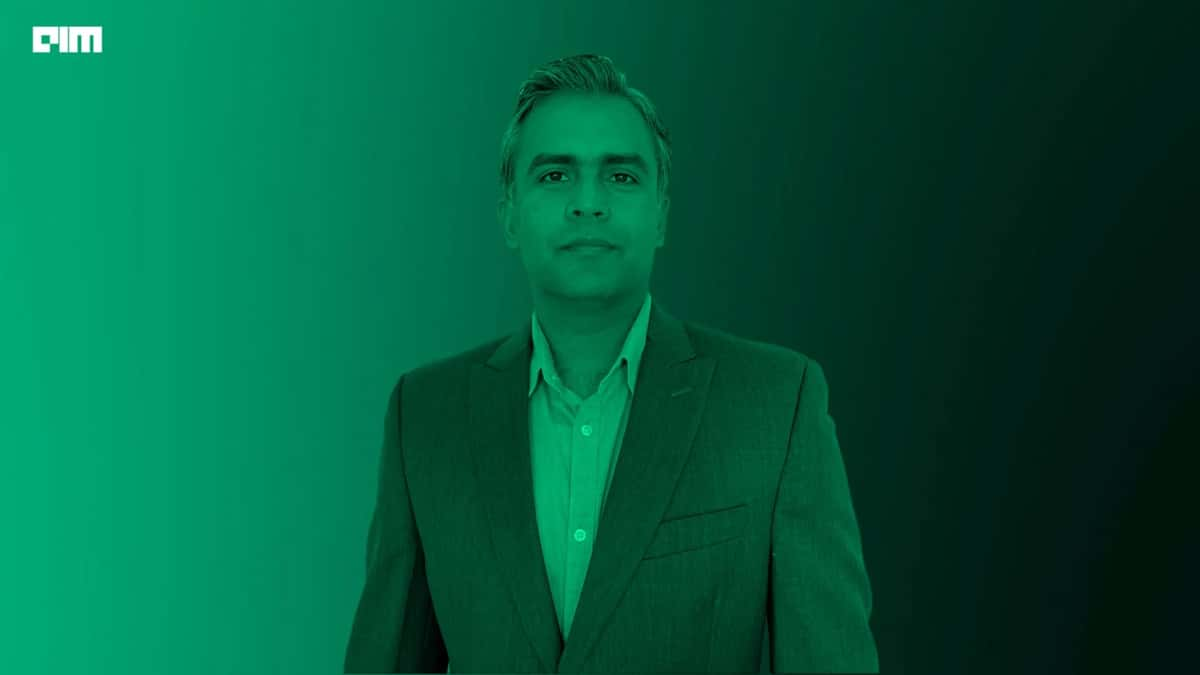
With over 15 years of experience in software engineering, Sandeep Shekhawat, director of engineering at Walmart Global Tech, USA, has worked across companies – Meta, WhatsApp, Apple, Yahoo! and Hewlett Packard – advising and developing IoT-based retail tech solutions and native cloud-based systems.
Analytics India Magazine interacted with Shekhawat, diving into his journey as a technical leader.
Shekhawat currently leads the associate productivity teams responsible for putting smarter apps and technologies in the hands of Walmart associates for smoother store operations using digital transformation. With the deployment of technology such as IoT and AI, his role is to bring efficiency to the firm’s operations.
“The role of technology is critical in everything we do at the store. Right from the team checking in to the store, seeing their schedules for the tasks assigned to more sophisticated apps that identify where pricing is missing. We use AI-based technology to identify where items are missing and replenish them. Running a store is a complex operation and doing it at Walmart scale is challenging. By using tech, we want to improve our associates' productivity in the store and meet them where they are.”
The engineer feels that having a great collaboration between product and design is critical for success, for strategy, ideation and goal setting. “To keep my calendar sane, I do follow the rule of going through my meetings the week before to move out meetings that could be done offline or over email. Second, is to ensure that I am respecting my engineers’ focus time.”
Deep dive into the AI Journey
Shekhawat says that AI/ML piqued his interest when he enrolled in the course Empirical Methods in Machine Learning and Data Mining at Cornell University. “I was exposed to neural networks then and the one thing that stood out was how technology had the potential to mimic human neurons. Over the first few years of my professional journey, I took on smaller ML projects. Finally, I got an opportunity to work on an enterprise-grade learning platform at Apple.”
Shekhawat states that the platform had millions of users with both enterprise and customers. “I was able to design and implement the content recommendation engine based on users past usage, content importance and other factors. I continued my work in the AI/ML area and worked on developing models that were deployed in stores to help identify store layout and inaccuracies in it by processing store images taken from surveys or store-submitted pictures.” Ever since, Shekhawat has continued his interests in this domain area by trying to find opportunities to integrate AI as required in the company’s projects.
Shekhawat shares his insights on solving an AI problem. “My approach is very similar to any other problem that we solve. Firstly, I try to understand the problem. Second is the goals we have set for ourselves. If we do not have specific goals, we might be chasing an outcome which we cannot accomplish. So clearly defined goals are very critical. Lastly, with ML problems quality training data is huge. Sometimes we spend months just collecting, cleaning and prepping our training data before we even write our first line of the ML model.”
During the pandemic, most tech companies were much better prepared to handle the work environment change as compared to other industries, Shekhawat feels.
Sharing a few leadership learnings from his experience in the tech industry, he said, “As a leader you always have to listen to your teams. Leaders can do that effectively by trying to adopt a bottom-to-top culture in your teams. By bottom-to-top culture, I mean prioritise work and projects that the team likes to work on, which aligns with the team's goals. This helps engineers with picking projects that they like the most and keeps them motivated. Overall I think the best way to be successful is by investing in your engineers' growth by identifying the right skillset and finding projects that will help further their growth.”
Contributions to the technological innovations
Shekhawat has been at hackathons both as a participant and as a judge. He has also been mentoring a few coding bootcamps and helping the community of next-gen engineers be ready for software tech. He is also an active contributor on IoT and has been a panel member at conferences.
“I still feel the excitement of churning out codes and making things work in a collaborative and hacky way. I love the enthusiasm people bring to hackathons and conferences. A key to running a successful hackathon is clearly articulating the idea and theme, providing support (through experts) to newcomers and providing the right data set (if ML related) to the participants so that the ideas are successful.”
Sandeep Shekhawat, director of engineering at Walmart Global Tech
He adds that the journey of being a tech leader wasn’t smooth. “I have been fortunate to have not encountered the ‘glass ceiling’ in my career. Like any technical leader, I have had to reinvent myself a few times to get to where I am. I started off as a database engineer because that's what I liked. However the opportunities in my company were more suited for Java and backend development so I pivoted. As mobile applications took off, I had to adjust and understand the mobile development world. Finally as you grow in the tech ladder you need to become good at asking the right questions and going deep to make sure the team is on the right path. You should be able to see a design, plan, or architecture and get to the core issue quickly.”
At Apple, he was responsible for deploying IoT based digital pricing solutions in all of Apple retail and channel stores worldwide. “One of the highlights of my time at Apple was that as an engineering manager, I got to be part of the first launch of Apple Watch and developed a few key apps for the same. I was also a new EM back then so forming my team and recruiting new talent was a big challenge. The launching of integrated affordability payment solutions in Apple’s channel stores helped customers purchase iPhones in India by splitting payments as an EMI without overwhelming paperwork.”
Shekhawat says that he only sees that the adoption of AI/ML will continue to grow throughout different sectors. “Be it healthcare, self driving, consumer industry or tech industry, AI has a huge role to play. In some areas adoption and advancement would be much faster than others. There is a lot of work being done in the automation world and I feel that that's the right industry for disruption through AI/ML.”

- India’s GCCs to Add 1.4 Million Jobs, Drive 170 Million Sq. Ft. Office Demand by 2031
- AI Can Be Cyborg or Centaur. But Can Enterprises Monetise It?
- AMD’s Server CPU Business Faces a New AI Boom
- How an Engineer Is Using AI to Bridge the Accessible Education Gap
- AI Agents are Making Human Customer Service a Specialist Job
- Why Nandan Nilekani-Backed F2A Believes India's Investment Opportunity Lies in Edge AI