Key takeaways
- Amazon has positioned itself as a leader in the data lake market with the launch of AWS Lake Formation.
- Data lakes facilitate the management of large datasets, including unstructured and raw data, enhancing decision-making processes for businesses.
- AWS Lake Formation automates several steps involved in creating a data lake, streamlining data collection and preparation for analytics.
- The service allows organisations to efficiently integrate data from various sources into their data lakes.
 Collecting and processing data to make decisions is a crucial part of businesses. This also means dealing and managing big data with the help of data lakes. It makes it easier to manage large quantities of data allowing companies to retain more information — including unstructured and raw data. It also allows companies to run their analytics and machine learning algorithms on large datasets to better discover patterns.
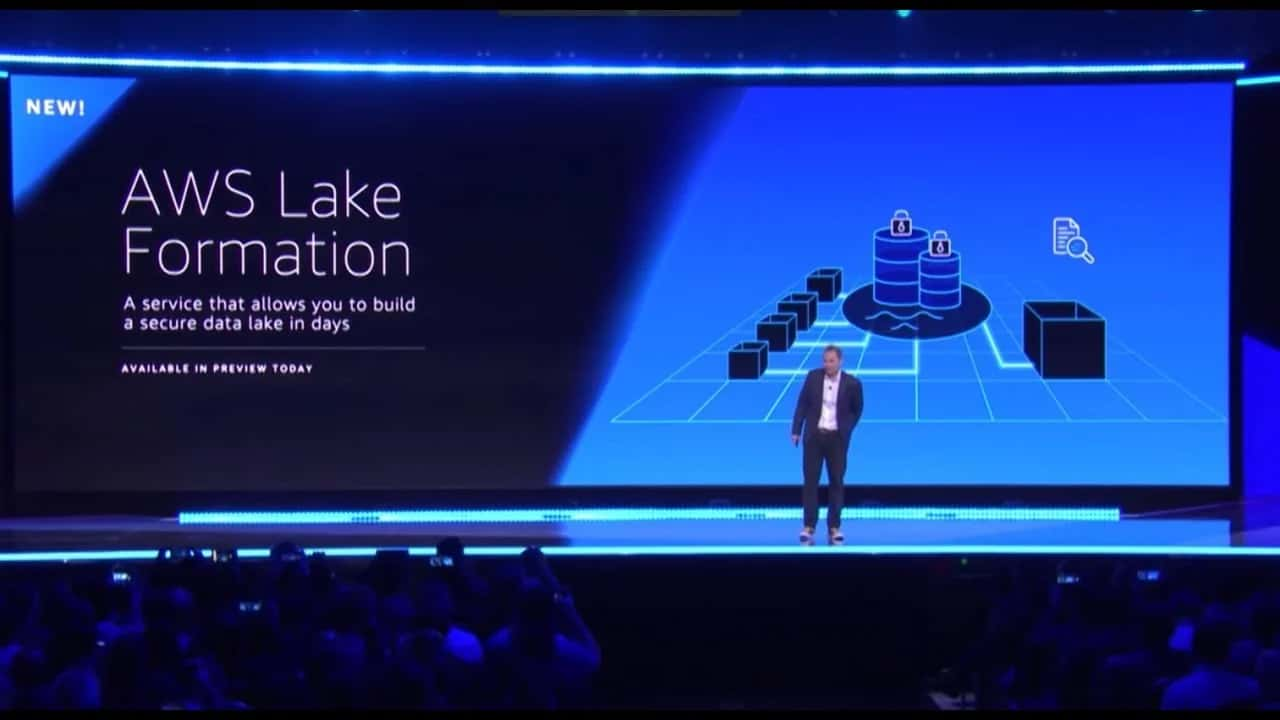
AWS Lake Formation, which is a fully-managed service by Amazon facilitating building, securing and management of data lakes, recently announced that it is now “generally available” — meaning that it is now available for developers to purchase. It comes as a breath of fresh air for those with large datasets to help them deal with data more efficiently.
Amazon Lake Formation was announced in November last year at the AWS re:Invent conference in Las Vegas. It brings about automation in a number of steps typically involved in creating a data lake such as collecting, cleaning, deduplicating, cataloguing data and making said data available for analytics in provisioned and configured storage. It also lets users bring data into a data lake from a range of sources.
What Would This Mean For Organisations?
While the concept of data lakes has been around for a long time, setting it up to store vast amounts of raw data in its native formats has never been easy. With the launch of AWS Lake Formation last year, Amazon aimed at allowing developers to create a secure data lake without much hassle. The usual process requires cumbersome process such as configuring storage, moving data, adding metadata, cleaning the data, setting up the right policies and more. This is a lot of work for the companies and it might take them several months to set up a data lake. Lake Formation makes it easy by handling all these complications required to create a data lake with just a few clicks. It sets up the right tags, cleans up and deduplicates the data automatically. It also provides admins with a list of security policies, governance, and auditing across multiple analytics engines to help secure that data. It also plans to enable engineers to analyse data within those data sets using their choice of AWS analytics and machine learning services such as Amazon Redshift, Amazon Athena, Amazon QuickSight, Amazon SageMaker and more. In a nutshell:- It reduces the heavy lifting and automates the manual, time-consuming steps, like provisioning and configuring storage, crawling the data to extract schema and metadata tags
- It automatically optimises the partitioning of data, transforming data into formats like Apache Parquet and ORC that are ideal for analytics
- It cleans and deduplicates data using machine learning to improve data consistency and quality
- It provides a single, centralised place to set up and manage data access policies