Key takeaways
- Object detection systems are prevalent in various applications, but their accuracy raises concerns.
- Flaws in object recognition often stem from poor data collection strategies and inherent biases.
- Misidentification in object recognition can lead to serious consequences, such as accidents involving self-driving cars.
- Researchers are exploring how object recognition varies across different countries and income levels.
- The study highlights cultural differences in perception, exemplified by the correlation of soap in London to a sandwich in Nepal.

Soap In London Is Sandwich In Nepal
In their investigation of current object recognition systems, the authors found that these systems are less effective at recognising household items that are common in non-Western countries or in low-income communities. When used to recognise such items, the error rate of object-recognition systems for households with an income of less than (USD) $50 per month is approximately 10% lower compared to households making more than $3,500 per month
Why Such Inaccuracies
The authors observe that there are two main reasons for the discrepancies surfacing in image classification tasks:- The geographical sampling of image datasets is unrepresentative of the world population distribution and
- Most image datasets were gathered using English as the “base language”.
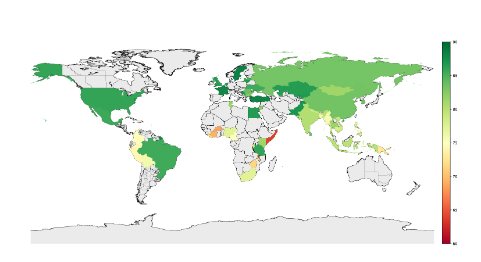 In this choropleth map, red indicates an accuracy of ~60% and green indicates an accuracy of ~90%. High income, highly developed nations like the US had better accuracies with image classification whereas, parts of Eastern Africa were displayed red. The results indicate that the economic status of a location does make a difference in a sample.
Pursuit For Fairness
With great ML deployment comes great responsibility. Studies such as these keep pushing for the fairness in machine learning applications while exposing the lack of diversity in datasets. If there are notable disparities in something as trivial as the image of toothbrush in a well-furnished room and that of outside, then this definitely demands for a prudent evaluation of the existing datasets of dire nature. You can read the full study here.Spotted an error? Tell our editors. Read our editorial standards and corrections.