Key takeaways
- AI has been tested and developed through various games since the early 1950s.
- The University of Manchester created one of the first AI programs for Checkers and Chess.
- Arthur Samuel's work in the 1950s led to the first competitive Checkers AI program.
- In 1990, TD-Gammon showcased reinforcement learning by competing at a championship level in Backgammon.
- Chinook, developed in 1994, marked a significant milestone by defeating a high-ranked Checkers player.
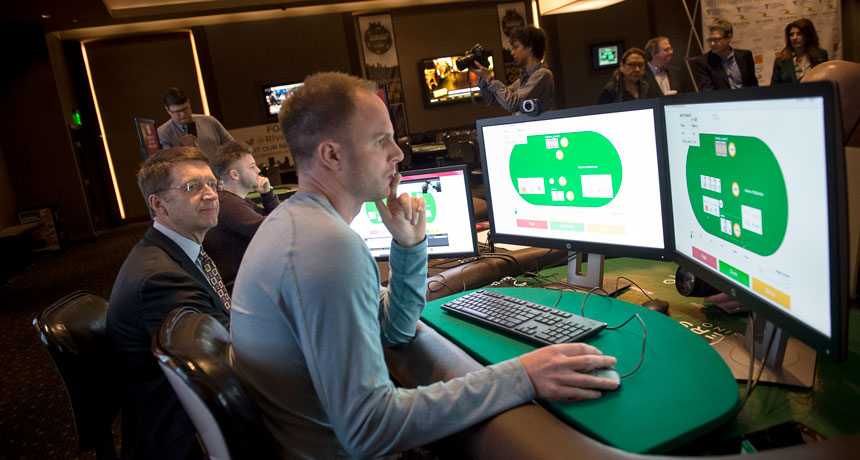
 One of the earliest experiments to have the Turing test is to make AI learn and master games played by humans. Games form the perfect test-bed for AI skills. Today, an AI called Pluribus has thoroughly learnt to play a game of Poker and we can now say that AI has conquered the game. Here is a look at the timeline of all the games that AI have mastered so far.
1951: The first working AI programs were written by the University of Manchester. This computer program which was run on the Ferranti Mark 1 machine had learnt how to play Checkers and Chess.
1952: Arthur Samuel of IBM began working towards the making of the first game-playing program that was capable of competing against human players in the game of Checkers.
1955: Arthur Samuel wrote the program version that learnt to play two years later.
1990: IBM program to learn Backgammon was written by Gerald Tesauro called as TD-Gammon was dedicated to demonstrating the power of reinforcement learning. It showed that an AI with capabilities to compete in a championship-level backgammon game could be built with the technology and the computer programming skills that we had during that time.
1994: A computer programme called Chinook played Checkers. It beat the second-highest rated player Don Lafferty and won the National Tournament of the game in the US with a big margin.
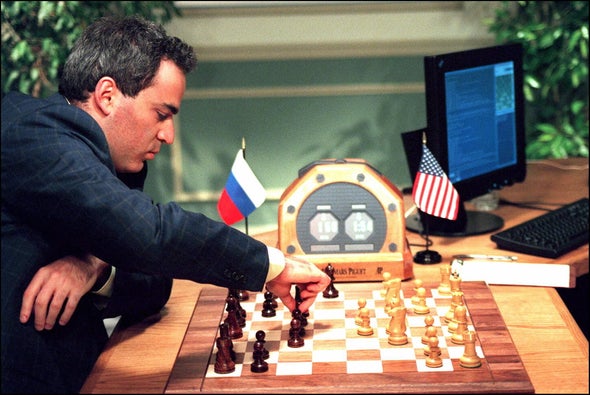
1997: IBM invented the Deep Blue machine which had learnt to play the game of Chess and defeated Garry Kasparov, the world champion of those times. This was the first time that an AI had defeated a world champion in a match play.