
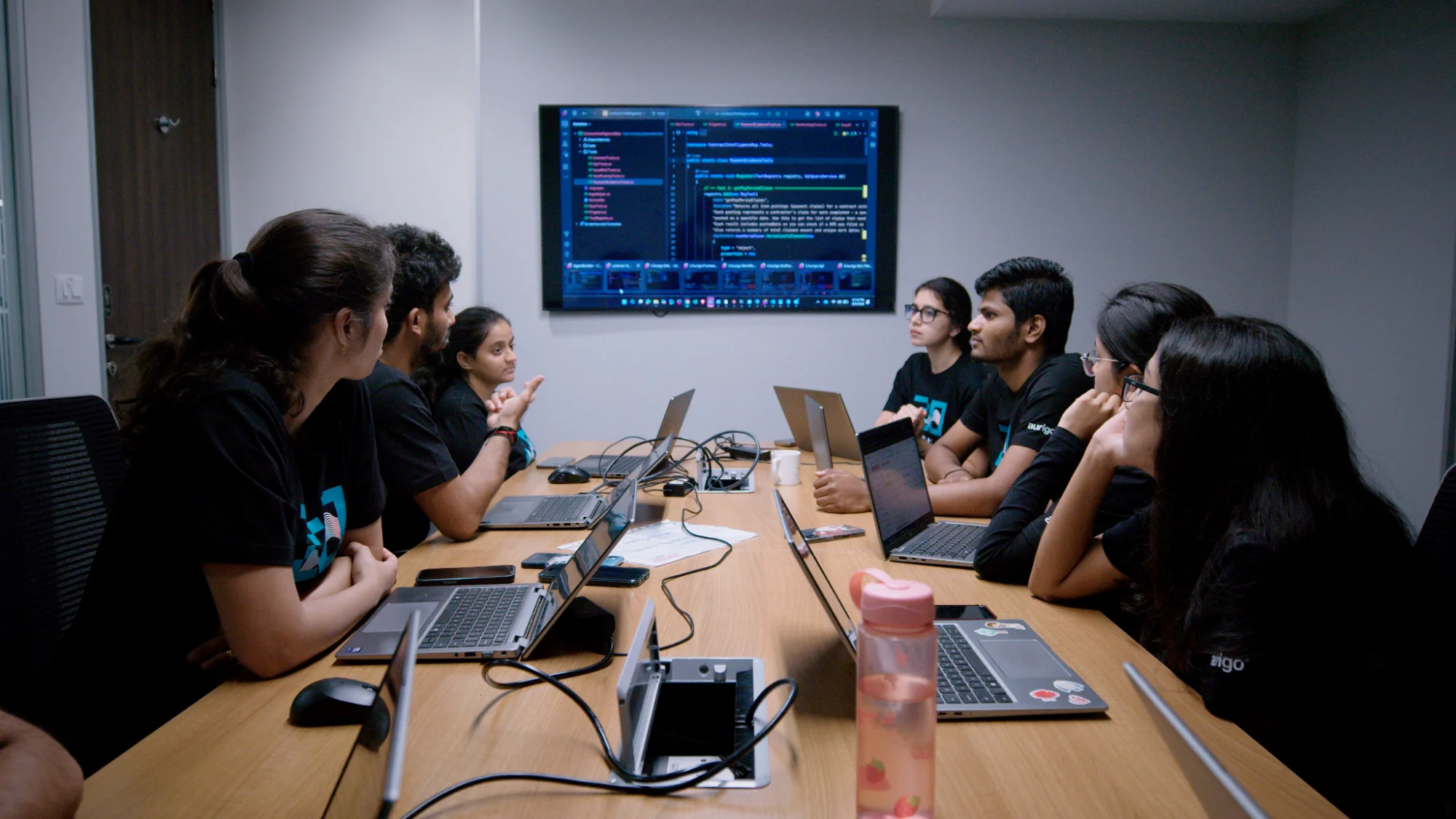
AI adoption inside companies often begins with engineering teams. Aurigo wants it to go much further. On August 6 and 7, the AI-native software company brought together 300 employees, nearly two-thirds of its workforce, for a 24-hour agentic AI hackathon.
Employees were split into 34 teams and given 25 defined problem statements across product, platform, new feature, and internal business automation tracks. But the larger goal was to give people across the organisation hands-on experience building with AI.
Their aim was to enhance AI-savviness across the organisation, regardless of business function. Teams from finance, marketing, and HR participated alongside software engineers, and each function was encouraged to identify where AI agents could solve practical customer or business problems.
Building AI, Not Just Using It
Rather than leaving teams to build broad or hypothetical AI concepts, Aurigo grounded the hackathon in specific problems connected to customer workflows and everyday operations. This gave employees a chance to apply AI to problems the company and its customers face in practice.
The winning team, for instance, built Omnify, a multi-agent system designed for field inspectors. The system converts site images and voice or text observations into Daily Progress Reports (DPRs) and performs quality checks before submission. In the workflow demonstrated during the hackathon, the team reduced DPR creation from one to two hours to around four or five minutes per report. It also reported bringing DPR rejections down from 20% to zero.
The runner-up, Plan2Win, tackled capital-program scenario planning. Users can provide an objective, such as maximising ROI, improving fund utilisation, or minimising carbon emissions, and the agent evaluates millions of possible combinations to identify an optimised capital program. A human approval step remains in place before committing any recommendation.
Second runner-up Documind focused on document management. The team built an agentic workflow that classifies and routes documents, summarises reviews, identifies missed comments and superseded revisions, and makes audit information easier to query. The team estimated the approach could cut a 30-35 day manual submittal cycle by roughly half and reduce audit-package preparation from weeks to minutes.
The winning projects were only part of the story. Across all 34 teams, employees built agents around real customer and business pain points, giving people across functions a chance to move from learning about AI to applying it to problems that matter today.
Giving Employees a Common AI Foundation
The teams did not have to build the underlying AI infrastructure from scratch. Aurigo gave participants access to its Agent Builder, an internal framework that provides a common foundation for developing agentic applications and connecting agents with workflows, Model Context Protocol (MCP) servers, and external AI tools.
Teams also worked with approved technologies, including AWS SageMaker, AWS Bedrock, and Claude models.
“With Agent Builder, everyone across Aurigo had democratized access to a pre-built foundation that gives governance, guardrails, and integrations, enabling them to build faster rather than start from scratch. Our AI-native vision came to life as teams across technology and business functions built agentic AI solutions to address real customer challenges. And the strongest builds secured a path straight into our product roadmap,” said Sanat Mohapatra, Director of Product Engineering at Aurigo.
The hackathon was designed to produce more than prototypes that disappear once the event ends. Top-performing projects can move toward production and potentially become part of Aurigo’s products. Aurigo followed a similar approach after its previous hackathon, when a mobile field-inspection agent developed during the event eventually made its way into the company’s live application. This year, Aurigo is also evaluating some of the strongest innovations for potential commercial patents.
From AI Fluency to a Different Way of Working
The hackathon also reflects a broader shift in how Aurigo wants its teams to work with customers. The company is building toward a Forward Deployed Engineer (FDE) model, where technical teams can work more closely with customer problems and rapidly turn them into deployable solutions.
“A key outcome is laying the foundation for Aurigo’s Forward Deployed Engineer model, with Agent Builder enabling teams to rapidly build, deploy, and scale intelligent capabilities. More importantly, this model shifts the focus from just writing code to understanding customers’ business requirements and architecting solutions to support them,” said Sanat.
At the same time, employees were expected to build within defined AI and compliance guardrails. Projects used synthetic data and incorporated model explainability requirements.
For Aurigo, the larger experiment is about making AI fluency part of how work happens across the company.
As the company moves toward an 'Outcome as a Service' model and looks to agentify more of the work its customers manage today, hackathons like this provide an early proving ground.
They give employees the opportunity to understand where AI can create value, build solutions around real problems, and learn what it takes to move an agent from an idea toward something customers can actually use. Over time, that builds a workforce that can identify where AI matters, architect solutions around those opportunities, and see the strongest ideas make their way into Aurigo’s products.

Your reaction
Discussion
What's your take on this story?
No comments yet — be the first to share your view.