
In October 2025, the Cypher stage hosted a formal debate with a blunt motion: Will India’s IT giants win the AI race—or get disrupted? At the time it was a genuinely open question, and the room could have gone either way. The Indian IT services industry had spent 30 years building the most successful services export business in the country’s history. It had survived Y2K, the dot-com collapse, the global financial crisis and the pandemic. Betting against it had been a losing trade for three decades.
Ten months later, the argument is no longer theoretical. The combined market capitalisation of TCS, Infosys, Wipro, HCLTech and Tech Mahindra has fallen from a record ₹33.71 lakh crore in August 2024 to roughly ₹18.15 lakh crore by July this year—a decline of more than 46%. About ₹15 lakh crore of value, removed in under two years.
This piece scores that debate against what has actually happened since.
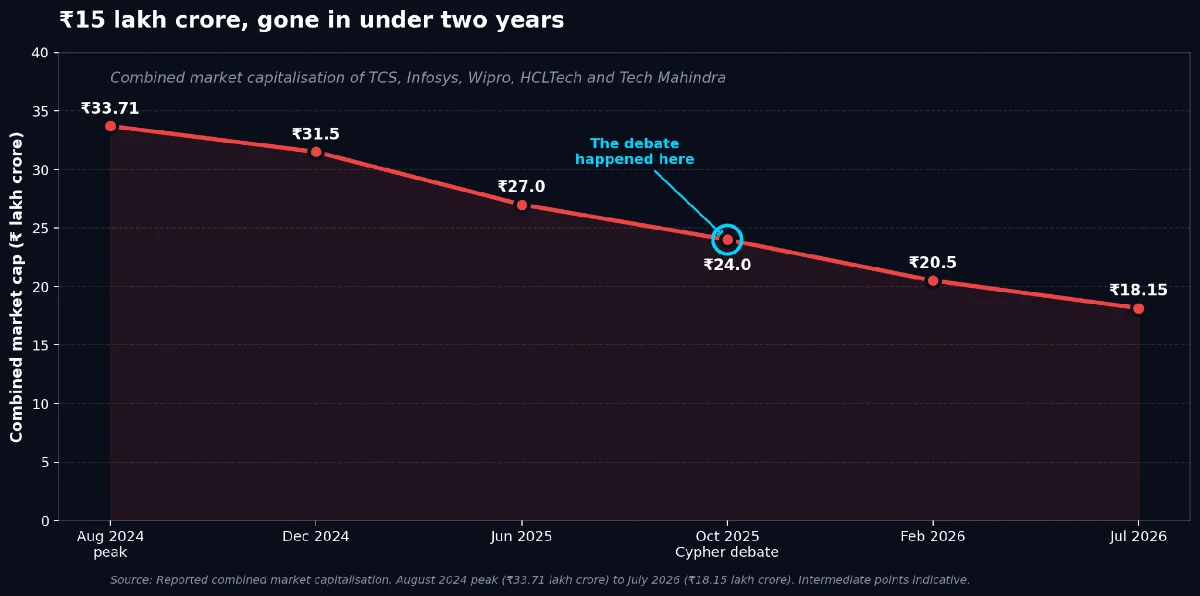
Figure 1: The combined market capitalisation of India’s five largest IT services firms, from the August 2024 peak to July 2026. The Cypher debate took place in October 2025.
What Made This Debate Hard in October 2025
It is worth remembering that the pro-incumbent case was not foolish. It rested on three arguments, each with real weight behind it.
The first was the moat. Three decades of embedded delivery relationships, regulatory knowledge, and institutional trust are not replaced by a model that writes code. The second was that the giants could sell AI themselves—every efficiency gain a client wants becomes a transformation contract someone has to deliver, and these are the firms with the delivery capacity to do it. The third was that scale buys time. Five companies employing millions of people, sitting on substantial cash reserves, have room to retool in a way that a smaller competitor does not.
The disruption case rested on a single structural observation, stated more simply. The Indian IT services model bills for people and time. If AI lets a smaller team deliver the same output, the link between headcount and revenue weakens—and so does pricing power. The work being automated first is precisely the work that was outsourced in the first place. And the entry-level tier, where the pyramid model begins, is the tier that automates soonest.
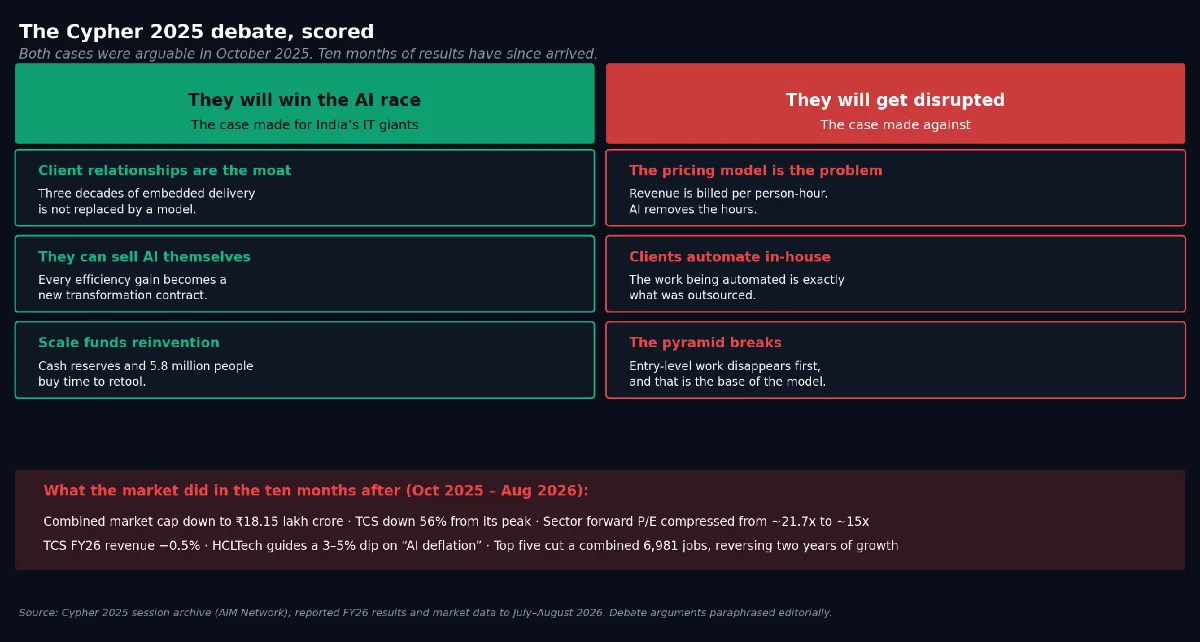
Figure 2: The two cases as they stood in October 2025, and what the ten months since have produced. Debate arguments paraphrased editorially.
What the Market Decided
The market has not been ambiguous. TCS has been hit hardest: the stock is down roughly 56% from its all-time high of ₹4,592.25, reached on 30 August 2024, with market capitalisation falling from a peak of ₹16.47 lakh crore to ₹7.35 lakh crore. Somewhere in that decline, TCS lost its long-running contest with Reliance Industries for the title of India’s most valuable listed company—a symbolic marker of how far sentiment has moved. Infosys has lost close to half its value from a December 2024 peak.
More telling than the price is the multiple. As recently as April, the sector traded at roughly 21.7 times forward earnings, already about 14% below its own five-year average. By July, that had compressed to around 15 times. The market has not merely marked down these companies; it has marked down what a rupee of Indian IT services earnings is worth. In early July the Nifty IT index touched 25,769.80, its lowest level since May 2021.
The selling has also been unusually concentrated around a single word. On June 3, the IT index fell 5.8% in one session—its steepest drop in four months—with TCS down 9%, Infosys 4.3% and Wipro 3.7%. There were no earnings surprises that day and no policy shock. In February, the sector had shed roughly $22.5 billion in a single week on the same anxiety.
What the Companies Themselves Have Said
The most persuasive evidence is not from the market. It is from the management commentary, which has shifted markedly in the last two reporting cycles.
HCLTech has been the most direct. The company reported FY26 revenue growth of 11.2% and a headcount increase of almost 2%—and then guided that revenue would dip between 3% and 5% in the coming year. CEO C Vijayakumar gave the phenomenon a name: AI deflation. He had already framed the shift a quarter earlier, noting that revenue grew 4–5% while headcount did not, and describing productivity rather than people as the lever.
TCS reported FY26 revenue down 0.5% year-on-year in dollar terms, and CEO K Krithivasan acknowledged the same dynamic, calling it degrowth. Wipro’s FY26 revenue declined 0.32%. Infosys CEO Salil Parekh said he expects deflation to become a factor, while predicting continued growth after 3.1% last year. Four CEOs, four different phrasings, one phenomenon.
When the leadership of an industry starts inventing vocabulary for a problem, the problem is real.
The Headcount Signal
For a people-based business, headcount is the honest metric. India’s top five IT services firms cut a combined 6,981 jobs in FY26, reversing two consecutive years of growth.
TCS accounted for the bulk of it, shedding somewhere between 23,000 and 25,000 employees across the year, including a net decline of 11,151 in the December 2025 quarter alone, alongside a stated workforce review targeting around 2% of global headcount. The detail worth sitting with is that TCS’ attrition rate fell to its lowest level in years over the same period. Fewer people were leaving. The company decided fewer were needed.
Fresher hiring tells the same story from the other end. Infosys held a 20,000 fresher target and remained the most active campus recruiter among the top tier, but prioritised AI and cloud-specific profiles. Wipro cut its fresher intake guidance to between 7,500 and 8,000, down from an earlier estimate near 10,000. Meanwhile, AI-skilled freshers are reportedly being offered entry packages of ₹18–22 lakh. The pyramid is not collapsing evenly; it is being rebuilt with a different base.
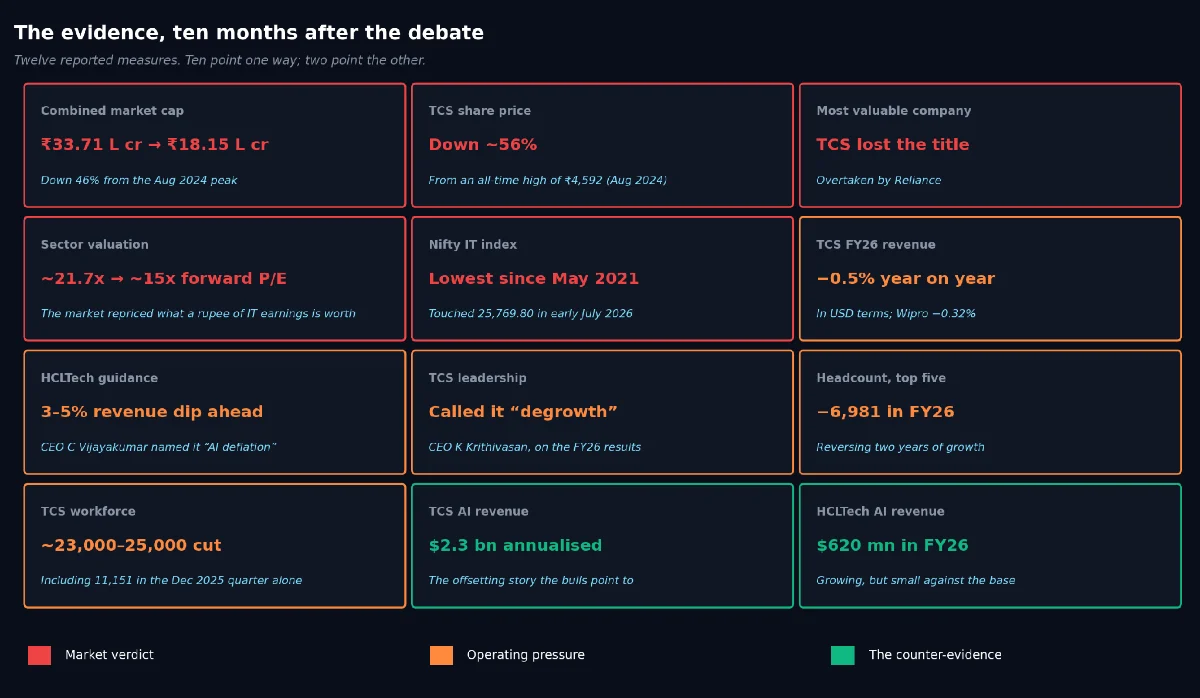
Figure 3: Twelve reported measures from the ten months following the Cypher 2025 debate.
The Case That is Still Standing
An honest scorecard has to include the evidence pointing the other way, and there is some.
TCS reported annualised AI revenue crossing $2.3 billion by the end of Q4 FY26. HCLTech reported Advanced AI revenue of $620 million for the year. Both numbers are growing quickly, and both vindicate the argument that these firms can sell the disruption rather than merely absorb it. HCLTech’s 11.2% FY26 revenue growth is not the performance of a business being dismantled. TCS is also committing roughly $7 billion to Indian data centre capacity—a bet that the infrastructure layer of the AI economy is a business the services giants can own.
It is also true that none of the five has made mass AI-driven layoffs on the scale seen at US technology companies. Revenues, for the most part, are still growing. The market has priced a structural transition that the operating results have not yet fully delivered.
The fair reading is that the disruption case has won the argument so far, but not the war. Ten of the 12 measures point one way. Two point the other, and those two are growing faster in percentage terms than anything else in these businesses. What the next 24 months decide is whether AI revenue compounds faster than legacy revenue deflates. That is the whole question, and nobody has the answer yet.
Why the Debate Mattered Before the Results Did
There is a pattern here worth naming, because this is the second time in a year that a Cypher debate has been settled by events shortly afterwards.
The 2025 edition also staged a formal debate on whether India should build its own AI foundation models rather than rely on Western ones. Four months later, at the India AI Impact Summit, five Indian-built foundation models launched with public funding behind them—a verdict delivered by the national budget. The IT giants motion has been answered on a similar timescale, by the market rather than the state.
That is what a well-chosen debate motion does. It surfaces the question at the moment when it is genuinely contested and before the answer is obvious, which is the only window in which the argument is worth having. A year later, everyone has an opinion and nobody remembers that it was ever uncertain.
What This Means for Cypher 2026
The uncomfortable follow-up question for October is no longer whether the giants get disrupted. It is what the 5.8 million people employed in Indian IT services do next, and which firms come out of the transition owning the AI work rather than losing the legacy work.
Those are the conversations the 2026 programme has to earn its place on. The edition runs October 7–9 at KTPO Whitefield, Bengaluru—the 10th—across three days and three parallel halls, with more than 130 sessions in the full programme and the same Oxford-style debate format that produced the motion this article has just scored. The speaker list is published, and the debates are worth planning your days around: they are the sessions where somebody has to defend a position that may not survive the year.
If you want to see how the 2025 arguments held up, the full session archive is public. If you would rather be in the room when the 2026 versions are argued, passes are here.
About this article
Part of AIM’s editorial series examining Indian enterprise AI through Cypher’s archive. Market and results data are drawn from reported figures to July–August 2026 and were accurate at the time of writing; this sector has moved sharply in both directions, so check current prices before treating any figure here as live. Debate arguments are paraphrased editorially from the public framing of the motion. See cypher.analyticsindiamag.com for the 2026 programme, or get in touch for group bookings.
Further reading
• How Cypher Hosted India’s Sovereign LLM Conversation Before It Became National Policy
• What Four Years of Cypher Reveal About AI in Indian Finance
• What Three Years of Cypher Reveal About India’s Industrial AI
Cypher 2026 · October 7–9 · KTPO Whitefield, Bengaluru

Your reaction
Discussion
What's your take on this story?
No comments yet — be the first to share your view.