
A speaker finishes. The applause dies. They step off the stage, unclip the microphone, and stand near the front of the room gathering their things.
For about four minutes, one of the most knowledgeable people in the building stands alone, still fully in the material they have just spent 30 minutes thinking about, and nobody is talking to them. Then someone from the organising team collects them, or the next session starts, and the window closes.
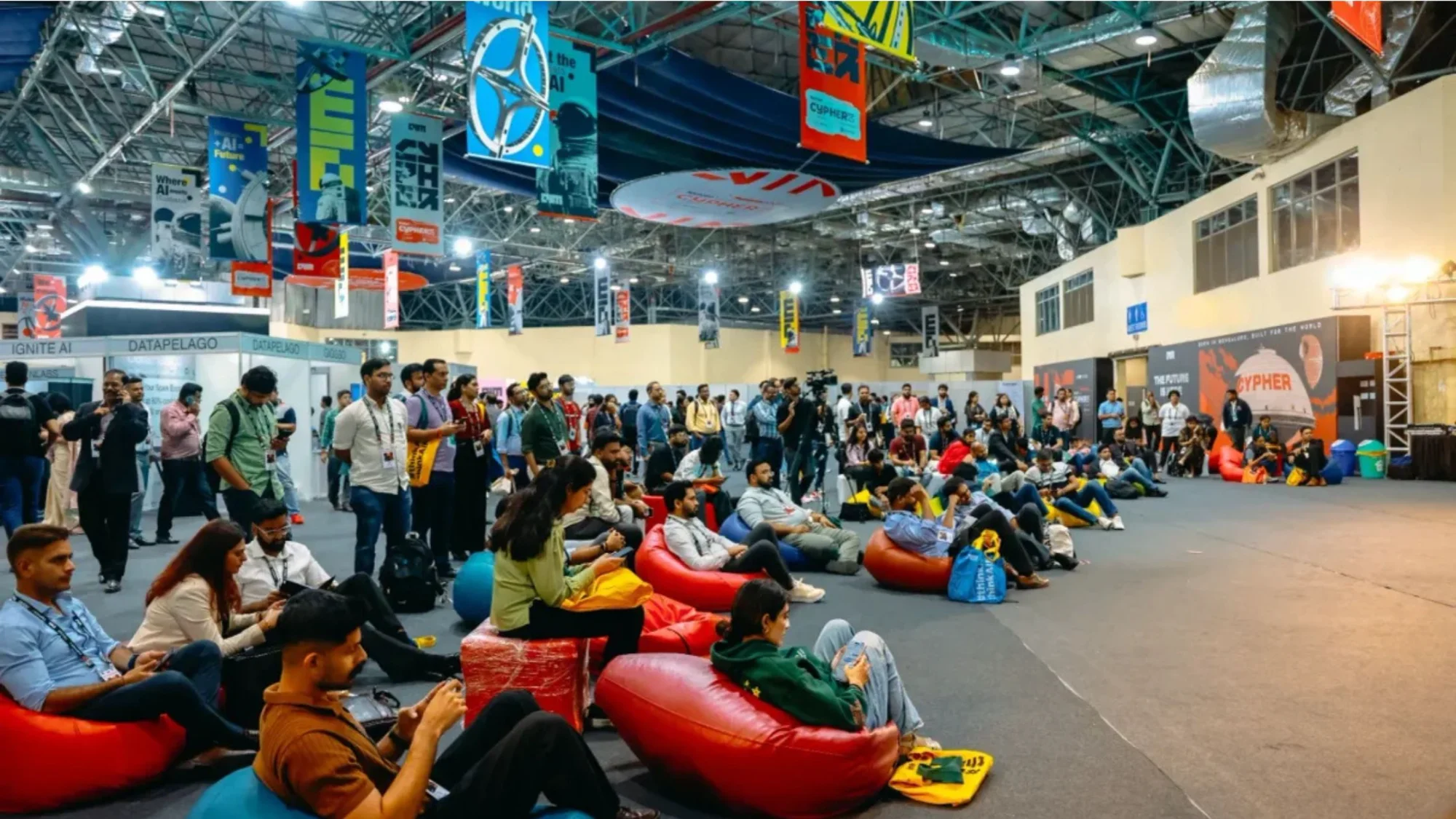
At an event the size of Cypher—150+ speakers across three days and three parallel halls—that window opens well over a hundred times. Most attendees never use it once. It is the single biggest gap between what a conference offers and what people take from it.
Here is how to use it properly.
1. Choose Before You Arrive, Not in the Moment
People who do this well decide in advance. They review the speaker list and the schedule before the event, pick three or four people whose work genuinely overlaps with theirs, and plan to be in those rooms.
Three is the right number for three days. More than that and you are collecting rather than conversing. Fewer and you will talk yourself out of it on the day.
Choose for relevance, not fame. The keynote speaker will have a queue. The person doing a Thursday-afternoon session on the exact infrastructure problem you are stuck on will have nobody, and will be far more useful to you.
2. Sit Where You Can Move
This sounds trivial and is not. If you are in the middle of a packed row at the back, you will spend 90 seconds getting out; and by then someone else is talking to them, and two more people are waiting.
Sit near an aisle, in the front half. Leave your bag packed. When the session ends, walk down calmly rather than sprinting—which brings us to the timing.
3. Be Second, Not First
The first person to reach a speaker usually catches them mid-cable-unplugging, still slightly adrenalised, and gets a distracted answer. There is also often someone from the event team who needs a word with them first.
Wait for that. Then step in. Being second means they have landed, their hands are free, and they can actually think about what you are asking. It costs you 40 seconds and improves the conversation considerably.
4. Open With the Specific Thing, Not the Compliment
Almost everyone opens with “great talk”. It is kind and it is completely forgettable, and the speaker has heard it four times in the last minute.
Open with the specific thing you are there about instead. Name the moment in their talk you are responding to, then ask the question. Something like:
“You mentioned you moved off the vector store you started with. We’re about to make that call—what pushed you?”
That opening does three things at once. It proves you were listening, it tells them exactly what you need, and it gives them something concrete to answer. You have used eight seconds and you are already in a real conversation.
5. Ask What They Could Not Say on Stage
This is the whole point of the window. On stage, a speaker is representing an employer, watching a clock, and talking to a room with a range of expertise. Standing next to you, they are just a practitioner talking to another practitioner.
The questions that work are the ones the format made impossible:
“What did you try first that didn’t work?”
“What would you do differently if you started again today?”
“What does this cost to run, really?”
“Where does it still break?”
These are generous questions rather than adversarial ones—they invite the speaker to talk about the hard part of their work, which is usually the part they most want to discuss and least get to. The answers are also the ones you cannot get from the recording, which is exactly why being in the room is worth something.
6. Do Not Pitch
If you sell something, this is not the moment. A speaker who has just come off stage and is immediately pitched will remember it, and not warmly.
The same applies to job-seeking. Asking a speaker for a role thirty seconds after their talk puts them in an awkward position in a public setting. Ask them about their work, be interesting, and let the relationship do that later if it is going to.
The expo floor exists for commercial conversations, and 100+ exhibitors run stands where that exchange is the explicit purpose. Use those.
7. Know When to Stop
Two to three minutes is the natural length. You will feel the moment it is ending—they glance past you, or someone else is waiting, or their answer gets shorter.
End it yourself rather than being ended. Thank them for the specific thing they told you, say you will follow up, and step away. Leaving while it is still going well is what makes the follow-up welcome. Standing there for 11 minutes is what makes it not.
8. Follow Up Within 24 hours, and Make it Easy
Most conference connections die because the follow-up arrives a week later and says “great to meet you at Cypher!”—by which point the speaker has met 200 people and has no idea which one you were.
Send it the same evening or the next morning, and lead with the detail that identifies you:
“We spoke after your session about why you moved off the vector store. You mentioned the re-indexing cost was what killed it—that’s exactly where we are. Would you be open to a short call in a few weeks?”
Specific, short, and it reminds them of the conversation rather than the venue. That message gets answered. The generic one does not.
If You Miss the Window
Sometimes the room empties into another session and the speaker is gone. There are two fallbacks at Cypher 2026, and one of them is better than the thing you missed.
The first is Mentoring 2.0—curated one-to-one slots with founders, CTOs and researchers, running across all three days in the lounge at KTPO and booked through your attendee dashboard. This is a scheduled, private conversation rather than a hurried one on a stage, and it is the most underused thing on the experiences programme. Book early; the slots are finite.
The second is simply the rest of the venue. Speakers do not leave after their session—they attend the others. The person you missed is very likely in the coffee queue an hour later, with more time and less adrenaline than they had by the stage.
The Short Version
Pick three speakers before you arrive. Sit near an aisle. Be second, not first. Open with the specific thing rather than the compliment. Ask what the format stopped them saying. Do not pitch. Leave while it is going well. Follow up the same day with a detail only the two of you would recognise.
Do that three times over three days and you will leave with something the recordings cannot give you — which is, in the end, the reason to be in the building at all.
Cypher 2026 runs October 7–9 at KTPO Whitefield, Bengaluru—the 10th edition, with 5,000+ attendees, 150+ speakers and 100+ exhibitors across three days and three parallel halls. The speaker list and schedule are now live, so you can pick your three now.
Passes are here: cypher.analyticsindiamag.com/tickets. For group bookings, get in touch. And if you want to know who else you will be sharing the corridors with, we wrote about the 10 people you’ll meet.
Cypher 2026 · October 7–9 · KTPO Whitefield, Bengaluru

Your reaction