
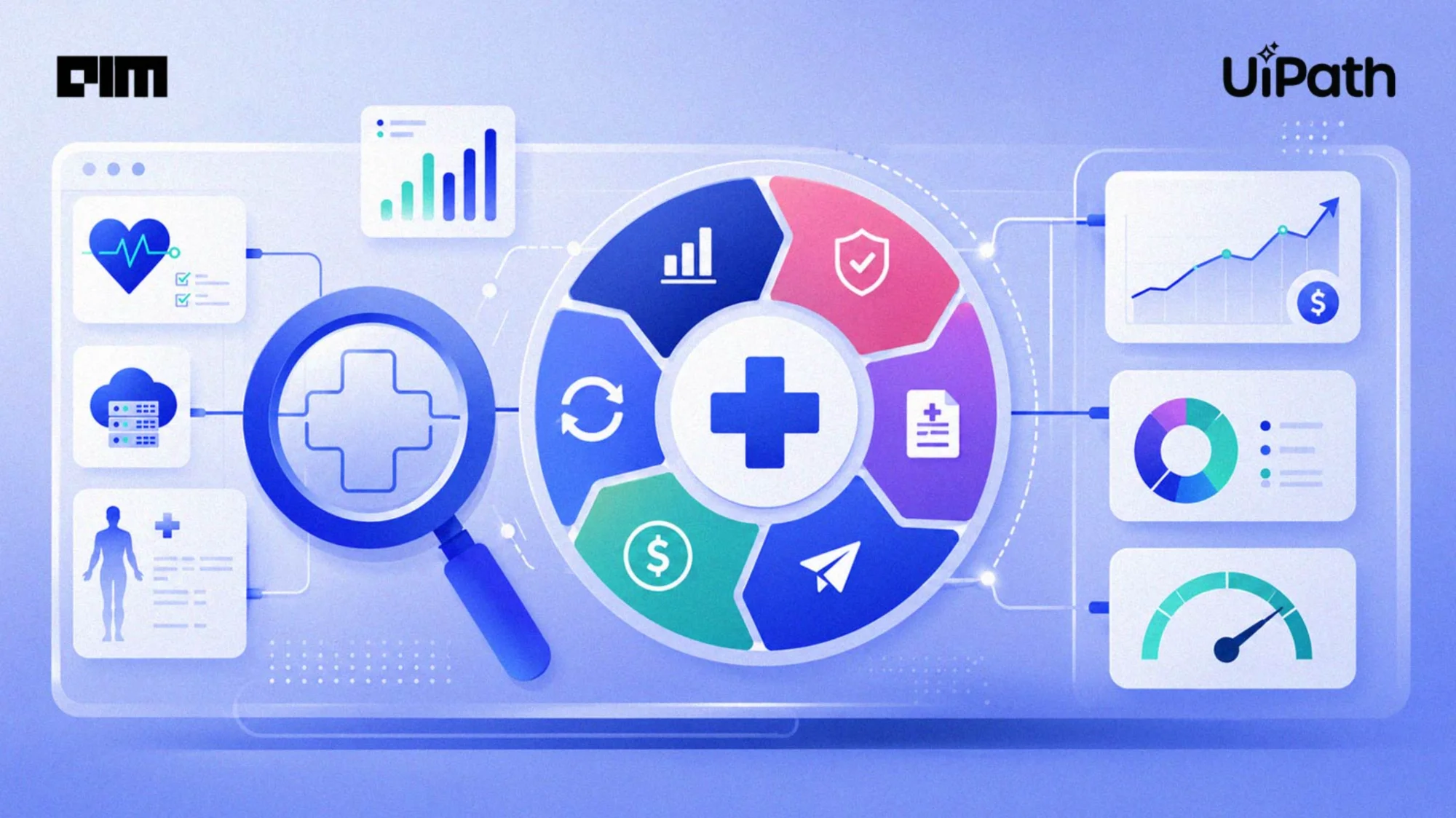
India’s healthcare sector is undergoing rapid digital transformation. Government initiatives like the IndiaAI Mission and the Ayushman Bharat Digital Mission are increasing the adoption of digital health records, AI-powered diagnostics, and other technology-driven healthcare services. Yet even as healthcare organisations invest in these new technologies, one challenge persists: fragmentation.
Behind every healthcare claim, billing document, or reimbursement request is ultimately a patient waiting for care to move forward without delays. In India, where healthcare providers manage growing volumes of claims across private insurers, third-party administrators, employer-sponsored plans, and public healthcare programmes, revenue cycle management (RCM) has become significantly more complex.
In fragmented environments like these, the burden becomes harder to manage at scale.
For healthcare organisations handling millions of documents every year, even small inefficiencies can create operational and financial strain. Ultimately, these delays can directly impact care delivery and overall patient experience.
The challenge is no longer simply adopting AI or automation. Organisations now need to think about how AI systems, enterprise applications, automation tools, and people can work together seamlessly across the entire revenue cycle. Not as a new solution, but as a foundational layer connecting these things together across the enterprise, with governance in place to maintain observability of the processes, auditability, and accountability for compliance and pace-of-mind.
UiPath describes this layer as business orchestration and automation. It brings together AI agents, automation, enterprise systems, and people into a single framework designed to coordinate work from beginning to end. Acting as a coordinating layer, orchestration determines where information should go next, when people need to step in, and how work continues when exceptions arise.
This orchestration-first approach is increasingly being applied to some of healthcare’s most document-intensive and administratively complex workflows. UiPath recently introduced Agentic Automation for Medical Records Summarisation, Claim Denial Resolution and Prevention, and Prior Authorisation. These solutions leverage agentic automation, business orchestration, and purpose-built, governed AI agents to connect data, improve efficiency, and accelerate revenue cycle management.
Medical Records Summarisation helps convert complex and fragmented medical records into concise, citation-backed summaries, enabling clinicians and reviewers to access critical information faster.
Claim Denial Prevention and Resolution helps healthcare organisations identify the root causes of denials, trigger corrective actions, and streamline appeals processes to protect revenue and improve compliance.
Prior Authorisation reduces administrative burden by automating eligibility and benefits validation, mapping clinical information to medical necessity requirements, routing requests based on complexity, and providing real-time visibility into approval workflows.
Together, these solutions help healthcare providers and payers transform large volumes of clinical documentation into actionable clinical intelligence, reducing delays, improving collaboration, and enabling better financial and patient care outcomes.
“As India’s healthcare ecosystem becomes increasingly digital and interconnected, providers must navigate growing volumes of clinical documentation, diverse payer networks, and complex reimbursement processes, all while maintaining speed, accuracy, and compliance. These organisations are managing workflows that directly impact patient outcomes, which is why we built the architecture that allows enterprises to connect systems, data, and workflows, transforming manual, document-heavy processes into autonomous, compliant, and scalable operations. By tackling critical friction points, we streamline payer-provider collaboration and dramatically reduce processing and payment delays,” said Gautam Goenka, Senior Vice President, Head of Engineering & Site Head - India, UiPath.
“Through a phased rollout of the UiPath Platform, we are integrating document understanding, process mining, and orchestration capabilities directly into our delivery system to create more intelligent, connected workflows. This is helping reduce claim errors earlier in the cycle, improve denial management, and enhance visibility into cash flow and reimbursement outcomes. Over time, we are building a more predictive and responsive revenue cycle operating model that enables faster and more accurate financial outcomes,” said Doug Marcey, Chief Technology Officer, Coronis Health.
“In revenue cycle management, a major bottleneck is the complexity of unstructured data and fragmented workflows like claims, coding, and billing. With UiPath® Document Understanding™ and orchestration capabilities, we’ve been able to automate a significant portion (40%) of our document-intensive workflows, while improving accuracy from 91% to 99%. This shift to agentic automation allows our teams to focus on higher-value work that ultimately supports better patient outcomes, while we continue to build more streamlined, AI-led operations at scale,” said Balaji Sundararajan, Chief Data and AI Officer, AGS Health.
In healthcare, however, greater autonomy must be matched with greater control. Patient information, reimbursement decisions, and clinical documentation are all subject to strict privacy, compliance, and audit requirements. As organisations adopt AI agents and autonomous workflows, governance becomes essential to ensure transparency, accountability, and human oversight. Business orchestration helps establish these guardrails by defining how AI agents, automation tools, enterprise systems, and people interact, while maintaining auditability, access controls, and policy compliance across every step of the process.
For healthcare leaders, the objective is no longer simply automating individual tasks. The focus is increasingly shifting toward building governed, orchestrated systems where AI agents, automation, enterprise applications, and people can work together while maintaining compliance and accountability.
UiPath summarises that transition in a simple line: “Agents think, robots do, people lead.”

Your reaction
Discussion
What's your take on this story?
No comments yet — be the first to share your view.