
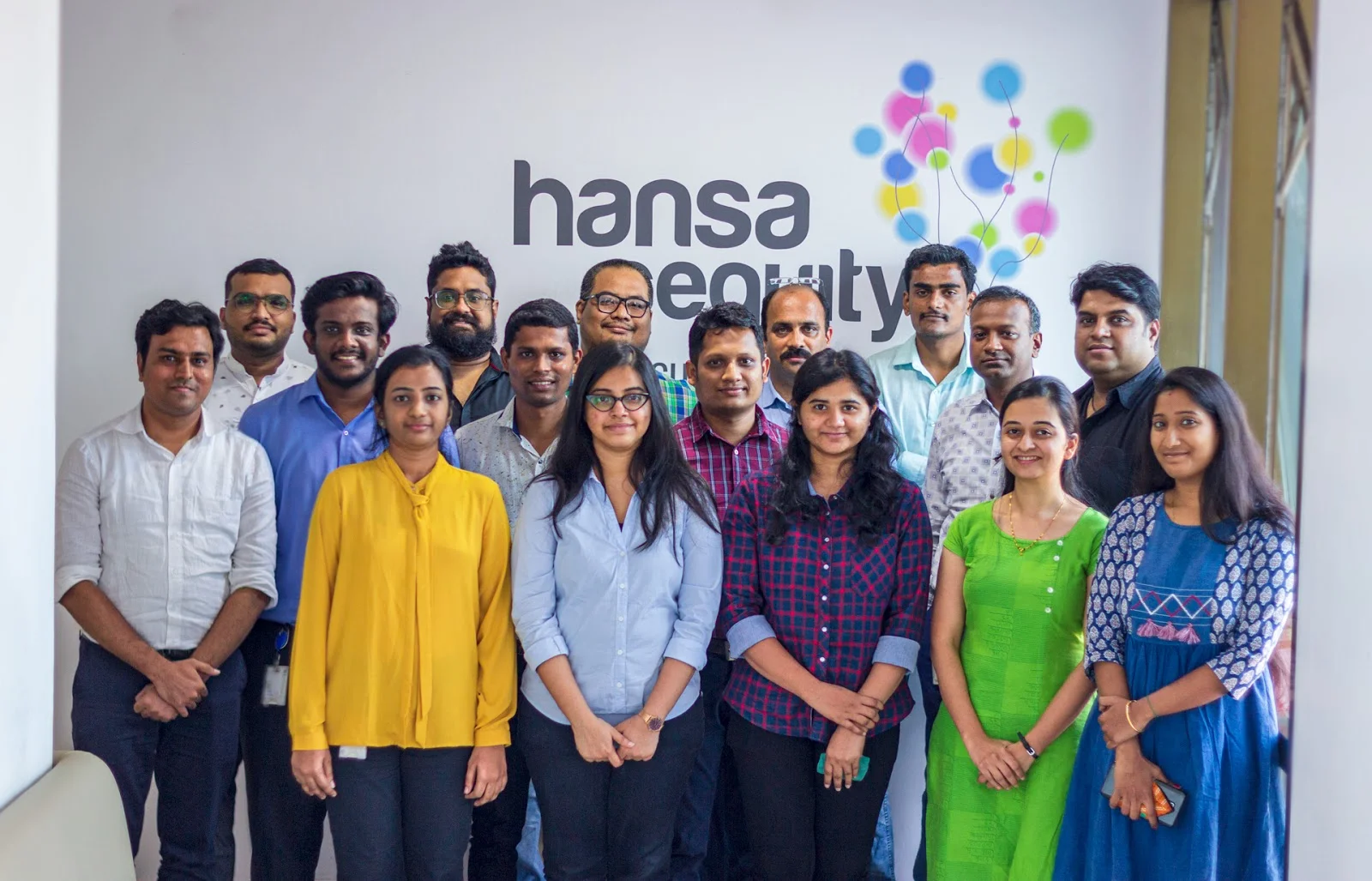
Mumbai-based Hansa Cequity is a data-driven, technology-enabled marketing and consulting company servicing business verticals such as retail, BFSI, automobile, media, etc. The data science team plays a critical role in solving business challenges of varying scale and complexity at Hansa Cequity. The centralised data science team is aligned horizontally.
We got in touch with Neeraj Pratap, Chief Operating Officer of Hansa Cequity, to understand their data science team’s hiring process.
Required Skills
Logical, agile and out-of-box thinkers get preferential treatment at Hansa Cequity. The candidates should be open to experimentation, have an appetite to explore new techniques and adapt to new tools and technologies. “Someone who is from a strong academic background with fundamental knowledge coupled with a few years of experience is the best fit for a data scientist position in our organisation,” said Neeraj.
“Technically they should have a comprehensive understanding of machine learning algorithms and knowledge across different specialisations such as operational research, NLP, etc. We emphasise exposure to big data technologies and thorough knowledge about end-to-end data science project lifecycle,” he added.
“A candidate is expected to blend behavioural data with demographics, transactional data to examine the “whats” and “hows” of customer behavioural data to inform the “whys” of customer behaviour,” he said. Additionally, they should have a hacker’s spirit and appetite to experiment and learn.
The educational qualifications Hansa Cequity looks for are bachelor’s in computer science, engineering or Masters in statistics, economics, and mathematics.
Neeraj said a strong educational background with analytics skills, designing and building statistical modelling, visualisation, machine learning is highly desirable.
Required skills:
- Statistical software (e.g. MATLAB, SAS, SPSS etc.)
- Programming language like Python, R, C++, and/or Java
- Advanced experience in database language (e.g. SQL or NoSQL)
- Experience in management systems
- Designing and building statistical modelling
- Visualisation tools
- Strong problem-framing and problem-solving capability
- Understanding business objectives
Hansa Cequity follows both the traditional hiring approach through job portals, and non-traditional hiring approaches through LinkedIn, referrals, and data scientist communities in social media platforms.
They are currently looking for a mid-level manager who will deliver and maintain multiple predictive modelling projects with the help of junior data scientists.
A candidate can contact the HR through LinkedIn or the company website.
Being A Data Scientist At Hansa Cequity
At Hansa Cequity, data scientists should be good at data intuition. Neeraj believes that data-intuitive candidates are excellent at identifying patterns within sets of structured and unstructured data. Neerja highlights the ideal traits of a data scientist at Hansa Cequity:
- Data scientists must enjoy the iterative development process. They should always be in search of finding an optimal solution through the process of iterative design.
- A solid background in data science and big data analytics with good statistical thinking is always a plus.
- Willing to work in a new or unfamiliar situation, learn new skills and provide solutions to business problems.
- Data science candidates should be creative in exploring behavioural sciences techniques and combining it with business and applying computational approaches from computer science, statistics, and data-centric engineering to better model, understand and predict behaviour.
- Ability to blend internal and external (macro-economic) data to make sharper predictions to solve business problems.
Neeraj also said the data scientist is expected to be in charge of data analysis — from data collection to making business decisions. He should work closely with data analysts, data engineers, business intelligence specialists, and data architects to create and maintain databases, analyse data, communicate business insights, build predictive and prescriptive analytics models. He/she should identify problem areas, and turn problems into opportunities using data science.
Growth Opportunities
Since the analytics team is centralised, data scientists get an opportunity to work and deeply understand multiple domains.
“We continually invest in development by providing access to technical/management development programs. Further, we support and coach employees to think broadly, develop a proactive consulting mindset, and encourage them to participate in various employee engagement programs,” said Neeraj.
A data scientist with more than two years of experience gets ample opportunity to engage directly with clients, discuss business problems and suggest ways to address them.
Interview Process
The interview process at Hansa Cequity is designed to assess a candidate with quantitative aptitude, programming skills, knowledge in statistics & machine learning, analytics tools, real-life scenario-based case studies, soft skills & cultural fit. The candidate selection process involves four rounds of interview. It usually starts with a resume evaluation based on the experience. Neeraj explained the interview process:
Microsoft Teams/Zoom Interview
Focuses on:
- logical reasoning
- quantitative aptitude
- programming skill assessments (Python/R/SQL, etc.)
- statistics knowledge and machine learning knowledge
Model Assignment & Case presentation
Assess a candidate’s modelling skills, logical reasoning, business problem-solving ability, programming comfort, technical know-how, presentation skills, ability to comprehend and communicate the business problem.
Personal Interview
HR personnel will evaluate the cultural fit, compatibility with team, communication skills, etc.
Management Round
Shortlisted candidates interact with senior leadership for a comprehensive analysis of capabilities and skills.
Interview Questions
Questions are asked based on the typical interview focus areas:
Quantitative aptitude: To measure the candidate’s numerical ability, problem-solving and mathematical skill. Questions can range from purely numeric calculations to critical arithmetic reasoning. Candidates can expect questions similar to the Common Aptitude Test(CAT), MAT, GMAT, etc.
Programming Skills: Candidates are asked to write pseudo-codes, or syntax related to Python, R, SQL, etc.
Statistics & Machine Learning Skills: Conceptual questions related to statistics, algorithms and Machine Learning Techniques.
Case Presentation: Ability to structure solutions to open-ended problems.
“Candidates who possess the skills of problem-solving, have a decent knowledge of algorithms and know their basics of statistics and machine learning stand a higher chance of cracking these interviews,” said Neeraj.
Recruiting Challenges
It is usual for companies to focus on questions that are technical rather than emphasising client engagement skills. However, it is equally important to find a solution to a business problem and communicate the same at the right time and in the proper manner to make a decision based on the analysis.
Setting the right expectation to the data scientist candidate during the hiring process is very important. Candidates tend to think their primary role is to analyse data, extract insights, build a predictive model, and fail to understand data collection is also a big part of the process.
“At Hansa Cequity, our interview process is well aligned to avoid these mistakes. We make the candidate aware of the kind of activities that is expected from them,” said Neeraj.
That said, Hansa Cequity face challenges in finding all-round candidates. “We look for someone who can solve business problems and play with data using different tactics,” said Neeraj. Another challenge is landing the candidate as they may have multiple job offers.
To become a competitive data scientist, Neeraj advises to be good at numbers, understand business challenges, develop storytelling ability, improve coding skills, work on communication skills and be ready to evolve with the fast-moving analytics industry.

Your reaction
Discussion
What's your take on this story?
No comments yet — be the first to share your view.