Key takeaways
- ISRO successfully completed the EMI-EMC test for the Chandrayaan-3 lander, marking a significant milestone in the mission's preparation.
- The EMI-EMC test ensures compatibility of satellite subsystems and verifies functionality against electromagnetic levels in space.
- Establishing reliable RF communication links between the mission's propulsion, lander, and rover modules is crucial due to its complexity.
- The test was conducted at the U R Rao Satellite Centre in Bengaluru, highlighting India's advancements in space technology.
On Sunday, The Indian Space Research Organisation (ISRO) successfully tested Chandrayaan-3’s lander for their third mission to the Moon. The Electro-Magnetic Interference/Electromagnetic Compatibility (EMI-EMC) test was conducted by U R Rao Satellite Centre in Bengaluru between January 31 to February 2.
According to a statement from ISRO, the EMI-EMC test of the Chandrayaan-3 lander verified the compatibility of the launcher, antenna polarization for all RF systems, and standalone auto compatibility for the orbital and powered descent mission phases. Additionally, tests were conducted to ensure compatibility between the lander and rover for the post-landing phase.
What is the EMI-EMC test?
The EMI-EMC test is an essential pre-satellite mission test that verifies the functionality of the satellite subsystems in space and their compatibility with the anticipated electromagnetic levels. ISRO acknowledged that this test represents a significant milestone in the development of satellites.
ISRO further emphasised the importance of the test by explaining that because the Chandrayaan-3 mission is an interplanetary mission with three principal modules—the Propulsion module, Lander module, and Rover—establishing radio-frequency (RF) communication links between the modules is crucial due to the mission's complexity.
Read: ISRO's Upcoming Space Missions 2023
More about the mission
Chandrayaan-3 mission will showcase the capability for safe landing and roving on the lunar surface, which is where Chandrayaan-2 failed due to a last minute glitch in the soft-landing. With a budget of approximately INR 615 crore, the mission will make India the fourth country to soft-land on the moon.
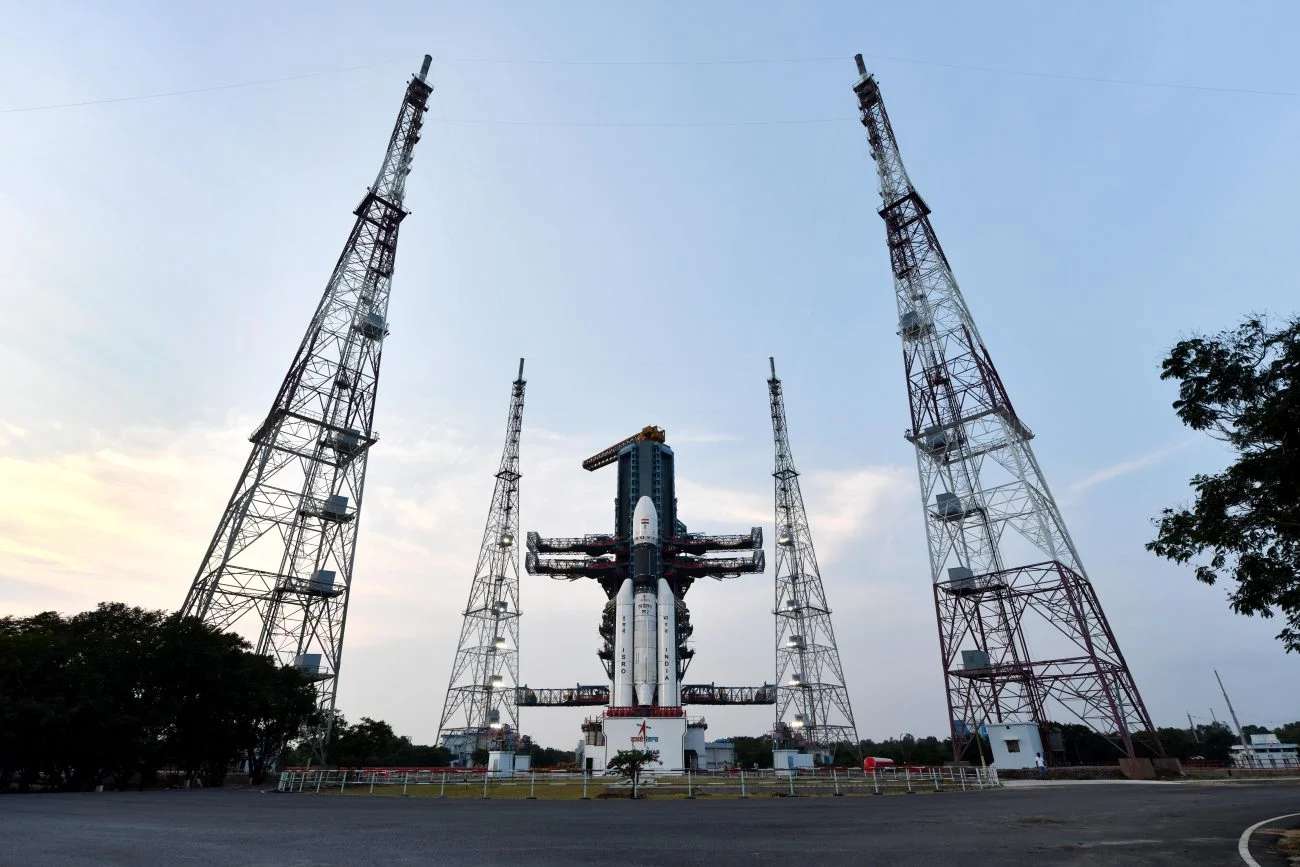
The mission will consist of a lander and rover configuration, using the GSLV MkIII rocket, and will launch from the Satish Dhawan Space Centre, known as India's spaceport.
The propulsion module will transport the lander and rover configuration to 100 km of the Moon's orbit and will also employ the Spectro-polarimetry of Habitable Planet Earth (SHAPE) payload to study Earth's spectral and polarimetric measurements from that location. Although the final launch date is yet to be announced, it is expected to take place in the second or third quarter of this year.
Spotted an error? Tell our editors. Read our editorial standards and corrections.