
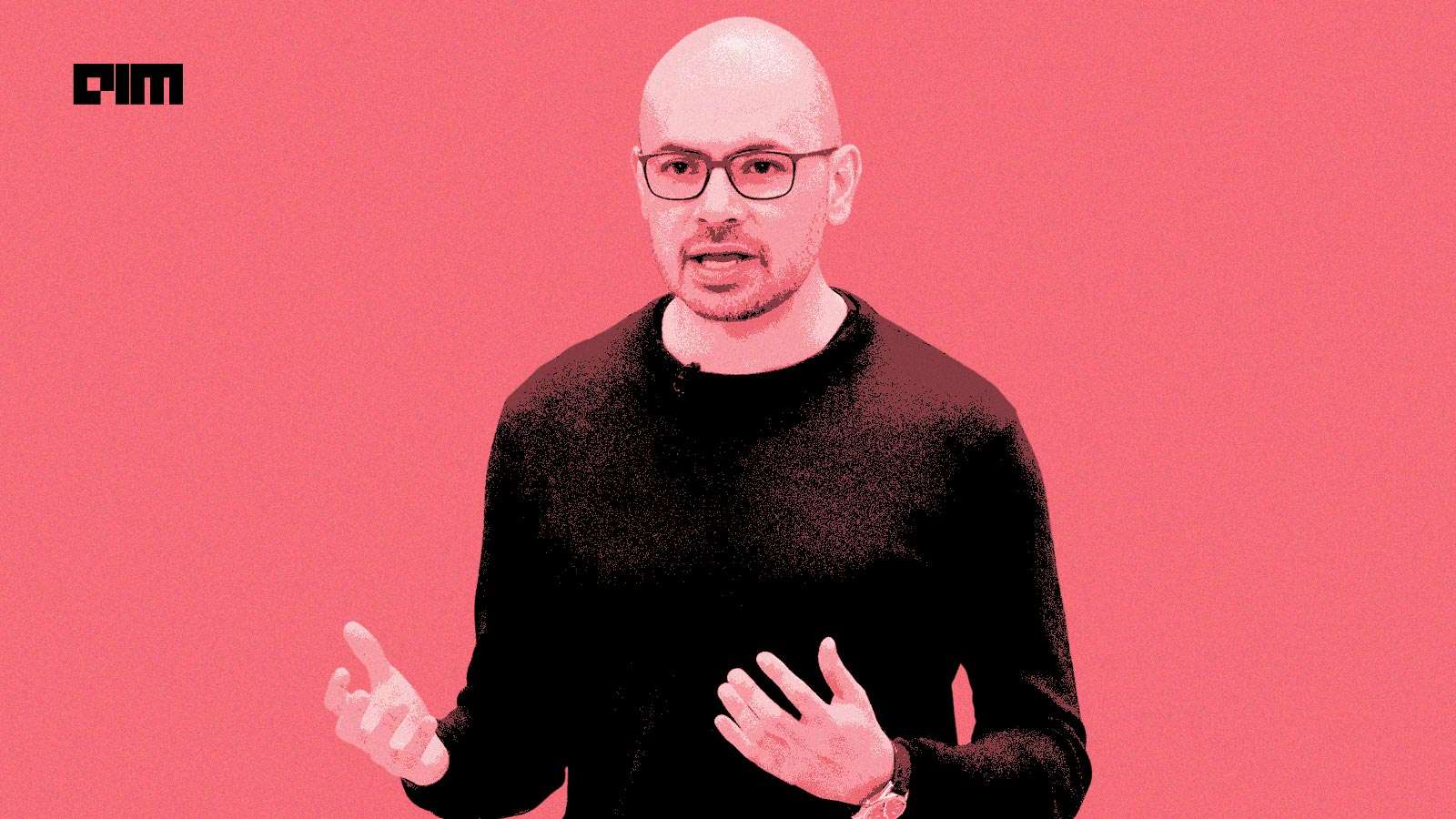
Demis Hassabis, CEO of Google DeepMind, dismissed claims that today’s AI systems are PhD intelligences, calling the label nonsense and arguing that current models lack the consistency and reasoning needed for true general intelligence.
“They’re not PhD intelligences,” Hassabis said in a recent All-in-podcast interview. “They have some capabilities that are PhD level, but they’re not in general capable, and that’s exactly what general intelligence should be—performing across the board at the PhD level.”
Hassabis’ statements come after OpenAI dubbed its latest AI model, GPT-5, as PhD-level.
Hassabis explained that while advanced language models can demonstrate impressive skills, they can also fail at simple problems. “As we all know, interacting with today’s chatbots, if you pose the question in a certain way, they can make simple mistakes with even high school maths and simple counting. That shouldn’t be possible for a true AGI system,” he said.
The DeepMind chief said artificial general intelligence (AGI) is still five to ten years away, pointing to missing capabilities such as continual learning and intuitive reasoning. “We are lacking consistency,” he said. “One of the things that separates a great scientist from a good scientist is creativity—the ability to spot patterns across subject areas. One day AI may be able to do this, but it doesn’t yet have the reasoning capabilities needed for such breakthroughs.”
On industry benchmarks, Hassabis pushed back against the idea of performance stagnation. “We’re not seeing that internally. We’re still seeing a huge rate of progress,” he said, countering reports that suggested convergence or slowing improvement among large language models.
Hassabis said that while scaling may deliver advances, one or two breakthroughs will still be required in the coming years.
- HCLTech, PTC Launch Pre-Configured PLM Solution for Semiconductor Firms
- IBM, Microsoft Launch Agentic AI Platform With Over 6,000 AI Agents
- NHA Selects EkaCare for AI Voice Scribe in Public Health Facilities
- SoftBank Takes $7 Billion Hit on US AI Data Centre Investments
- Anthropic Seeks Up to $64.4 Bn at $1.4 Tn Valuation With IPO
- IBM Ends H-1B, Green Card Sponsorship for Most Roles in Consulting Division