
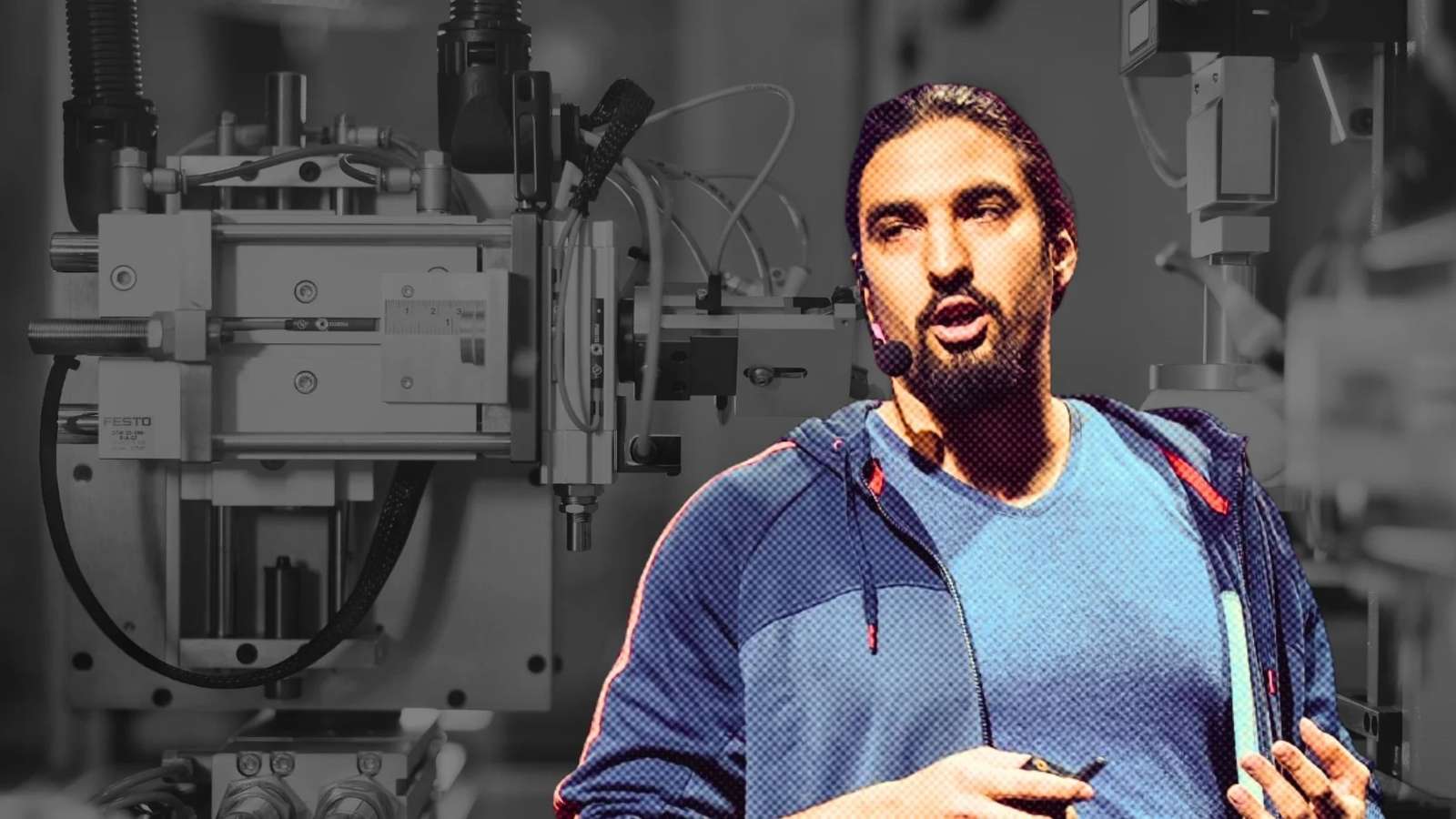
P-1 AI, a startup that has been operating in stealth mode, announced on Monday that it has raised $23 million, led by Radical Ventures. The startup aims to build an AI agent called ‘Archie’, which will automate tasks typically performed by humans in the physical domain.
The startup was founded by Aleksa Gordić, a former researcher at Google DeepMind, along with Paul Eremenko, a former CTO of Airbus, among others.
“Our vision is simple: we want to build an engineering AGI (artificial general intelligence) for the real world to help us design airplanes, Dyson spheres, cars, HVAC (heating, ventilation and air conditioning) systems, etc.,” said Gordić in a post on X.
Archie’s capabilities encompass full-spectrum multi-physics and spatial reasoning, enabling tasks that human engineers currently perform. According to the startup, it can perform tasks such as distilling key design drivers from requirements, generating product concepts and variants, conducting first-order design trades, and selecting and utilising the right engineering tools for detailed design.
“Our aim is [to ensure] that every engineering team at every major industrial company has an Archie as a team member, focusing initially on the dull and repetitive tasks, enhancing the team’s bandwidth and productivity, learning from real-world feedback and data, getting smarter and smarter, and ultimately helping humankind build things we don’t know how to build today,” Eremenko said.
Prominent AI researchers such as Yann LeCun have highlighted the need to go beyond large language models and develop AI to assist with tasks in the physical world.
In a talk at the NVIDIA GTC 2025 event, LeCun said, “I am not so interested in LLMs anymore,” suggesting that his focus has shifted to four areas he considers more fundamental for machine intelligence: understanding the physical world, persistent memory, reasoning, and planning.
LeCun emphasised his interest in “world models”, which are systems that develop internal representations of the physical world to support reasoning and predictive capabilities.
“We all have world models in our minds. This is what allows us to manipulate thoughts, essentially,” he said.
- Amazon Warns Engineers Against AI Productivity Traps in Latest Memo
- Gnani AI Launches Prisma v3.0 Speech Recognition Model for 10 Languages
- Venttup Raises $3 Million To Expand Precision Manufacturing
- Articul8 Launches Bivia To Help Enterprise AI Agents Make Decisions
- NVIDIA Launches Open-Weight Transcription Model for 40 Languages
- Sarvam AI Rolls Out Indus Cowork to 2,500 Maharashtra Govt Officials