
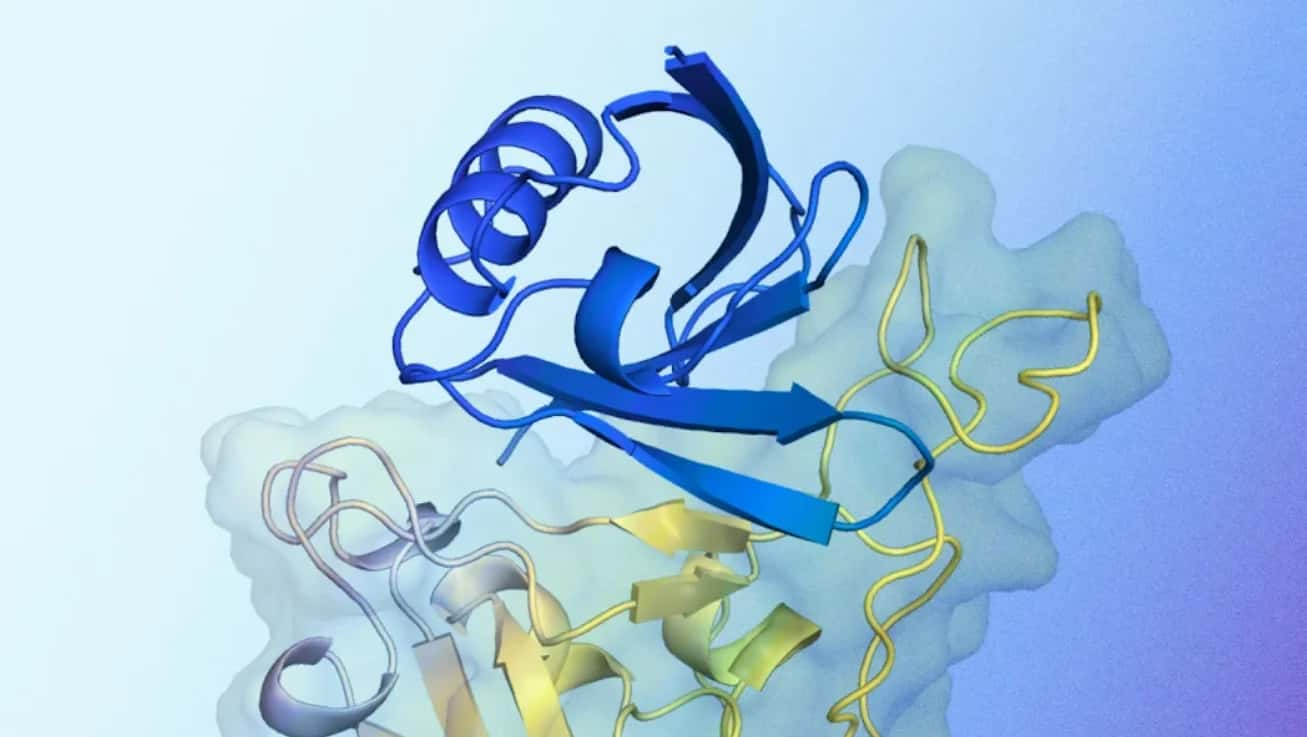
Google DeepMind recently launched AlphaProteo, an AI system that generates novel proteins designed to bind to specific target molecules poised to significantly advance research in drug design, disease understanding and other health applications.
This AI system aims to create new protein binders for diverse target proteins, including those linked to critical health issues like cancer. It has so far successfully designed binders for VEGF-A, a protein associated with tumor growth and complications in various diseases. The system's protein binders are reported to be three to three hundred times more effective than traditional methods, allowing researchers to tackle complex biological challenges more effectively, leading to breakthroughs in treatments and diagnostics.
While existing tools like AlphaFold have excelled in predicting protein structures, AlphaProteo takes a step further by enabling the design of proteins that can actively interact with and modify biological processes. This capability potentially leads to the development of targeted therapies that block harmful proteins, halting disease progression. Not just drug development, AlphaProteo's capabilities extend to enhancing cell and tissue imaging, improving understanding of diseases. It also contributes to agricultural advancements such as crop resistance.
DeepMind’s effort to leverage AI
DeepMind is on a path to make significant advancements leveraging AI, its recent developments include a Table Tennis Robot that used AI to demonstrate the ability to compete at a human level utilising advanced AI techniques to analyze and respond to opponents in real-time showcasing the potential of AI in mastering complex physical tasks.
DeepMind also introduced a new Visual Processing Framework designed to reduce computational costs associated with help of AI models, aiming to enhance the efficiency of visual understanding tasks, making it easier to process and interpret visual data without requiring extensive computational resources.
DeepMind researchers continue to explore the potential of AlphaProteo, its impact on the future of medicine and health research could be transformative, paving the way for more precise and effective treatments across a range of conditions. Demis Hassabis, the cofounder of DeepMind, posted on X sharing his excitement on the launch saying, “It has the potential to accelerate our understanding of biology, and aid the discovery of new drugs, the development of biosensors, & much more!”
Cradle, an Amsterdam-based AI startup is also leveraging generative AI in accelerating the process of designing and creating novel proteins with tailored properties. Enabling them to generate new protein sequences with desired functional characteristics.
- TSMC October Revenue Hits Record $17.81 Bn on Skyrocketing AI Chip Demand
- Froncort.AI Gets $2.3M From Google.org to Expand AI-Based Disease Screening in India
- Gartner Introduces Framework for CIOs to Determine AI Outcomes
- Qantas AI Jobs are Coming to India as Outsourcing Deal Affects 850 Roles
- Meta Expands AI Age-Estimation Tech to Protect Teens on Instagram
- Meta to Introduce Muse AI Agent in India Starting With ₹1,799 Plan: Report