
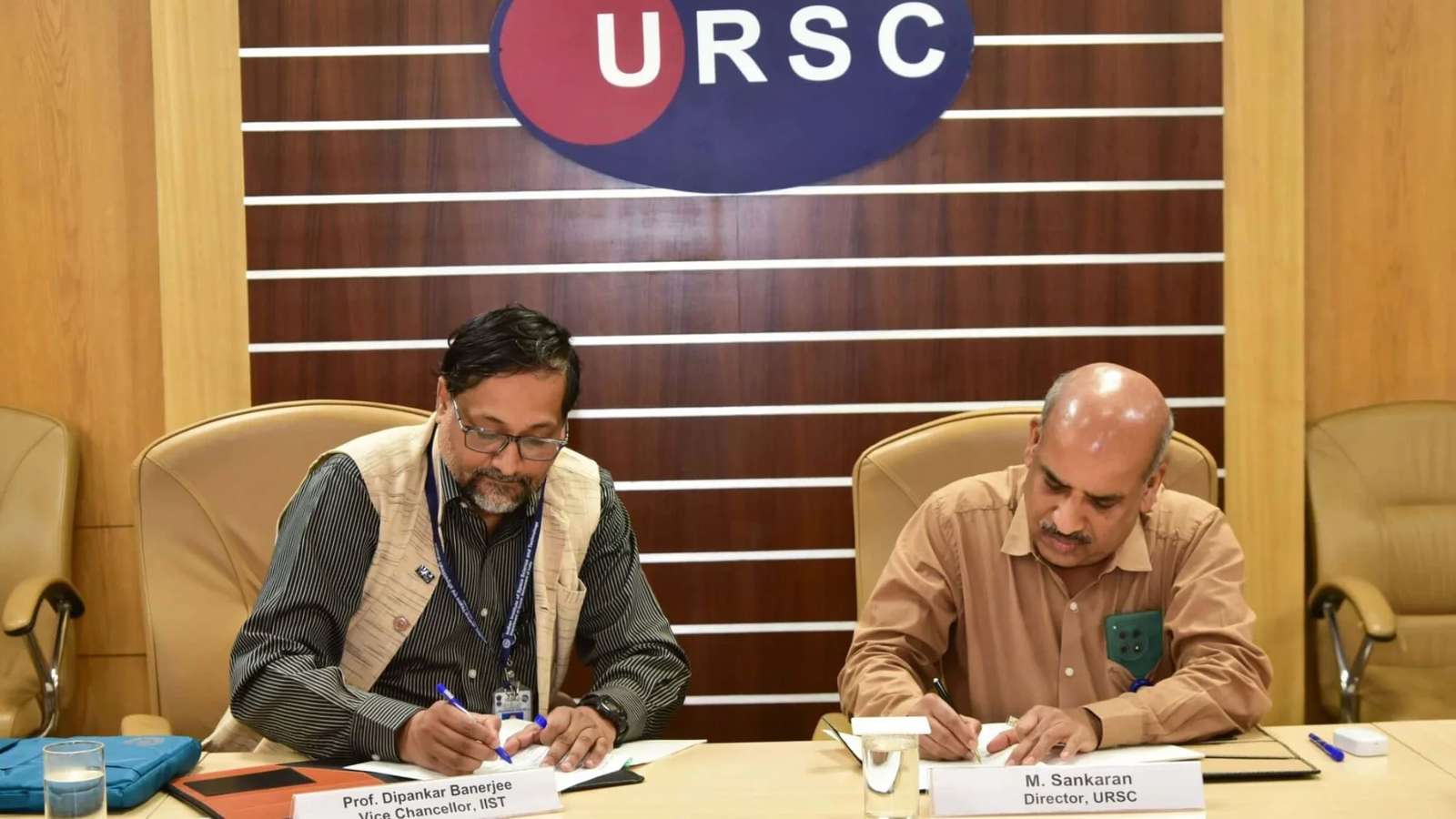
The Indian Institute of Space Science and Technology (IIST) has signed a memorandum of understanding (MoU) with the UR Rao Satellite Centre (URSC) for the development of the Retarding Potential Analyzer for Venus (RPA-V) payload.
The project aims to study the ionosphere of Venus. According to IIST’s LinkedIn post, the project is expected to provide key insights into the dynamics of the Venusian ionosphere and its interaction with solar wind.
The RPA-V payload will be developed under the leadership of professor Umesh R Kadhane, with support from faculty members Anoop CS, Immanuel Raja, Sooraj VS, R Sudharshan Kaarthik, Pradeep Kumar P and Rajeevan PP.
Building on Past Missions
IIST has been given this responsibility due to its earlier success with ARIS-1 and ARIS-2 missions. These projects demonstrated the institute’s capability in building space-qualified hardware. The new payload continues this track record and will expand India’s planetary exploration programme.
“The RPA-V payload is set to deepen our understanding of Venus’s atmosphere,” IIST stated in the post.
The project also holds academic value, with IIST students set to contribute to its development. Their participation will provide hands-on training in space plasma research. IIST noted that this experience would help prepare a talented workforce for India’s upcoming indigenous space programmes.
“This collaboration will strengthen IIST’s position as a world-class research hub for developing ionospheric measurement devices, while simultaneously shaping the skilled workforce needed for India’s future space science endeavours,” the institute added.
- AI Productivity to Add $28 Billion to $84 Billion to India's GDP: Cognizant Study
- OpenAI's Codex Helps in Aerodynamic Engineering for Mazda
- Bengaluru Accounts for 34% of India's FDE Talent: Report
- 84% See AI Productivity Gains, but Only 10% Allow Agent Autonomy: TCS Study
- Snowflake Introduces Business Ontology, Cortex AI Gateway to Bring AI Agents Into Enterprise Workflows
- Three Members Behind Claude Code Leave Anthropic Within 10 Days