
IIT Madras has licensed its silicon photonics-based Quantum Random Number Generator (QRNG) to Indrarka Quantum Technologies in a ₹1 crore deal. This agreement is a significant milestone in India’s quantum technology landscape.
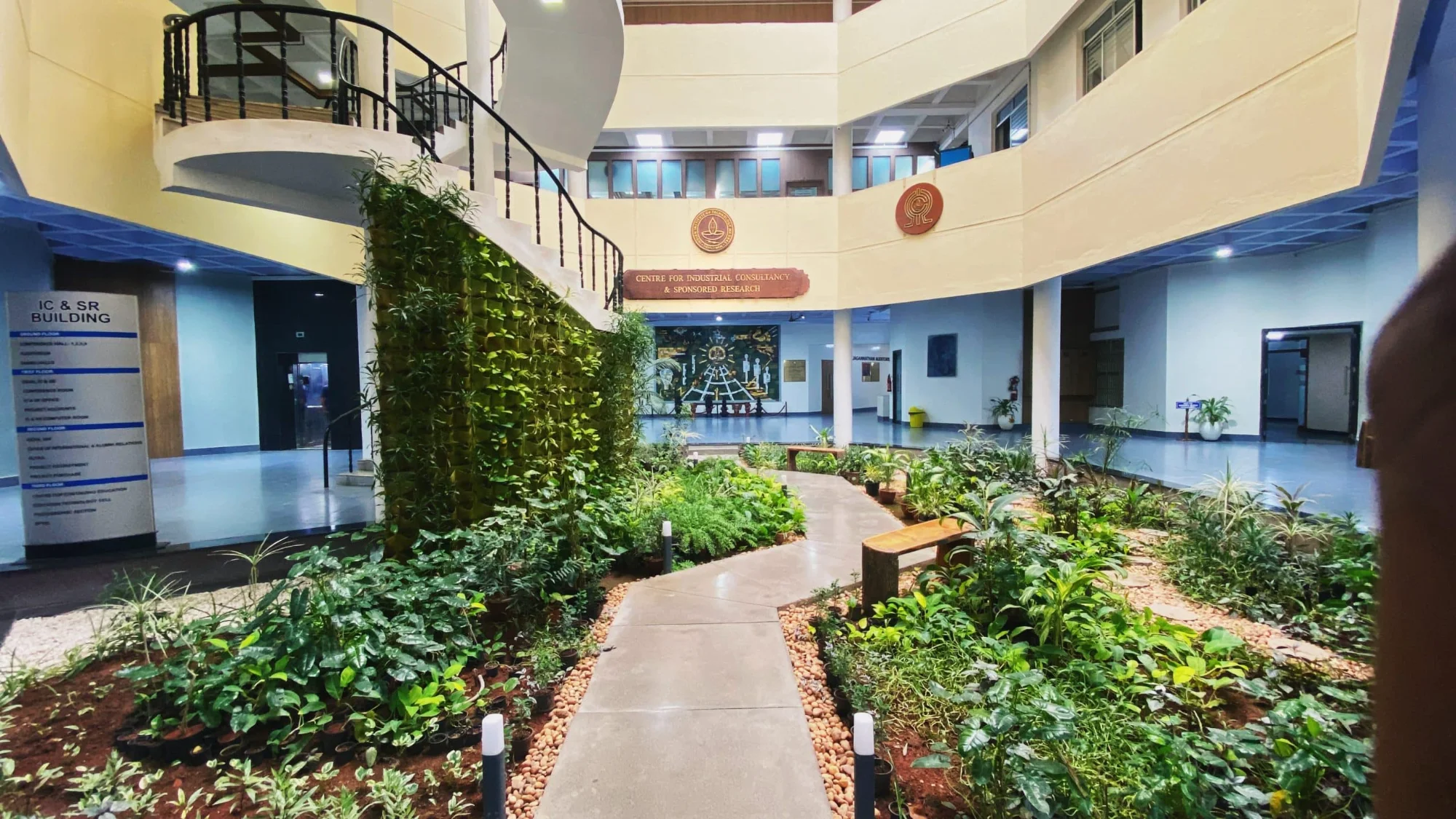
The deal was formalised in an MoU signed by Kamakoti Veezhinathan, director of IIT Madras, alongside Manu Santhanam, dean of industrial consultancy and sponsored research (IC&SR), and Dinanath Soni and Tej Soni from Indrarka Quantum Technologies. The event was also witnessed by various experts from the industry and academia.
Developed at the Centre for Programmable Photonic Integrated Circuits and Systems (CPPICS) at IIT Madras, the QRNG has numerous applications, including defence, IT security, cryptography, financial transactions, blockchain and scientific simulations.
“This milestone demonstrates how world-class research at IIT Madras is translated into real-world products, reinforcing India’s leadership in the global quantum technology landscape,” IIT Madras stated in a LinkedIn post.
The partnership underscores the growing collaboration between academia and industry in advancing quantum technologies in India.
Recently, the institute, through its IITM Incubation Cell (IITMIC), announced the successful incubation of 104 deep-tech startups in the financial year 2024–25.
Over the past 12 years, IITMIC has supported 457 deep tech startups, now collectively valued at more than ₹50,000 crore. The portfolio includes two unicorns and one IPO-bound company.
IIT Madras, along with ISRO, also recently developed and booted an indigenous aerospace-grade semiconductor chip based on RISC-V, an open-source instruction set architecture.
The ‘IRIS’ (Indigenous RISC-V Controller for Space Applications) chip was developed from the ‘SHAKTI’ processor baseline. This highlights India’s efforts towards self-reliance in semiconductor technology for space applications.

Your reaction
Discussion
What's your take on this story?
No comments yet — be the first to share your view.