Key takeaways
- Indian IT Minister Chandrasekhar opposes telecom demands for OTT revenue sharing.
- Chandrasekhar reaffirms India's commitment to net neutrality principles.
- Net neutrality is crucial for India's digital ecosystem and startup growth.
- OTT services significantly contribute to data consumption and economic activities.
- Revenue-sharing proposals could hinder the positive trend in India's digital landscape.
Private telecommunications companies and other internet service providers are advocating for app providers to contribute a "fair share" for building on their infrastructure. This stance challenges the fundamental principles of net neutrality.
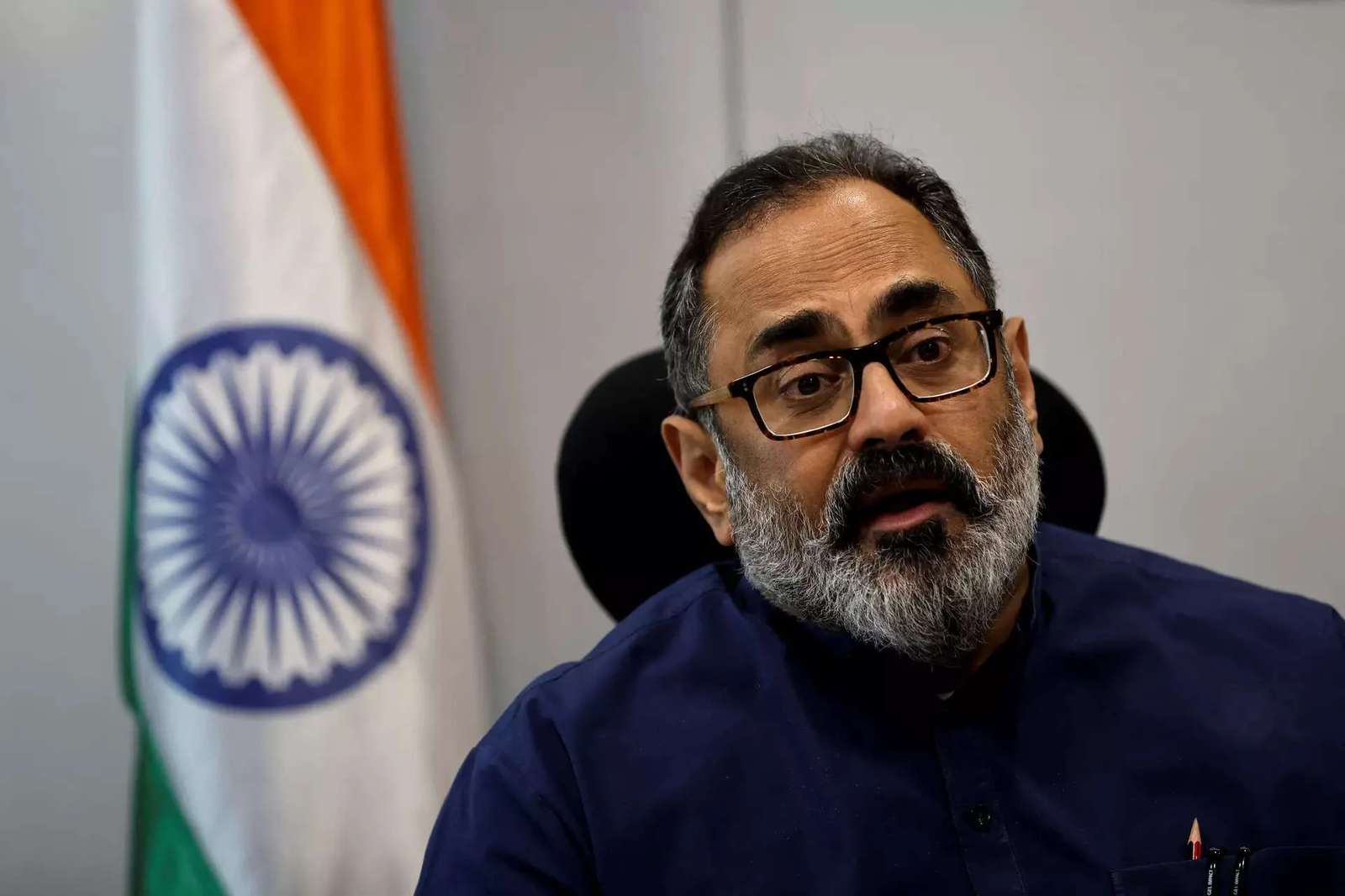
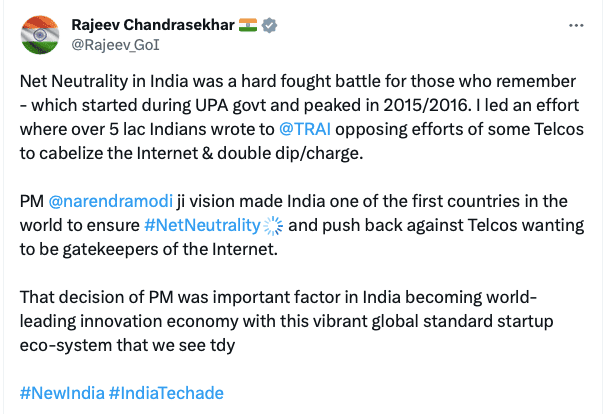
In a response to these developments, the Minister of State for Electronics and Information Technology, Rajeev Chandrasekhar, took to Twitter today to reaffirm India's commitment to net neutrality. He asserted that India was one of the pioneering nations to ensure net neutrality, firmly resisting attempts by telecom companies to act as gatekeepers of the internet. Chandrasekhar highlighted the significance of this decision in propelling India towards becoming a global leader in innovation, boasting a thriving startup ecosystem that adheres to international standards.
Over-the-top (OTT) services like Netflix and Amazon Prime, offering services like streaming, social networking, e-commerce, and gaming, serve as the lifeblood of India's digital landscape. These services have not only provided users with high-quality content at minimal cost but have also catalysed the growth of data consumption and economic activities within India.
Proposing revenue-sharing mechanisms between OTT platforms and Internet Service Providers (ISPs) at this point could potentially reverse this positive trend.