
MIT's New AI-Powered Co-Pilot Will Redefine Aviation Safety
MIT's Computer Science and Artificial Intelligence Laboratory (CSAIL) has introduced Air-Guardian, an aviation safety system for a better collaboration between human pilots and AI, promising safer skies for all.
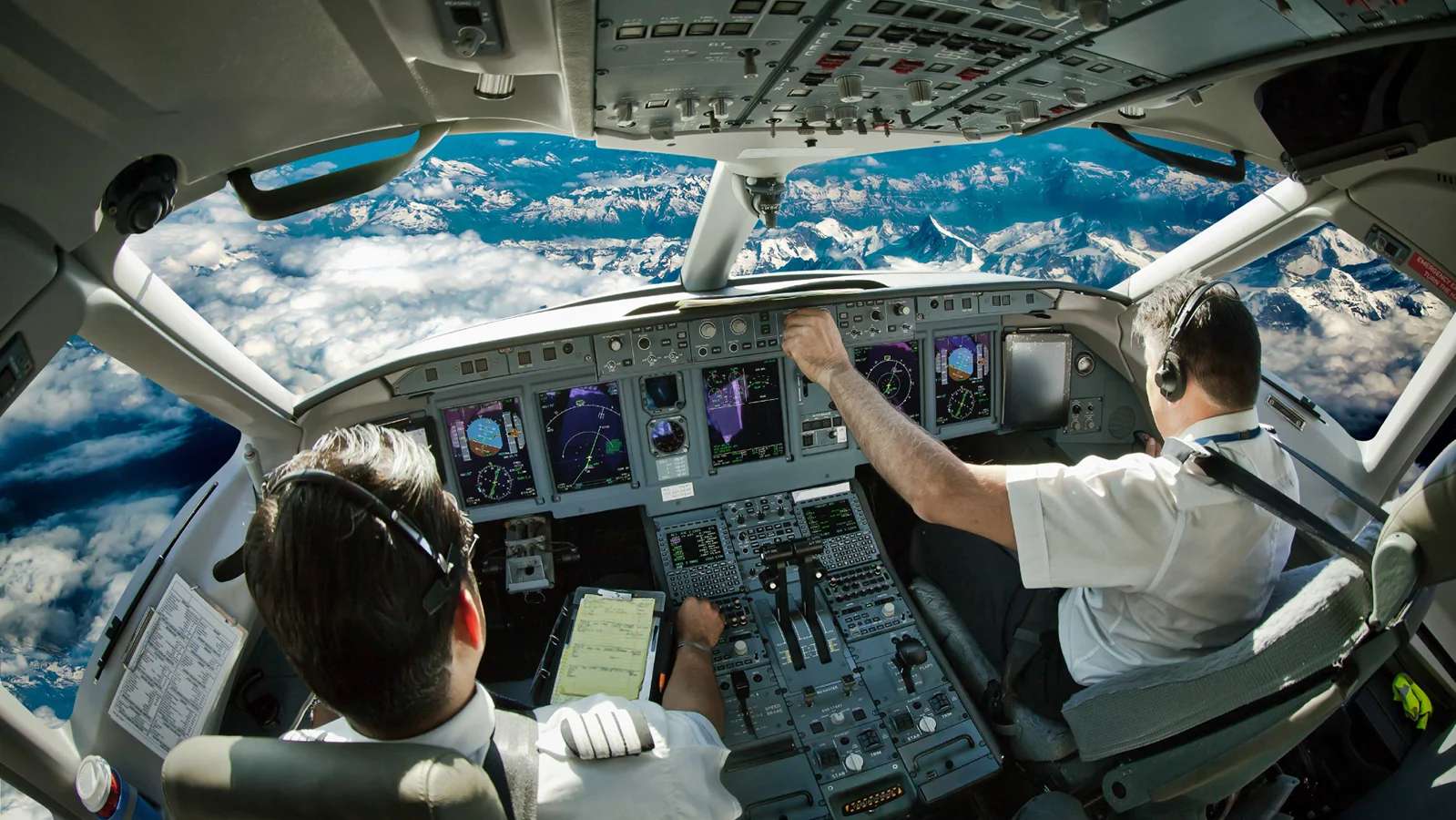
The technology will upgrade a cockpit to a place where both a human pilot and an AI co-pilot continuously monitor and assess the flight's parameters, each focusing on different aspects but working together to ensure passenger safety.
Air-Guardian operates by proactively interpreting the pilot's attention. It utilises eye-tracking technology for humans and "saliency maps" for AI, pinpointing the areas of focus within the cockpit's visual field. These maps function as a virtual guide, aiding the AI in comprehending algorithms and identifying potential risks long before they escalate, setting it apart from traditional autopilot systems that react only after safety breaches have occurred.
Air-Guardian was put through field tests where both the pilot and the AI made decisions based on the same unprocessed visual data during navigation. The results: Air-Guardian not only reduced the risk level during flights but also improved the success rate of reaching predefined waypoints.
"This system doesn't replace human judgement; instead, it complements it, leading to enhanced safety and collaboration in the skies, " said Ramin Hasani, MIT CSAIL research affiliate and the mind behind liquid neural networks.
Air-Guardian's core technology relies on an optimization-based cooperative layer and liquid Closed-form continuous-time neural networks, known for their ability to decipher cause-and-effect relationships. The inclusion of the VisualBackProp algorithm ensures a clear understanding of attention maps within the images.
The research for Air-Guardian was partially funded by organisations such as the United States Air Force Research Laboratory, the United States Air Force Artificial Intelligence Accelerator, The Boeing Company, and the Office of Naval Research. It represents a significant stride in aviation safety.
- Amazon Warns Engineers Against AI Productivity Traps in Latest Memo
- Gnani AI Launches Prisma v3.0 Speech Recognition Model for 10 Languages
- Venttup Raises $3 Million To Expand Precision Manufacturing
- Articul8 Launches Bivia To Help Enterprise AI Agents Make Decisions
- NVIDIA Launches Open-Weight Transcription Model for 40 Languages
- Sarvam AI Rolls Out Indus Cowork to 2,500 Maharashtra Govt Officials