
5 min
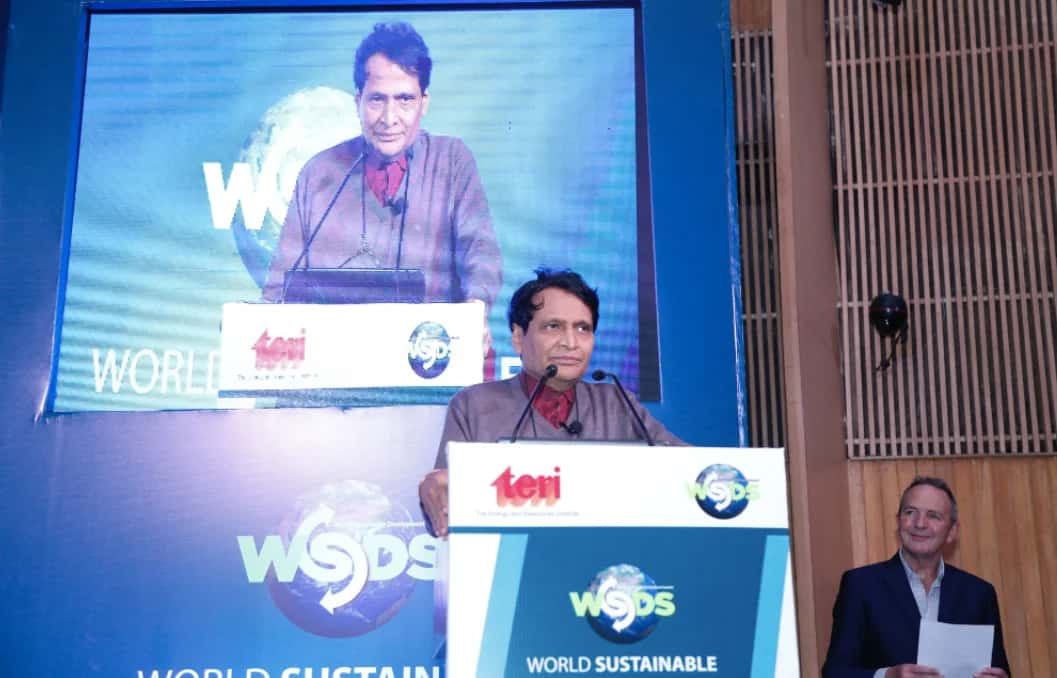
[caption id="attachment_21877" align="aligncenter" width="1057"] File photo of Suresh Prabhu, Union Minister for Commerce and Industry, Government of India.[/caption]
Union Commerce and Industry Minister Suresh Prabhu may release a new industrial policy this May. The policy, which will set a record for being the third major intervention after the industrial policies of 1956 and 1991, will reportedly seek to promote emerging sectors.
According to a report, the draft for the proposed policy has already been released by the Commerce and Industry Ministry for consultation with various stakeholders. Industry insiders are saying that the new policy will completely revamp the Industrial Policy of 1991.
Government sources told a news agency that the new policy would focus on Industrial Revolution 4.0 and would give a lot of importance to new technologies such as artificial intelligence, robotics, deep learning and internet of things. "The ministry is holding consultation with states also on the new policy to see their best practices. It will be released soon," the source added.
The Department of Industrial Policy and Promotion (DIPP) in August 2017 floated a draft industrial policy with an aim to create jobs for the next two decades, promote foreign technology, and transfer and attract $100 billion FDI annually.
A financial magazine reported that the new industrial policy would concentrate on the following five key points:
File photo of Suresh Prabhu, Union Minister for Commerce and Industry, Government of India.[/caption]
Union Commerce and Industry Minister Suresh Prabhu may release a new industrial policy this May. The policy, which will set a record for being the third major intervention after the industrial policies of 1956 and 1991, will reportedly seek to promote emerging sectors.
According to a report, the draft for the proposed policy has already been released by the Commerce and Industry Ministry for consultation with various stakeholders. Industry insiders are saying that the new policy will completely revamp the Industrial Policy of 1991.
Government sources told a news agency that the new policy would focus on Industrial Revolution 4.0 and would give a lot of importance to new technologies such as artificial intelligence, robotics, deep learning and internet of things. "The ministry is holding consultation with states also on the new policy to see their best practices. It will be released soon," the source added.
The Department of Industrial Policy and Promotion (DIPP) in August 2017 floated a draft industrial policy with an aim to create jobs for the next two decades, promote foreign technology, and transfer and attract $100 billion FDI annually.
A financial magazine reported that the new industrial policy would concentrate on the following five key points:
- Strengthen ease of doing business and reduce compliance costs for the industry.
- Make provisions which will give weightage to the quality of foreign direct investment, with a preference to investments that will create local value additions, like, jobs.
- Make provisions for rationalisation of electricity cost for industries.
- Incentivise research and development with the objective of positioning India as a test bed for emerging technologies and creating an environment for ease of innovation.
- Help "medium"-sized enterprises in the SME sector.
- AI Productivity to Add $28 Billion to $84 Billion to India's GDP: Cognizant Study
- OpenAI's Codex Helps in Aerodynamic Engineering for Mazda
- Bengaluru Accounts for 34% of India's FDE Talent: Report
- 84% See AI Productivity Gains, but Only 10% Allow Agent Autonomy: TCS Study
- Snowflake Introduces Business Ontology, Cortex AI Gateway to Bring AI Agents Into Enterprise Workflows
- Three Members Behind Claude Code Leave Anthropic Within 10 Days