Key takeaways
- OpenAI projects an annual revenue run rate of $20 billion by 2025.
- Plans to invest $1.4 trillion in infrastructure over the next eight years.
- Funding will come from revenue growth and selling computing capacity to other companies.
- Rejects the need for government guarantees for data centers, emphasizing private sector accountability.
- Suggests governments could benefit from building their own AI infrastructure.
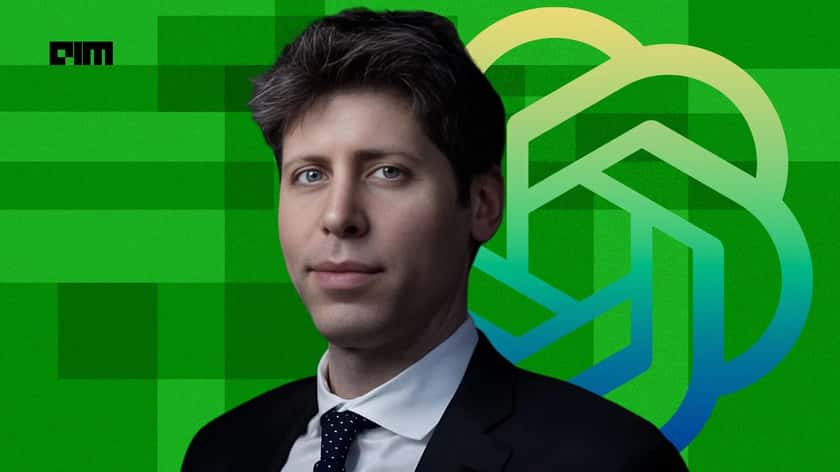
OpenAI chief executive Sam Altman said the company expects to surpass an annualised revenue run rate of $20 billion by the end of 2025 and is planning infrastructure commitments of around $1.4 trillion over the next eight years, as it scales up computing power to meet growing demand for AI systems.
OpenAI intends to fund its expansion through continued revenue growth, potential equity and debt raises, and by selling computing capacity directly to other companies.
“We expect to end this year above $20 billion in annualised revenue run rate and grow to hundreds of billions by 2030,” Altman announced in a post on X. “We are looking at commitments of about $1.4 trillion over the next eight years.”
Altman clarified that the company is not seeking government guarantees for its data centres, pushing back on speculation following recent comments from OpenAI’s chief financial officer, Sarah Friar.
“We do not have or want government guarantees for OpenAI data centres,” he said. “Governments should not pick winners or losers and taxpayers should not bail out companies that make bad business decisions.”
Instead, Altman suggested that governments could build and own their own AI infrastructure, with benefits accruing to the public. “We can imagine a world where governments decide to offtake a lot of computing power and get to decide how to use it…But this should be for the government’s benefit, not the benefit of private companies,” he wrote.
Altman said the only area where OpenAI has discussed potential government-backed financing is semiconductor fabrication. “The basic idea has been to ensure that the sourcing of the chip supply chain is as American as possible,” he said, emphasising that this differs from private datacenter financing.
Responding to concerns about whether OpenAI could become “too big to fail”, Altman said, “If we screw up and can’t fix it, we should fail, and other companies will continue on doing good work. That’s how capitalism works.”
He also addressed why the company is investing at such a scale now rather than expanding gradually. “We are trying to build the infrastructure for a future economy powered by AI. Massive infrastructure projects take quite a while to build, so we have to start now,” he said.
Altman noted that the company faces severe compute constraints, which limit new features and model rollouts. “Based on the trends we are seeing…the risk to OpenAI of not having enough computing power is more significant and more likely than the risk of having too much,” he said.
He added that OpenAI’s long-term mission requires scaling up to support breakthroughs in areas such as scientific discovery and healthcare. “We no longer think it’s in the distant future,” Altman wrote. “Our mission requires us to do what we can to not wait many more years to apply AI to hard problems, like contributing to curing deadly diseases.”
Altman concluded that while OpenAI’s plan carries risks, market forces—not government intervention—should determine its outcome. “We plan to be a wildly successful company, but if we get it wrong, that’s on us,” he said.
Spotted an error? Tell our editors. Read our editorial standards and corrections.