Key takeaways
- PyTorch Live simplifies the creation of AI-powered mobile experiences using a single programming language, JavaScript.
- This tool builds upon PyTorch Mobile, enhancing the transition from model training to deployment within the PyTorch ecosystem.
- The release includes a command-line interface and a data processing API for integrating custom machine learning models.
- Future plans include facilitating community sharing of PyTorch models and demos through PyTorch Live.
At its Developer Day conference, PyTorch announced the release of PyTorch Live, a set of tools designed to make AI-powered experiences for mobile devices easier. PyTorch Live offers a single programming language — JavaScript — to build apps for Android and iOS, as well as a process for preparing custom machine learning models to be used by the broader PyTorch community.
PyTorch Live builds on PyTorch Mobile, a runtime that allows developers to go from training a model to deploying it while staying within the PyTorch ecosystem and the React Native library for creating visual user interfaces. PyTorch Mobile powers the on-device inference for PyTorch Live.
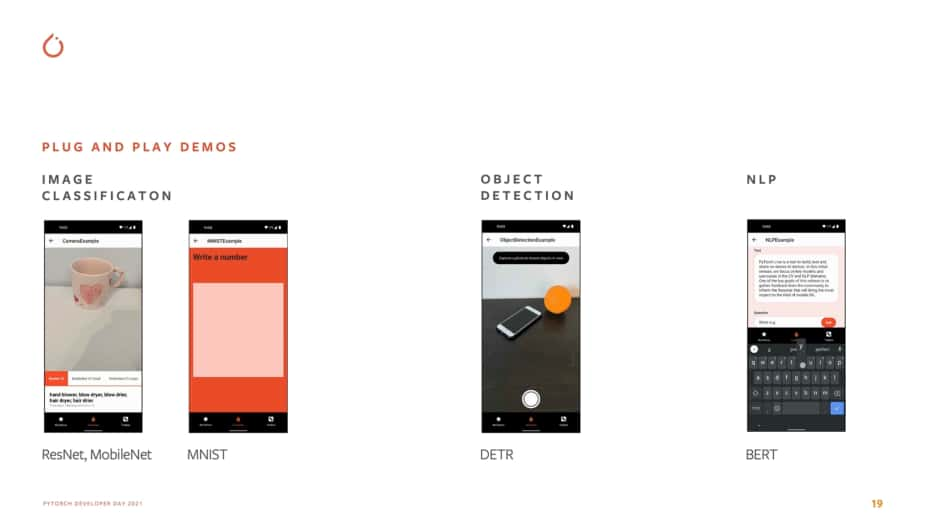
The tool ships with a command-line interface (CLI) and a data processing API. The CLI enables developers to set up a mobile development environment and bootstrap mobile app projects. As for the data processing API, it prepares and integrates custom models to be used with the PyTorch Live API, which can then be built into mobile AI-powered apps for Android and iOS.
In the future, the company plans to enable the community to discover and share PyTorch models and demos through PyTorch Live, as well as provide a more customizable data processing API and support machine learning domains that work with audio and video data.
Spotted an error? Tell our editors. Read our editorial standards and corrections.