
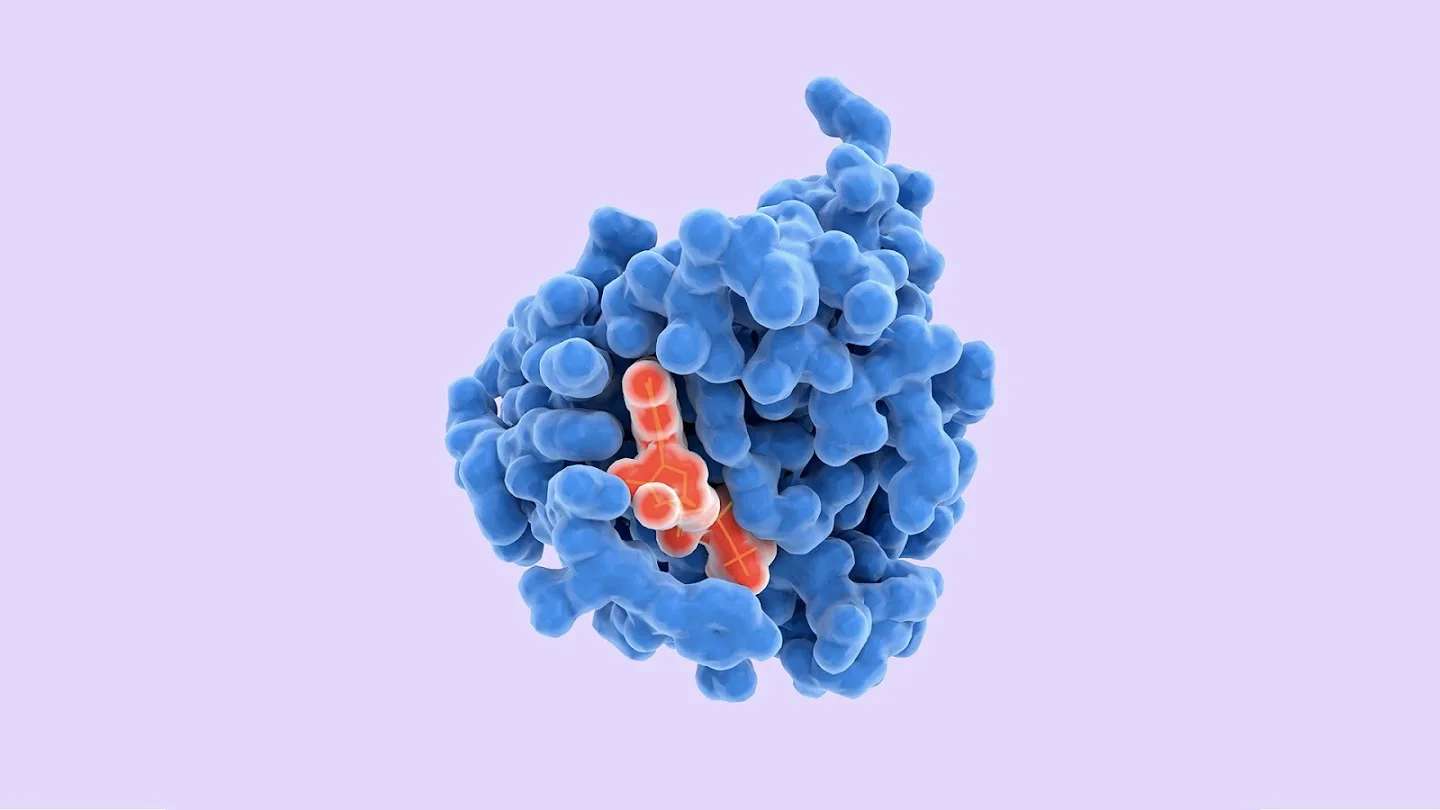
A recent breakthrough in AI has led scientists to draw new revolutionary proteins. The advancements are spearheaded by a team of scientists led by David Baker, Biochemist, University of Washington (UW), Seattle, who reported designing molecules in seconds instead of months. This is expected to lead to many new vaccines, sustainable biomaterials, and treatments.
The first-ever medicine—a COVID-19 vaccine—to be made from a novel protein designed by humans was authorised by South Korean regulators, which is based on a spherical protein called a ‘nanoparticle’.
The paper titled, ‘Robust deep learning–based protein sequence design using ProteinMPNN’, published by biologists at the University of Washington School of Medicine explains how machine learning can be used to create protein molecules more accurately and quickly.

Baker laboratory spent over three decades on making new proteins, with the help of a software called Rosetta. The process was split into steps for deriving the final protein. Firstly, researchers conceived a shape for a novel protein, majorly by cobbling together bits of other proteins. The software would then deduce a sequence of amino acids that corresponded to this shape.
“Proteins are fundamental across biology, but we know that all the proteins found in every plant, animal, and microbe make up far less than one percent of what is possible. With these new software tools, researchers should be able to find solutions to long-standing challenges in medicine, energy, and technology,” said David Baker, senior author and professor of biochemistry, University of Washington School of Medicine.
The team developed the protein with an approach called ‘hallucination’, where researchers would feed random amino-acid sequences into a structure-prediction network.
AlphaFold, and a similar tool called ‘RoseTTAFold’, were trained to predict the structure of individual protein chains, which further led to the discovery of using such networks to model assemblies of multiple interacting proteins.
- Amazon Warns Engineers Against AI Productivity Traps in Latest Memo
- Gnani AI Launches Prisma v3.0 Speech Recognition Model for 10 Languages
- Venttup Raises $3 Million To Expand Precision Manufacturing
- Articul8 Launches Bivia To Help Enterprise AI Agents Make Decisions
- NVIDIA Launches Open-Weight Transcription Model for 40 Languages
- Sarvam AI Rolls Out Indus Cowork to 2,500 Maharashtra Govt Officials