
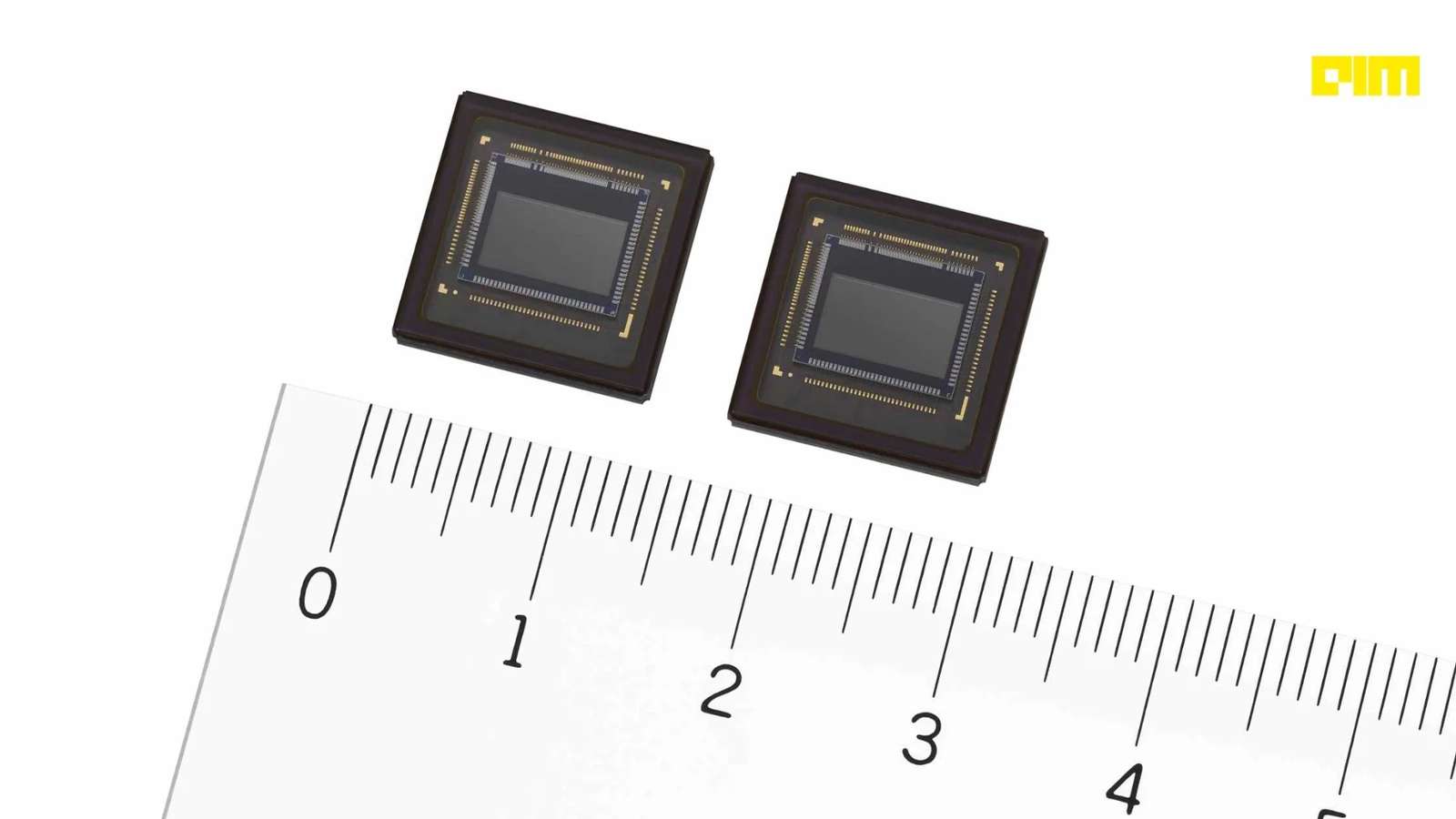
Sony Semiconductor Solutions Corporation has announced the upcoming release of two types of stacked event-based vision sensors. These sensors, designed for industrial equipment, are capable of detecting only subject changes. The two new sensors employ stacking technology leveraging Sony's proprietary Cu-Cu connection 2 to achieve the industry's smallest 1-pixel size of 4.86μm.
Event-based vision sensors asynchronously detect luminance changes for each pixel and output the changed data only, combining it with information on pixel position (x-y coordinates) and time, thereby enabling high-speed, low latency data output.
In addition to operating with low power consumption and delivering high-speed, low-latency, high-temporal-resolution data output, the new sensors also feature a surprisingly high resolution for their small size. All of these advantages combine to ensure immediate detection of moving subjects in diverse environments and situations.
These two sensors were made possible by combining Sony's CMOS image sensor technology with Prophesee's unique event-based vision sensing technology. This enables high-speed, high-precision data acquisition and contributes to improving the productivity of industrial equipment.
These products can sense slight changes in vibration, detecting abnormalities for use in predictive maintenance of equipment. They also sense changes in sparks produced during welding and metal cutting, information that can notify workers of the optimal time to change tools, among other possibilities. Likewise, they can contribute to improved production in various applications that frame-based image sensors have trouble with and support work processes that rely on the human experience.
Earlier, in interaction with Dr Angshuman Ghosh, Head of Data Science at Sony Research India, we tried to understand his thought processes and gain insights into the inner workings of the emerging field of data science. Find the story here.
- Anthropic Posts $17 Bn in Q3 Revenue, Swings to Operating Loss
- OpenAI Signs Four Agreements With Abu Dhabi Across Government, Energy And Investment
- Deep-Tech and Green Finance to Drive India’s Climate Investments in 2027
- Google’s Project Suncatcher Satellite Generates First AI Response in Orbit
- DeepSeek Proposes Super-Agent Architecture to Automate AI Coding Workflows
- Arrowhead AI Launches Fletch Voice Model for Multilingual Customer Calls