
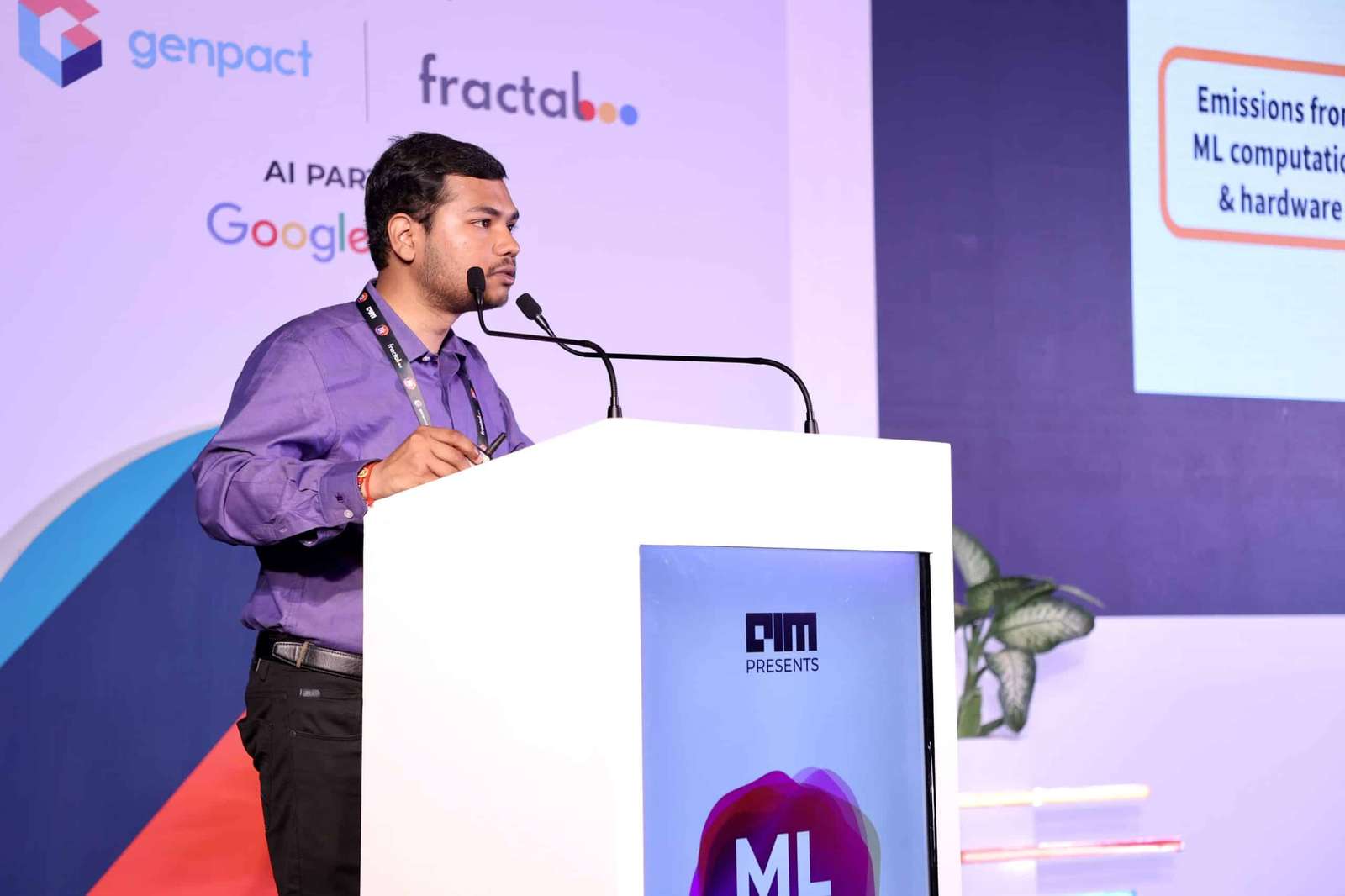
“The data-centric approach to machine learning is far more sustainable than the model-centric one,” said Ayon Roy, the executive data scientist for NielsenIQ, at MLDS 2024. AI and sustainability is continuously debated, trying to quantify how much energy the model uses and what are the environmental benefits to it.
Artificial intelligence is being used to address climate change by improving climate predictions, energy efficiency, and monitoring environmental health. However, the AI industry's growth raises ethical concerns due to its substantial carbon and water footprints.
We know that the production of AI systems requires significant computational power, contributing to carbon emissions and water usage, and necessitates mining for rare earth minerals, causing soil and air pollution.
A study by Hugging Face revealed that their language model BLOOM generated over 50 metric tons of CO2, equivalent to 60 flights from London to New York. The shocking energy cost of these models only increases with their increasing size. Roy explained that trying out different approaches in training and fine tuning the model makes a difference. “Like a lot of people, I believed that the model-centric approach was efficient, but over time I’ve seen how the data-centric approach really optimises my processes better.”
Andrew Ng backs this approach and stressed on the importance of improving data quality to achieve desired performance in AI systems. This not only increases the accuracy of the models but is also more compute efficient, saving energy and financial costs.
Ayon Roy also works on projects that help studying the environmental trends and its impact. “We have to consistently be mindful of aligning AI development with sustainability and responsible AI principles that includes fairness, safety, and reduced biases,” he said.
- Lenovo Unveils New AI, HPC Servers With AMD’s 6th Gen EPYC Processors
- Only 35% Indian Enterprises are Prepared for AI Cyberattacks: Kyndryl Study
- OpenAI Launches API Inference Residency in India
- HCLTech, PTC Launch Pre-Configured PLM Solution for Semiconductor Firms
- IBM, Microsoft Launch Agentic AI Platform With Over 6,000 AI Agents
- NHA Selects EkaCare for AI Voice Scribe in Public Health Facilities