
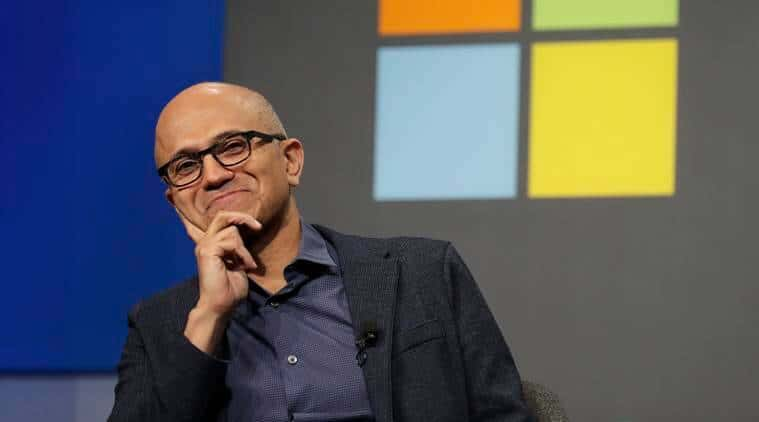
Microsoft CEO Satya Nadella has challenged conventional definitions of artificial general intelligence (AGI), arguing that true AGI should be measured by economic growth rather than AI advancements alone. Nadella said that the focus should be on broader economic impact rather than self-proclaimed AI breakthroughs.
“If you’re going to have this explosion or abundance…of intelligence available, the first thing we have to observe is GDP growth,” said Nadella in a recent interview with Dwarkesh Patel. “Before I get to what Microsoft’s revenue will look like, there’s only one governor in all of this. This is where we get a little ahead of ourselves with all this AGI hype.”
He added that current economic growth rates in the developed world remain low, at around 2%, and inflation-adjusted figures would remain close to zero. According to Nadella, the real benchmark for AGI’s success should be global economic growth reaching 10%.
“Us self-claiming some AGI milestone, that’s just nonsensical benchmark hacking to me,” he said. “The real benchmark is the world GDP growing at 10%.”
Nadella said that the primary beneficiaries of AI advancements will not be tech companies but industries using AI to drive productivity.
“The big winners here are not going to be tech companies. The winners are going to be the broader industry that uses this commodity,” he said. “Suddenly, productivity goes up, and the economy is growing at a faster rate. When that happens, we’ll be fine as an industry.”
Drawing a comparison to past technological revolutions, Nadella said that AI should drive significant economic progress similar to the Industrial Revolution.
“When we say this is like the Industrial Revolution, let’s have that Industrial Revolution type of growth,” he said. “That means to me, 10%, 7%, developed world, inflation-adjusted, growing at 5%. That’s the real marker. It can’t just be supply-side.”
Microsoft recently introduced Majorana 1, the world’s first quantum chip using topological qubits, along with Muse, a generative AI model for gameplay ideation. The tech giant also made Azure AI Foundry Labs available – a hub where developers, startups, and enterprises can explore Microsoft’s latest AI research and innovations. It provides access to experimental AI models, agentic frameworks, and tools that accelerate the transition from research to real-world applications.
- Bihar Partners with IT Cos to Train Government School Teachers In AI
- Meta Wants $95 Billion Through Stock Sales to Fund AI Infrastructure
- Pronto Founder Enters Physical AI Space With Provision Labs
- HCLTech Taps NVIDIA Simulation Tools to Automate Software-Defined Vehicle Testing
- Tata Communications Plans $450 Mn Investment to Build 10,000 Km AI Network
- Telangana Unveils AI-Powered Digital Twin of IT Minister at DevFest 2026