
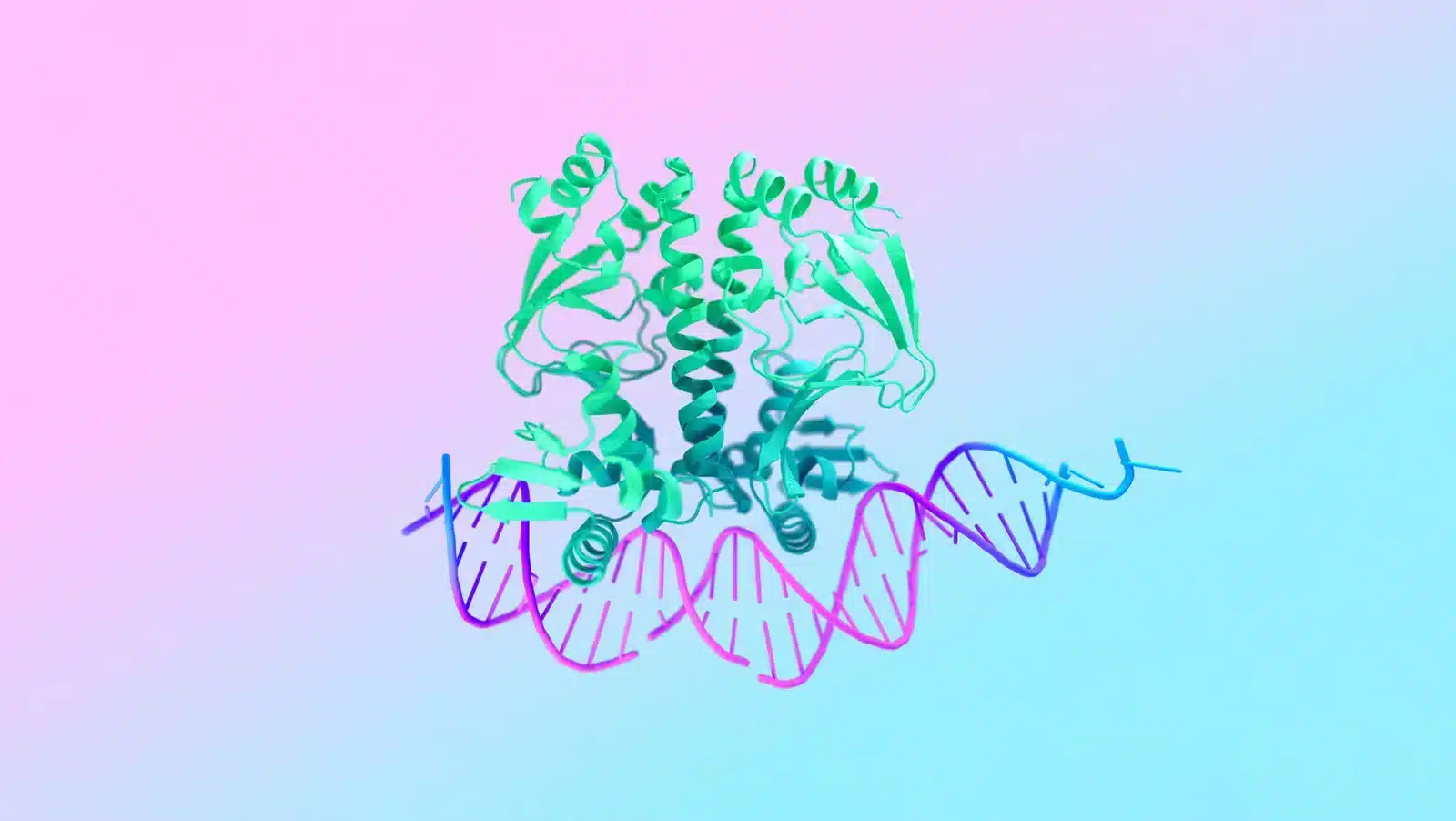
Claude AI has identified a previously uncharacterised enzyme system with DNA repeat patterns reminiscent of CRISPR, in an early demonstration of how AI agents could be used to search biological data and generate hypotheses for laboratory testing.
The system, which Anthropic has named array-associated reverse transcriptases (ART), was found in bacteriophages, the viruses that infect bacteria. While earlier research identified the reverse transcriptase at the centre of the system, Anthropic says Claude was the first to identify the combination of the enzyme, an adjacent accessory protein, and a long array of repeated DNA sequences.
The company announced the finding alongside the launch of a new life sciences research group and laboratory. The work is currently described in a preprint, and researchers are still trying to determine what ART actually does.
Anthropic said Claude was given an initial prompt to search a large database for unusual reverse transcriptases. Around 950 Claude agents then worked for about 21 hours, using roughly 210 million tokens. The agents identified more than 2,00,000 reverse transcriptases, generated about 3,500 candidate systems and narrowed these down to 20 candidates for deeper analysis.
One agent eventually noticed a tandem repeat pattern next to an unusual reverse transcriptase. It compared the sequence with known systems, searched the scientific literature and generated a report for human researchers to investigate.
Anthropic’s scientists subsequently tested the candidate in the laboratory. The ART system consists of three components: a reverse transcriptase, a neighbouring partner gene and an array of evenly spaced DNA repeats. The repeat structure resembles the arrays found in CRISPR systems, which contain sequences that help make CRISPR-based systems programmable.
Initial laboratory experiments found that the ART array is expressed as multiple short RNAs. However, Anthropic has not yet established the biological function of the system or demonstrated that it can be used as a gene-editing tool.
Feng Zhang, a CRISPR genome-editing pioneer and professor at MIT and the Broad Institute, reviewed the preprint and described the identification of RNA-repeat arrays associated with reverse transcriptases as intriguing and worthy of further investigation.
Anthropic said it established its biology laboratory in spring 2026. Its researchers use Claude to analyse large collections of DNA sequences, examine protein families, identify unusual genomic patterns and generate hypotheses. Human scientists then decide which candidates are worth testing and conduct the laboratory experiments.
The company said its current work is limited to BSL-1 and BSL-2 research and that the laboratory does not handle pathogens that can infect humans. The physical laboratory work is performed by human scientists, with Claude being used primarily for computational analysis, hypothesis generation and interpretation of experimental results.

Your reaction
Discussion
What's your take on this story?
No comments yet — be the first to share your view.