
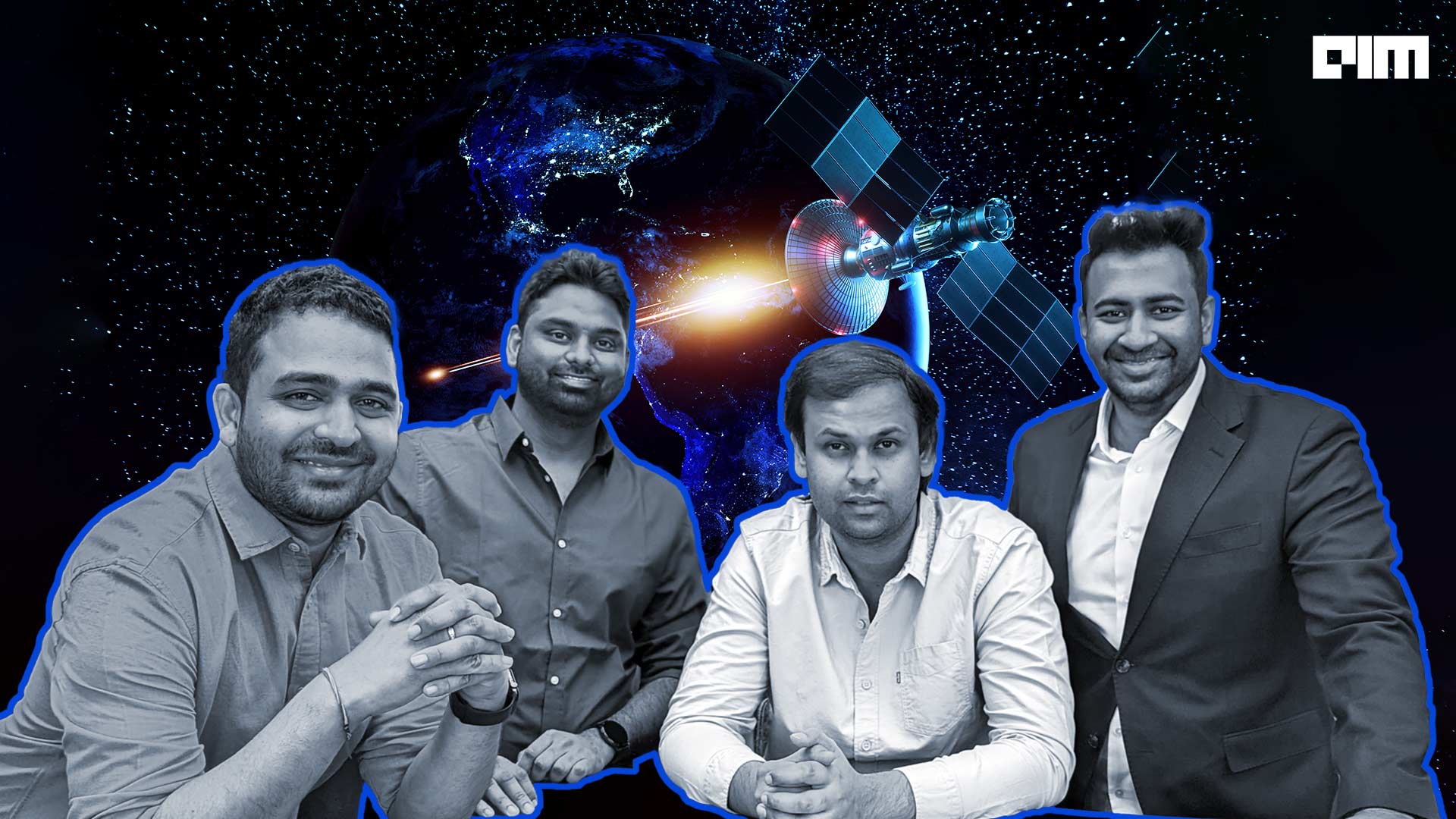
Hyderabad-based Dhruva Space and the Manipal Academy of Higher Education (MAHE) have signed a memorandum of understanding to co-develop the Advanced Space Capability, Engineering & New-space Technologies (ASCENT) Centre of Excellence (CoE) at the MAHE campus in Manipal.
The centre will bring academia and industry together to support space systems engineering, applied research, mission development and technology qualification.
Expected to be inaugurated in late 2026, ASCENT will house infrastructure for spacecraft development, integration, testing and qualification. The facility will include a Class 10,000 cleanroom, a Helmholtz cage and an air-bearing table for spacecraft dynamics and control validation. The partners said the centre aims to create an ecosystem where research can be translated into operational space technologies and engineering programmes.
Krishna Teja Penamakuru, Co-Founder and Chief Operations Officer of Dhruva Space, said that the startup is establishing CoEs where ideas can mature from research to mission-ready solutions in close collaboration with industry.
The centre will enable student-led satellite and hosted-payload missions, giving students experience across spacecraft design, integration, testing, launch preparation, and on-orbit operations.
It will also support research and development programmes in autonomous spacecraft technologies, space sustainability, space situational awareness, space-based Internet of Things applications and microgravity research.
According to the roadmap outlined by the partners, ASCENT plans to develop and operate at least three CubeSat missions with sizes ranging from 1U to 6U by 2028.
By 2030, it aims to deploy a swarm constellation of femto-satellites, establish a Space Situational Awareness Control Centre and develop indigenous satellite bus designs, payloads and modular satellite platforms. The centre also targets at least one interplanetary technology demonstration mission by 2035.
Dr Sharath K Rao, Vice Chancellor of MAHE, said, “Through our partnership with Dhruva Space, our students will have the unique opportunity to work on real satellite missions, gain hands-on experience with industry-grade infrastructure and learn by solving real engineering challenges.”
The partners also emphasised that the centre would combine MAHE’s academic capabilities with Dhruva Space’s engineering expertise to support indigenous space technologies, collaborative research and the development of mission-ready talent for India’s commercial space ecosystem.

Your reaction
Discussion
What's your take on this story?
No comments yet — be the first to share your view.