
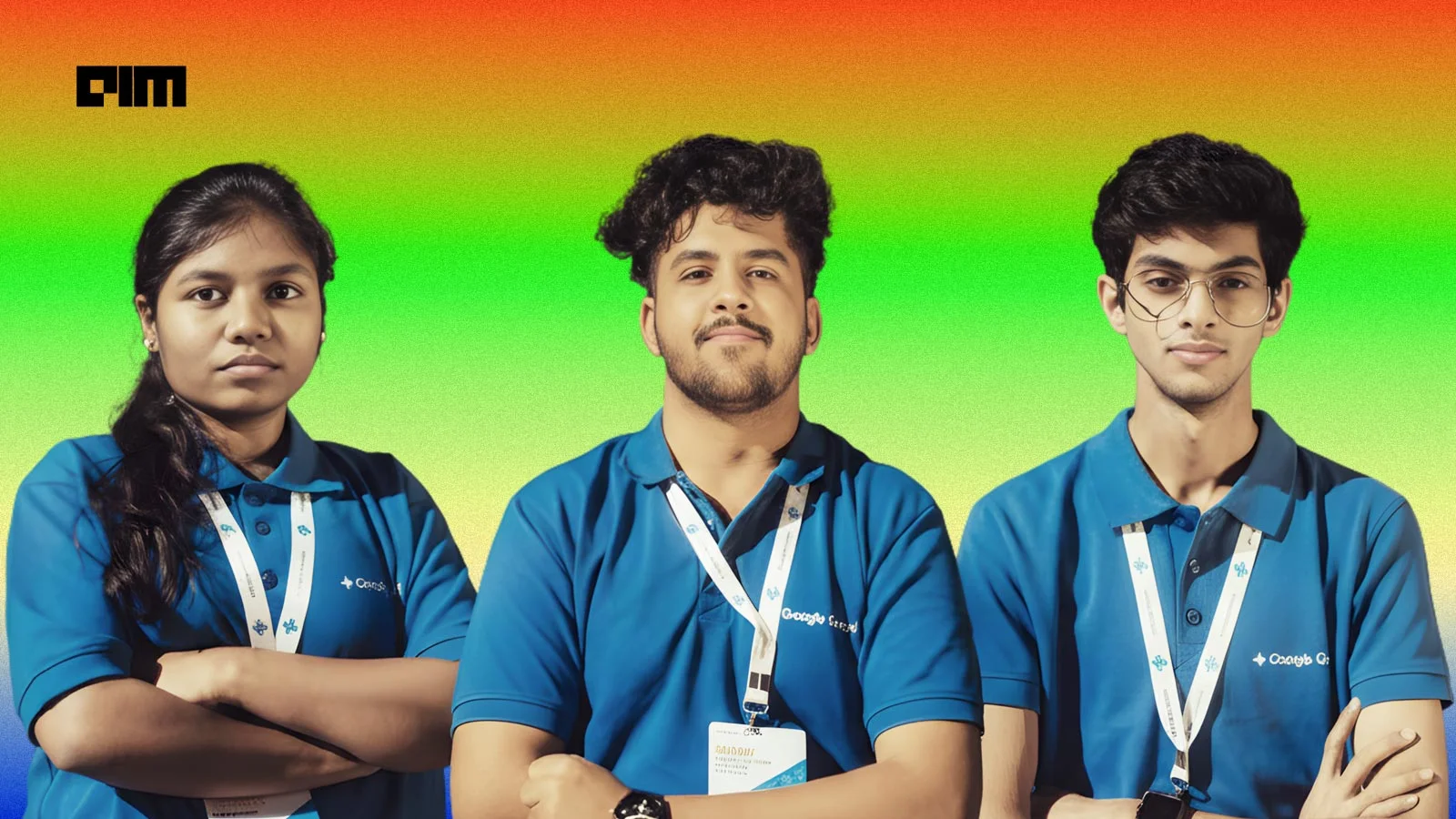
Two third-year BTech students from Sona College of Technology, Salem, Tamil Nadu won the top prize of ₹25 lakh at Google’s Gemini AI-powered ‘Fund My Crazy’ challenge held during IIT Bombay’s Mood Indigo festival last month. The national competition attracted participation from more than 29,000 teams across India.
Bhavana L and Sunil Kumar L secured the top honour for ‘Rest in Pieces’, a platform designed to reduce electronic waste and lower costs in engineering education by enabling the reuse of discarded student project hardware. The idea stood out for addressing a routine yet largely invisible issue in project-based technical education—the short lifecycle of expensive academic prototypes.
Across engineering colleges, semester projects are central to hands-on learning. Students routinely spend thousands of rupees on components such as Raspberry Pi boards, sensors, motors and robotics kits to build working prototypes for evaluation. “What often gets ignored is not just the hardware waste, but the money and effort behind every student project,” Kumar noted in a conversation with AIM.
Once assessments conclude, many of these projects are dismantled or stored away indefinitely, even when the hardware remains fully functional. Each academic year, junior students are required to purchase the same components again.
Rest in Pieces envisions a verified, student-to-student marketplace where senior students can list their tested and certified project hardware, allowing juniors to access components at significantly lower costs. By extending the lifecycle of academic hardware, the initiative aims to reduce financial barriers to experimentation while tackling the growing problem of electronic waste on engineering campuses.
The idea emerged from personal experience. Sunil Kumar had spent nearly ₹15,000 building a smart mirror for a semester project , an amount that required prolonged discussions with his family. The realisation that the project would likely be dismantled after evaluation raised a fundamental question: why should innovation be both expensive and short-lived? After talking to Bhavana, it became clear that this was not an isolated incident but a systemic pattern repeated across institutions every academic year.
While the problem was rooted in lived campus experience, the team used Google’s Gemini AI to shape the concept into a competition-ready proposal. “Gemini helped us structure our research and presentation, but the idea came directly from our experience of how student projects are built and then abandoned,” Bhavana added. Tasks that would typically take weeks were compressed into a much shorter preparation window.
Rest in Pieces is expected to roll out first within the Sona College ecosystem before being adapted for other institutions. The students will use the prize money to pilot the model, address logistical challenges, and assess student willingness to participate in a structured reuse system.
Challenge Winners
The Fund My Crazy challenge also recognised two other student-led innovations with top honours.
Hardik Sachan, a student at Shaheed Bhagat Singh Evening College, Delhi, was ranked among the winners for Feko Pay, a chat-first application that simplifies splitting café and food bills among friends. The app uses AI-assisted photo scanning to itemise bills and automate settlements. Sachan used Gemini AI during the ideation phase and for presentation.
Garvit Dudeja from Malaviya National Institute of Technology, Jaipur, was also listed among the top three winners for Swappr, a gamified campus barter platform that enables students to exchange unused but high-value items such as textbooks, musical instruments, and equipment. Dudeja used Gemini AI to organise his thought process and structure the product flow.

Your reaction
Discussion
What's your take on this story?
No comments yet — be the first to share your view.