
The Ministry of Electronics and Information Technology (MeitY) will assess whether AI is affecting the pace of global capability centre (GCC) expansion even after a series of labour and tax reforms targeted at boosting the sector.
The review comes as the government evaluates whether policy changes have translated into stronger GCC growth and what role AI may be playing in altering investment decisions.
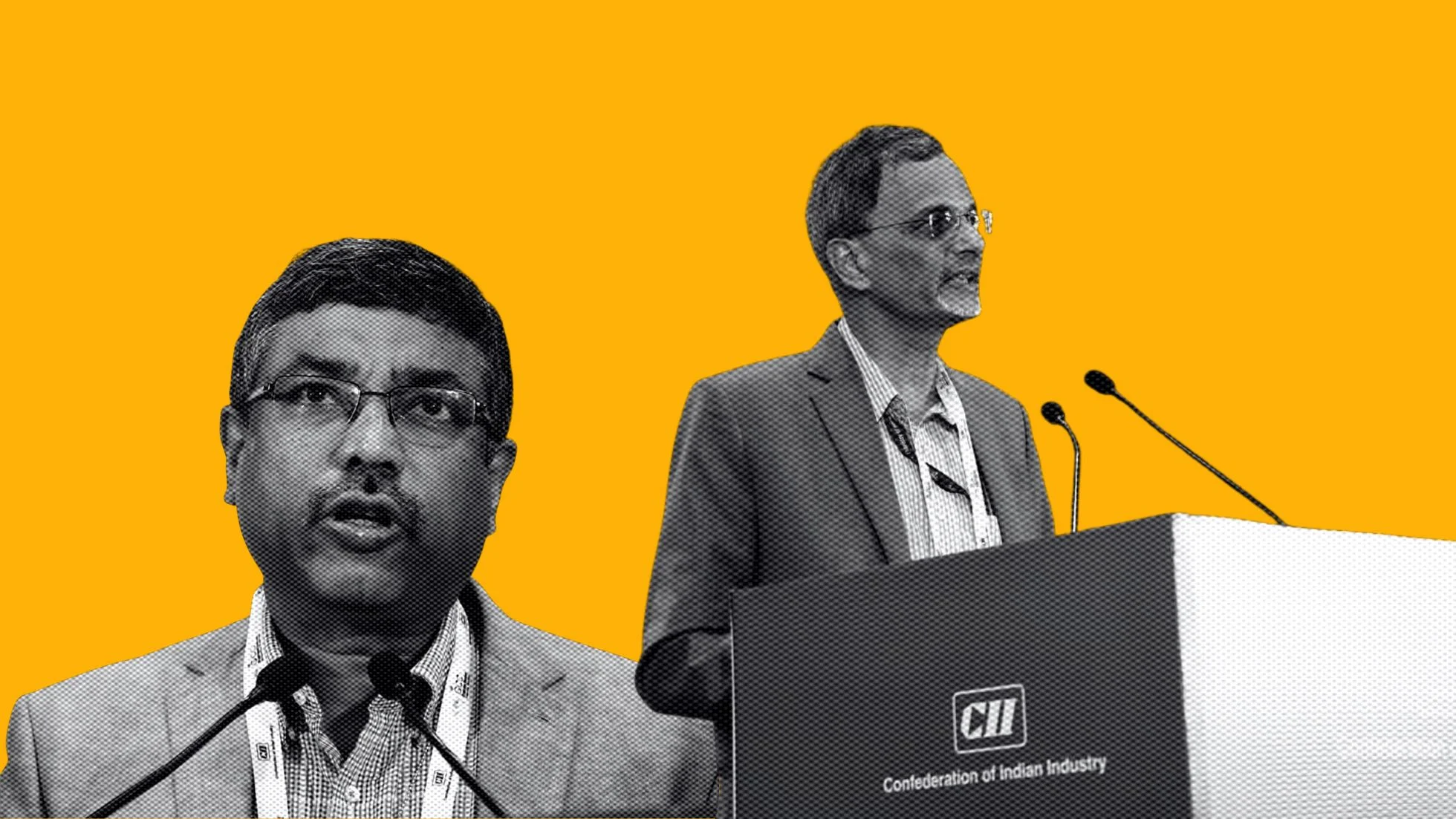
Speaking at the CII GCC Business Summit in New Delhi, MeitY Secretary S Krishnan said the government wants to measure the outcomes of recent reforms, including changes to labour regulations and safe harbour tax provisions. If GCC momentum has not accelerated as expected, the government will examine whether AI is a contributing factor.
Krishnan noted that GCCs now contribute nearly 2% of India’s GDP, while IT and IT-enabled services remain the country’s largest export sector at about $250 billion. He said AI should be deployed across GCCs to leverage India’s talent base and cost advantages. He also argued that slower enterprise adoption of AI globally presents an opportunity for India’s GCC ecosystem.
The government’s assessment comes alongside comments from Chief Economic Adviser V Anantha Nageswaran, who said AI is likely to displace routine and rule-based work but will also create demand for higher-value skills and capabilities.
Addressing the same summit, Nageswaran urged GCCs to invest in skilling, capability development, and innovation. He said India’s long-term advantage would depend on moving beyond low-cost execution and building expertise around emerging technologies.
“AI does not build, deploy, or govern itself. Someone has to design these systems, train them, test them, correct them, and hold them to account,” Nageswaran said. “Someone has to decide where they should be used and where they must not be used.”
He argued that AI would not hollow out GCCs. Instead, centres that adapt could increase the value their workforce generates.
The Centre has introduced several measures to strengthen the GCC ecosystem. Nageswaran highlighted the expansion of the transfer pricing safe harbour regime, which aims to improve tax certainty by raising thresholds and expediting approvals. The government has also launched a framework to encourage GCC expansion into tier-2 and tier-3 cities.
Additionally, in the Budget 2026, the union government revised the transfer pricing safe harbour framework for GCCs, allowing eligible centres to qualify for a five-year safe harbour at a 15.5% operating margin. The measure sought to reduce transfer pricing disputes, improve tax certainty and make India a more attractive destination for multinational firms looking to establish GCCs.
At the same time, both officials also stressed that policy support alone would not determine India’s future position in the global GCC market. Krishnan said AI deployment could unlock higher-order technology jobs in India, even as lower-level roles become redundant. Nageswaran warned that India’s competitive edge could erode if skill development and innovation fail to keep pace with global competition.

Your reaction
Discussion
What's your take on this story?
No comments yet — be the first to share your view.