

High compensation remains the primary barrier to Indian professionals returning to India from the United States, revealed a survey by Blind, which hosts anonymous discussions from verified professionals.
The study, conducted in March, surveyed 2,316 Indian professionals currently working in the US to gauge their intent to return to India, salary expectations, and housing plans.
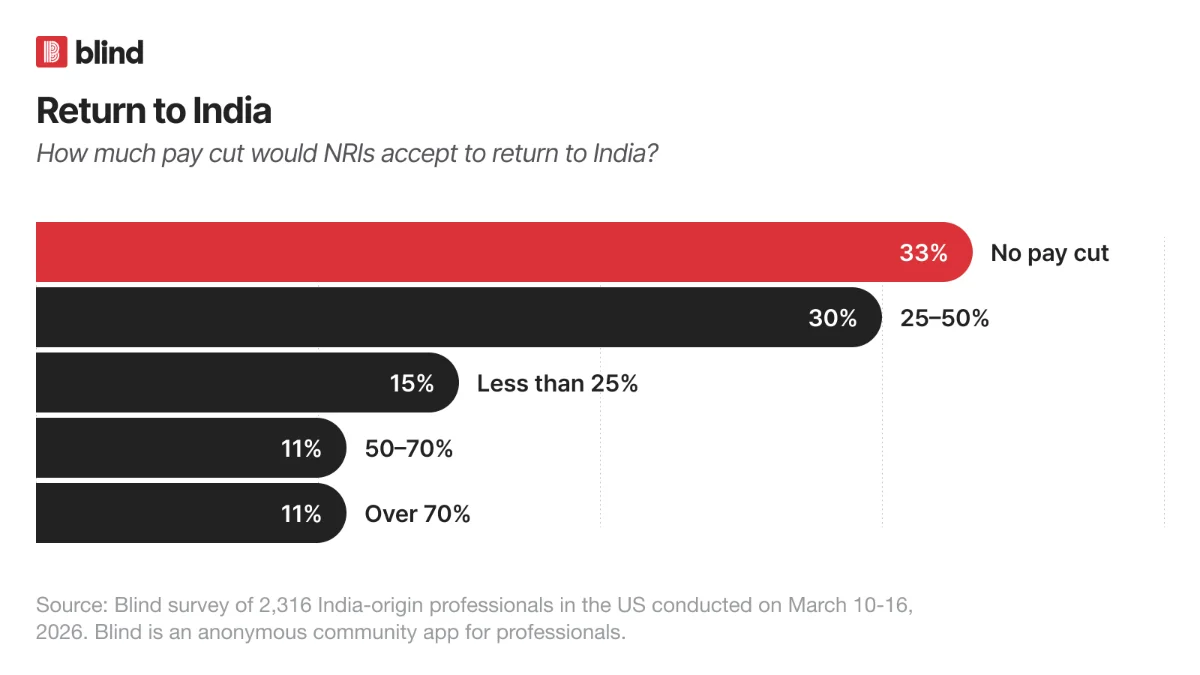
Findings indicated that 58% of respondents were not considering a move back to India within the next two to three years. While India has seen a rapid expansion of global capability centres (GCCs), 33% of those surveyed stated they would accept no pay cut to return.
An additional 45% would only accept a reduction of up to 50%, suggesting that domestic compensation levels do not meet the expectations of the majority of the US-based workforce.
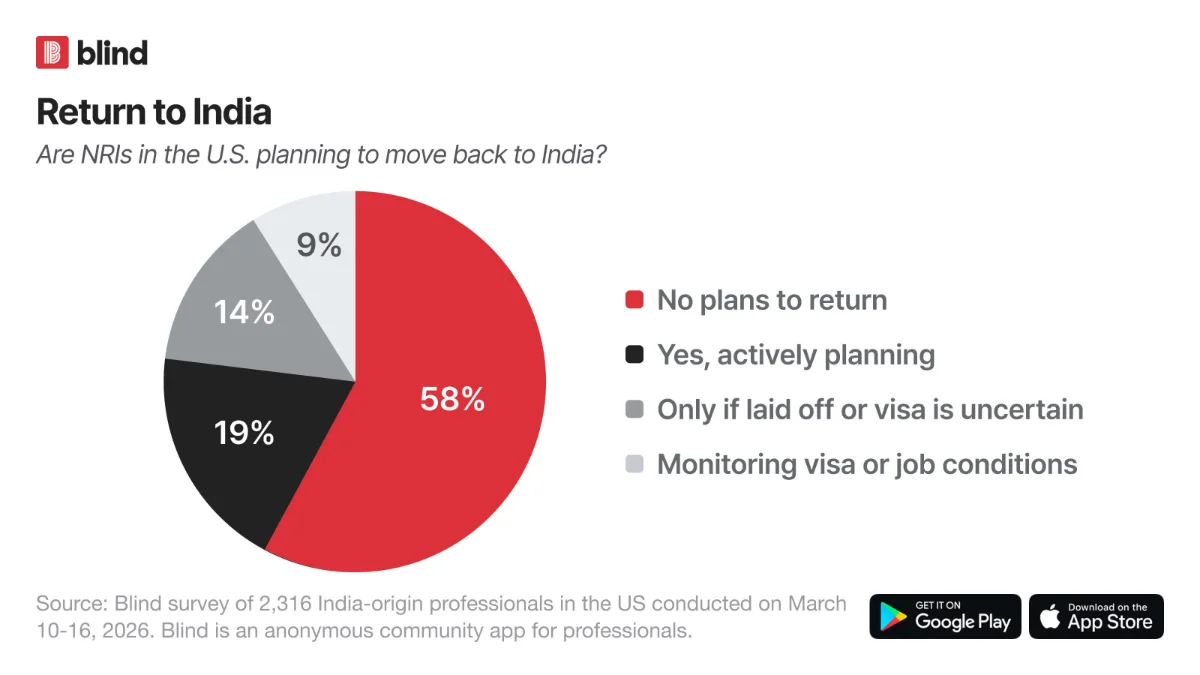
Return migration remains largely motivated by external pressures. Only 19% of respondents said they were actively planning a move, while 14% would only consider returning if faced with a layoff or visa uncertainty. However, willingness to relocate is higher among employees at firms with established Indian operations, such as Walmart, Intel, and ServiceNow, where 62% to 80% expressed interest in returning.
The reluctance to return persists despite a volatile US job market. In the first quarter of 2026 alone, global tech layoffs exceeded 45,000, with over 30,000 in the US, according to RationalFX data.
Major firms have implemented significant workforce reductions to redirect resources toward AI. For instance, Amazon has cut 16,000 corporate roles this year, bringing the total to 30,000 reductions since late 2025. Both Microsoft and Meta have conducted multiple rounds of layoffs in early 2026, with Meta targeting a 5% reduction in its total headcount.
Despite the findings, India’s GCC sector is experiencing record growth. As of March 2026, India hosts over 1,800 GCCs employing approximately 2.4 million professionals, according to NASSCOM. The sector contributed $64.6 billion to the economy in the last fiscal year, with projections reaching $110 billion by 2030.
Bengaluru remains the primary hub with over 875 centres, representing roughly 35% of India’s GCC leasing activity. In 2025, the city recorded 12 million square feet of GCC office leasing, supported by a Grade A office stock of 215 million square feet.
Hyderabad, similarly, has emerged as the fastest-growing challenger, capturing 40% of all new greenfield GCC setups over the last three years. In 2025, Hyderabad secured 35 new centres compared to Bengaluru’s 21, driven by infrastructure in HITEC City and the Financial District.

Your reaction
Discussion
What's your take on this story?
No comments yet — be the first to share your view.