

Perplexity has built an in-house key-value database to replace AWS DynamoDB for fetching prepared web content in its search infrastructure.
The company said CobbleDB was developed by two human engineers and hundreds of persistent AI coding agents over two months.
CEO Aravind Srinivas claimed the migration to in-house database infrastructures like these could save Perplexity “up to a hundred million dollars yearly”.
Perplexity plans to open-source CobbleDB, although it has not announced a release date.
CobbleDB is claimed to reduce production batch-read latency by roughly five times and lower estimated storage costs by at least 20%.
It stores prepared web content, including passages and the information used to retrieve them.
Perplexity said its redesign separates document storage, update management and search-time retrieval, allowing each to be tuned independently.
Previously, processed pages were written directly to DynamoDB, meaning large reprocessing jobs could compete with live searches.
The new system uses a component called Pillar to track document versions, while Lorry groups updates into batches that CobbleDB applies independently.
This lets slower machines catch up without delaying the rest of the system.
CobbleDB keeps frequently requested content in memory and uses local storage for the rest.
A routing layer directs requests to the machines holding the relevant data and can switch to another copy if one is slow.
Perplexity described the system as “purpose-built for our specific workload of repeated batch reads of prepared page records”.
The company said median batch-read latency fell from 31.4 milliseconds to 5.60 milliseconds after the migration.
P90 latency declined from 56.7 ms to 9.77 ms, while P99 fell from 123 ms to 24.2 ms.
The measurements covered batches of roughly 10–15 keys, with an average payload size of 50 KB, at approximately 2,00,000 requests per second.
On the other hand, load tests reached 5,00,000 requests per second without degradation, according to the company.
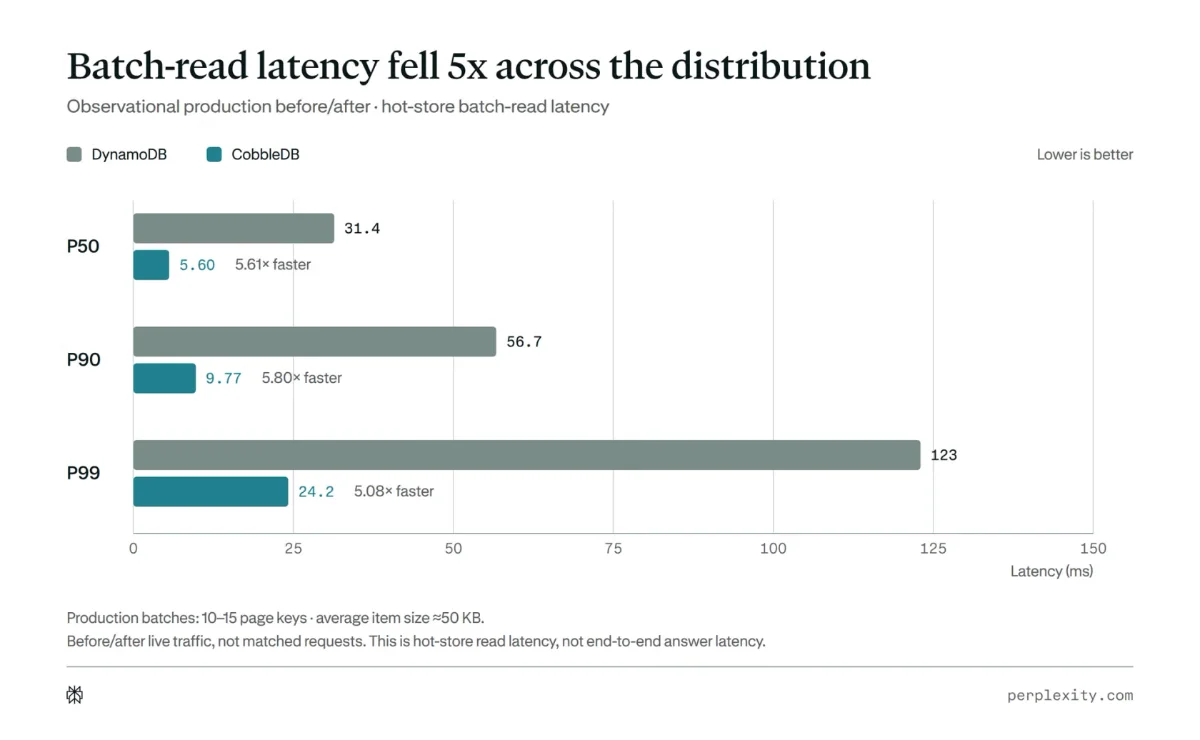
The comparison used live production traffic measured at different times, rather than identical requests run simultaneously.
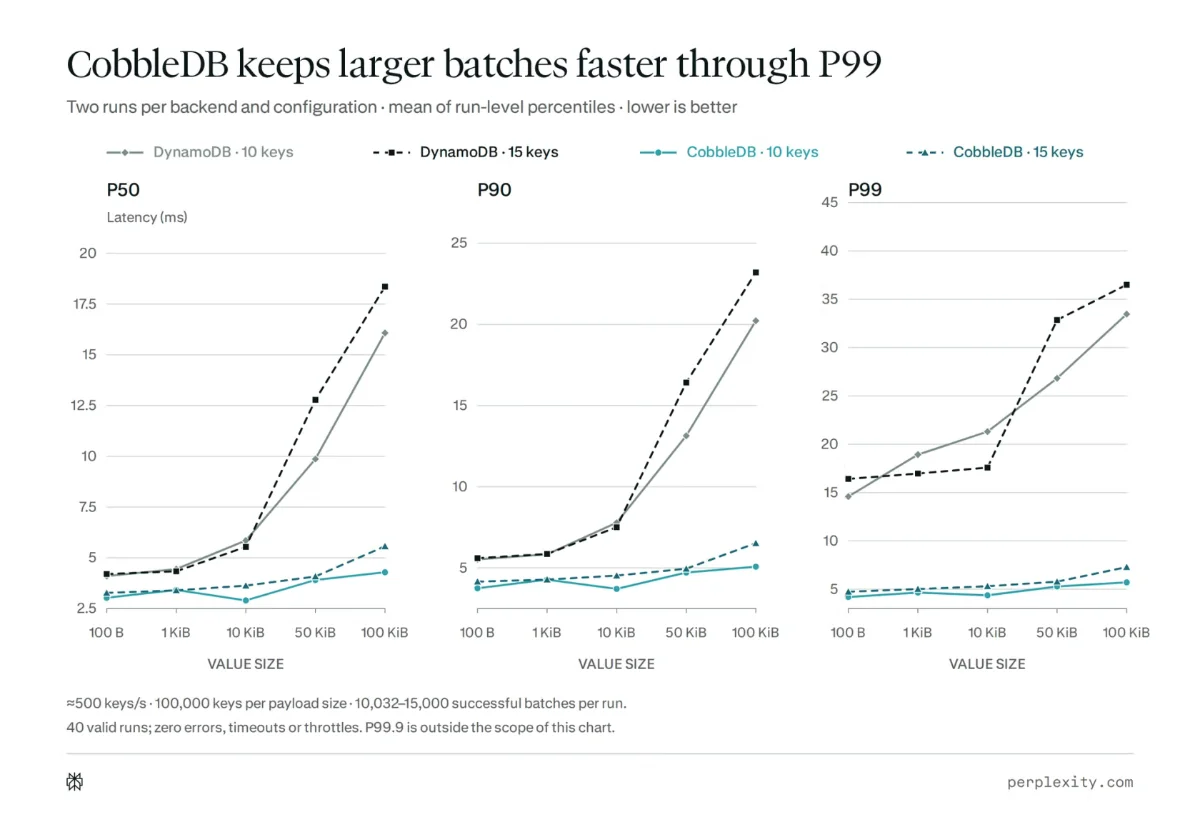
Perplexity also conducted a synthetic benchmark using similar batch sizes and payloads. Its cost estimate, based on storage size and read and write capacity requirements, found CobbleDB at least 20% cheaper than DynamoDB across commitment tiers.

Your reaction
Discussion
What's your take on this story?
No comments yet — be the first to share your view.