Key takeaways
- Recognize Google's significant impact on science through its Nobel-winning researchers.
- Acknowledge Geoffrey Hinton's pivotal role in AI, winning the 2024 Nobel Prize in Physics.
- Understand how corporate innovation can reshape entire scientific disciplines.
- Note that Google has produced five Nobel Laureates, reflecting its research prowess.
- Appreciate the integration of deep learning into Google's products enhancing user experience.
Google has long been at the forefront of technological innovation, but in recent years, its contributions to fundamental science have garnered global recognition.
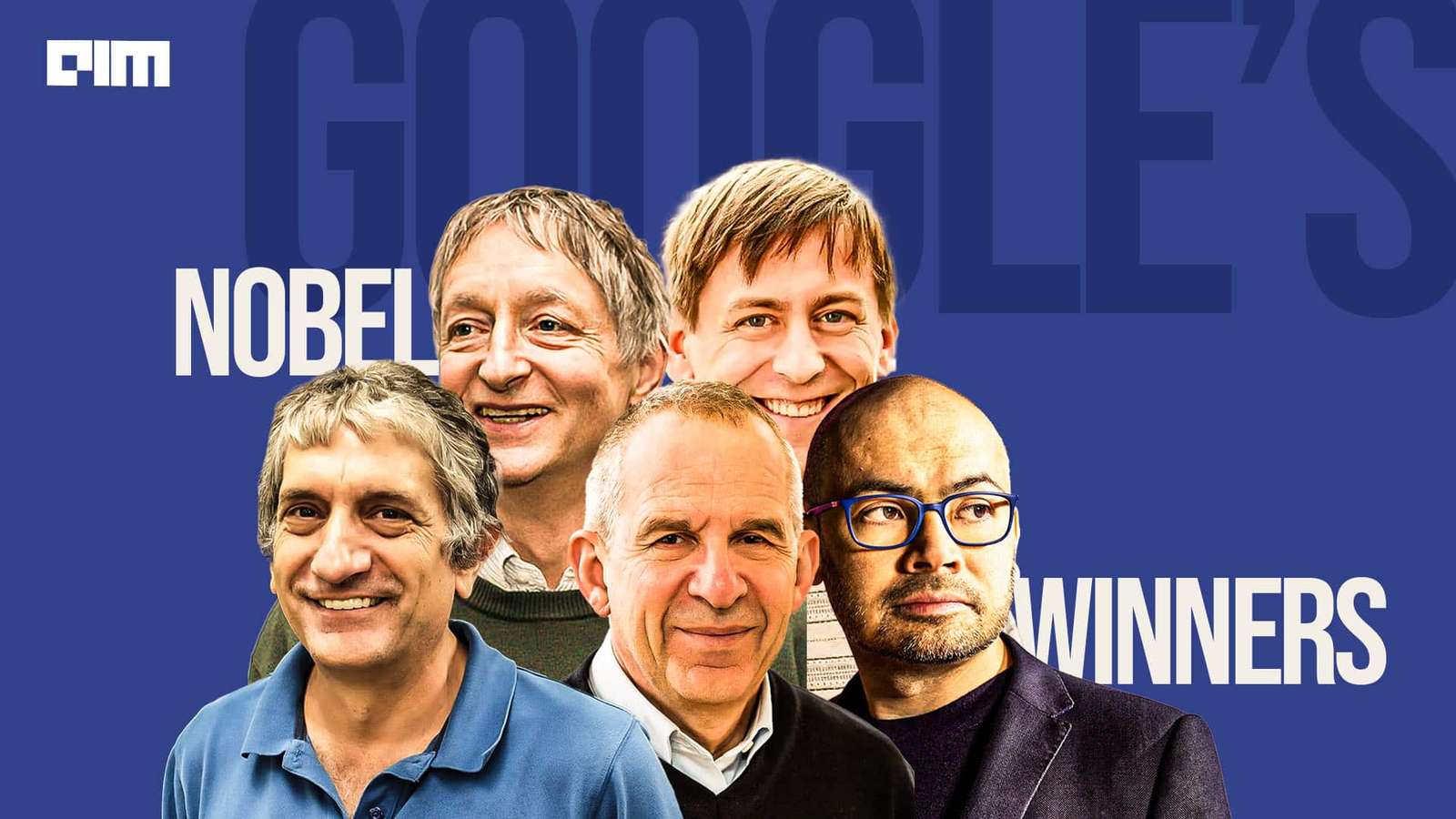
Between 2024 and 2025, three researchers affiliated with Google have been honoured with Nobel Prizes, highlighting the tech giant’s pivotal role in advancing fields as diverse as AI, computational biology, and quantum computing.
These laureates have not only propelled Google’s research initiatives but also reshaped entire scientific disciplines, proving that innovation at the corporate level can directly impact the frontiers of science.
On October 7, Google CEO Sundar Pichai expressed his excitement, saying, “Feeling lucky this morning to work at a company that has had five Nobel Laureates among our ranks.”
1. Geoffrey Hinton – Nobel Prize in Physics 2024
Geoffrey Hinton, often called the “Godfather of Deep Learning,” received the Nobel Prize in Physics in 2024 for his foundational contributions to artificial neural networks.
Hinton achieved the award for developing the ‘Boltzmann machine’, a neural network model inspired by statistical physics. This model allows neural networks to self-learn patterns from data by modelling systems with interacting nodes, mimicking how the brain processes and categorises information.
He joined Google Brain in 2013 and played a key role in integrating deep learning into Google’s products, including Google Photos, Google Translate, and speech recognition systems. Hinton’s work on distributed representations and probabilistic models allowed machines to understand complex data, laying the foundation for modern AI.
The Nobel Committee praised Hinton for demonstrating that artificial neural networks could not only simulate aspects of human cognition but also solve problems previously considered computationally intractable.
2. Demis Hassabis – Nobel Prize in Chemistry 2024
Demis Hassabis, CEO of Google DeepMind, was awarded the Nobel Prize in Chemistry in 2024 alongside John Jumper for the development of AlphaFold 2, an AI system capable of predicting protein structures with extraordinary precision.
Proteins are the building blocks of life, and understanding their 3D structure is critical for drug development and disease research. Traditionally, determining protein structures involved time-consuming and expensive laboratory techniques. AlphaFold transformed this process by predicting protein folding with near-experimental accuracy, drastically reducing the time and cost required for scientific discovery.
Hassabis founded DeepMind with the mission of solving intelligence to advance science. Under his leadership, AlphaFold became a landmark achievement in computational biology. The AI has already assisted researchers in understanding diseases such as Alzheimer’s and COVID-19 and continues to accelerate progress in biotechnology worldwide.
3. John Jumper – Nobel Prize in Chemistry 2024
John Jumper, director at Google DeepMind, shared the Nobel Prize with Demis Hassabis for AlphaFold 2. Jumper’s expertise lies in computational biology and machine learning, enabling him to bridge the gap between algorithms and real-world biological challenges.
He led the technical development of AlphaFold’s neural networks, designing algorithms that could accurately model the physical forces guiding protein folding.
This breakthrough accurately predicts the three-dimensional structures of proteins, which are critical for understanding biological functions and advancing research in pharmaceuticals, environmental technology, and many scientific fields.
Jumper’s work has inspired new collaborations across academia and industry, driving innovation in drug discovery, personalised medicine, and synthetic biology.
4. Michel Devoret – Nobel Prize in Physics 2025
Michel Devoret, chief scientist of Quantum Hardware at Google Quantum AI, was awarded the 2025 Nobel Prize in Physics for his pioneering experiments demonstrating macroscopic quantum phenomena. Devoret’s research focused on superconducting circuits, showing that quantum mechanical effects could be harnessed in systems visible to the naked eye.
He shared the honour with John Martinis, former hardware leader at Google Quantum AI, and John Clarke of the University of California, Berkeley.
In the 1980s, Devoret, alongside Martinis and Clarke, conducted experiments that proved quantum mechanics is not limited to microscopic particles but can manifest in larger engineered systems. This laid the groundwork for the field of quantum computing. At Google, Devoret has led efforts to design and optimise superconducting qubits, the building blocks of quantum computers.
Before joining Google in 2023, Devoret was a professor at Yale University and later became a professor at the University of California, Santa Barbara in 2024, while continuing his role at Google Quantum AI.
5. John Martinis – Nobel Prize in Physics 2025
John Martinis, former leader of Google’s Quantum AI hardware team, shared the 2025 Nobel Prize in Physics with Michel Devoret and John Clarke. Martinis focused on superconducting qubits and quantum error correction, tackling major challenges in building stable and scalable quantum processors.
At Google, he led the development of advanced quantum processors that achieved unprecedented levels of coherence and computational fidelity, laying the foundation for superconducting qubits, the fundamental building blocks of quantum computers. His work also demonstrated that quantum computers can outperform classical computers in specific computational tasks.
The Nobel Committee highlighted Martinis’s contributions to both fundamental quantum mechanics and the practical realisation of quantum computing technologies. His achievements illustrate how corporate research teams can address frontier physics problems while developing technologies with transformative potential for industries ranging from pharmaceuticals to cryptography.