Research Reports
In-depth research and analysis on AI, data science, and emerging technologies — curated exclusively for our subscribers.
Research reports require a subscription
AIM Research ·
Scaling AI in the Real World
This report encapsulates key learnings from Neysa’s Delhi roundtable on Scaling AI in the Real World, where technology and data leaders exchanged firsthand experiences on moving AI from experimentation to production. The conversation highlighted the friction points of scaling — from inference economics, infrastructure reliability and hallucination control, to the need for stronger evaluation and observability architectures.

AIM Research ·
The AI Blueprint: Architecting for Scalable Innovation - Mumbai Edition
The whitepaper brings insights from the AIM x Neysa – CXO Unplugged (Mumbai Edition), a roundtable where CXOs and technology leaders discussed “The AI Blueprint: Architecting for Scalable Innovation. ” The discussion focuses on real-world experiences of scaling AI from pilots to production, with emphasis on cost control, infrastructure choices, governance, and building reliable AI systems that deliver lasting business value. Overall, the insights highlight how enterprises are moving from experimentation toward building scalable, production-ready AI systems embedded within core operations
AIM Research ·
Scaling AI in the Real World | Bengaluru Edition
This report brings together insights from AIM CXO Unplugged (Bengaluru Edition) powered by Neysa, where leading Co-founders, CTOs, CIOs, and Heads of Data Science & AI shared their perspectives on the realities of scaling AI in production. Leaders highlighted the unpredictability of GPU and API costs, the performance bottlenecks of non-specialized infrastructure, and the governance challenges of fast- evolving models. Additionally, the discussion also highlighted how outcome-based pricing, AI-optimized platforms, and process re-engineering are helping organizations move past these hurdles. Collectively, the discussion highlighted how enterprises are shifting from experimentation to building enterprise-grade AI ecosystems that deliver measurable outcomes at scale.
AIM Research ·
Consilio Report: A Comparative Evaluation of Demographic Bias in PII Detection Systems
Personally Identifiable Information (PII) detection systems are increasingly relied upon to ease the burden of large-scale manual document review to identify sensitive information in critical legal and regulatory workflows, such as identifying impacted individuals following a cyber breach.
However, bias in PII detection systems creates disproportionate privacy risks when certain demographic groups are less likely to be detected and therefore to be protected. In this technical report, we investigate whether PII detection systems and popular LLMs exhibit a bias against non-Western names, hypothesising that Western names are detected more reliably than non-Western names.
In our evaluations, the LLMs tested missed far fewer names than the traditional PII detection tools tested, and 4 of the 12 LLMs showed a statistically significant demographic bias - a higher rate of missed names missed for one group than another. We also test an in-house PII detection LLM, which was intentionally fine-tuned on a diverse mix of synthetic and real public international documents.
Among the systems that did not show statistically significant demographic bias, this LLM achieved the highest measured recall (99.3%) while maintaining an economical footprint of only 8B parameters, supporting large-scale deployment. These findings emphasise the importance of designing PII detection systems to achieve overall accuracy while ensuring fair and equitable performance across demographic groups.
The report is prepared by Consilio. Download the full report here.
AIM Research ·
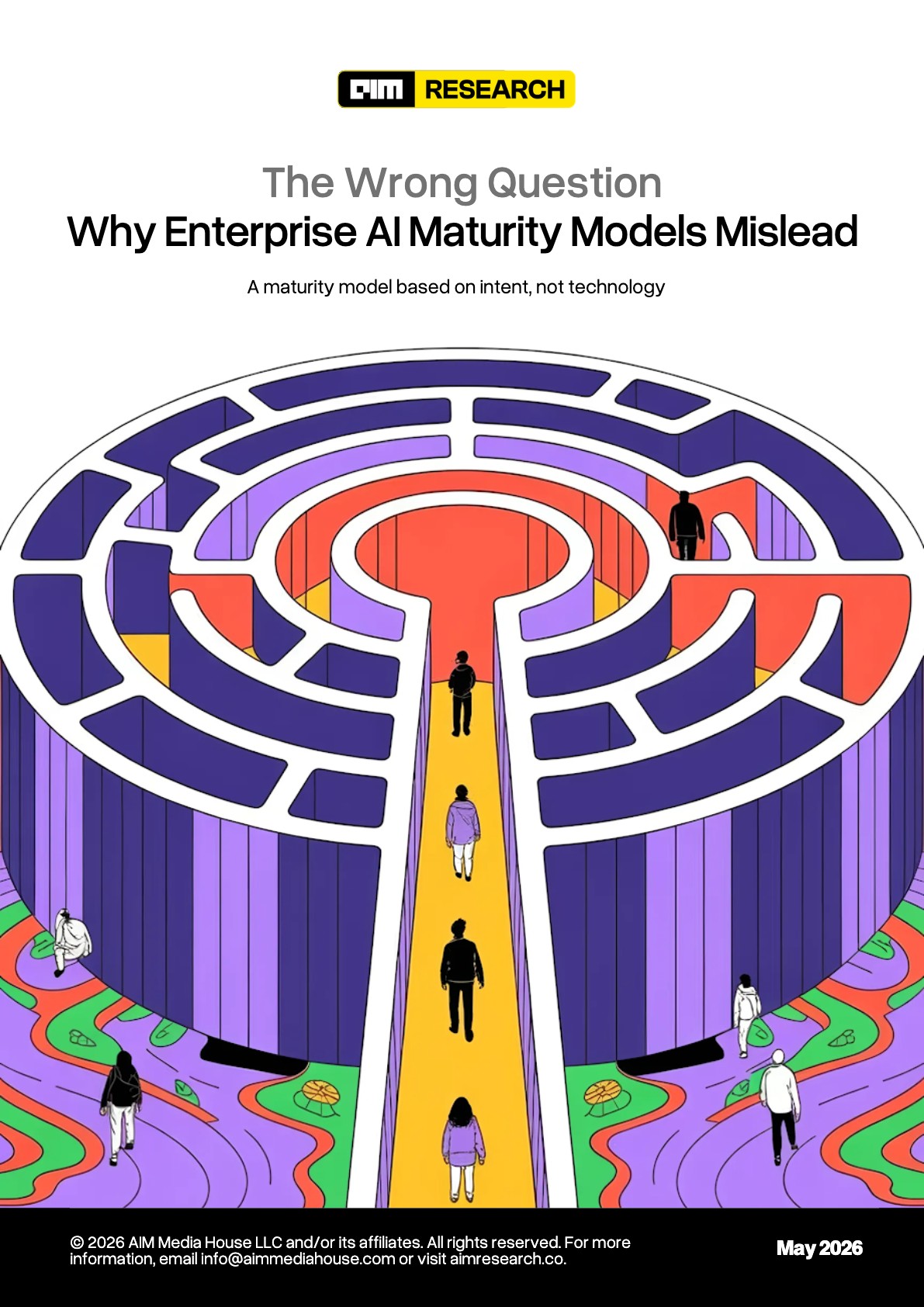
The Wrong Question: Why Enterprise AI Maturity Models Mislead
Every enterprise AI maturity model on the market measures the same thing. Awareness. Pilots. Industrialisation. Transformation. The arrow points up and to the right. The conclusion is always that the company is somewhere between steps three and four and needs to invest more to reach five.
These models are not wrong. They are simply not strategic. They measure the maturity of the AI factory — how many models, how much governance, how mature the platform — without asking the only question that matters to the board. What is AI changing about the business?
A maturity model treats every use case as equivalent. Automating customer support, redesigning underwriting, building a new revenue line, rebuilding the operating model around agents — they all count as "AI in production". They are not the same activity. They are not the same kind of bet. They are not the same kind of advantage.
AIM Research ·
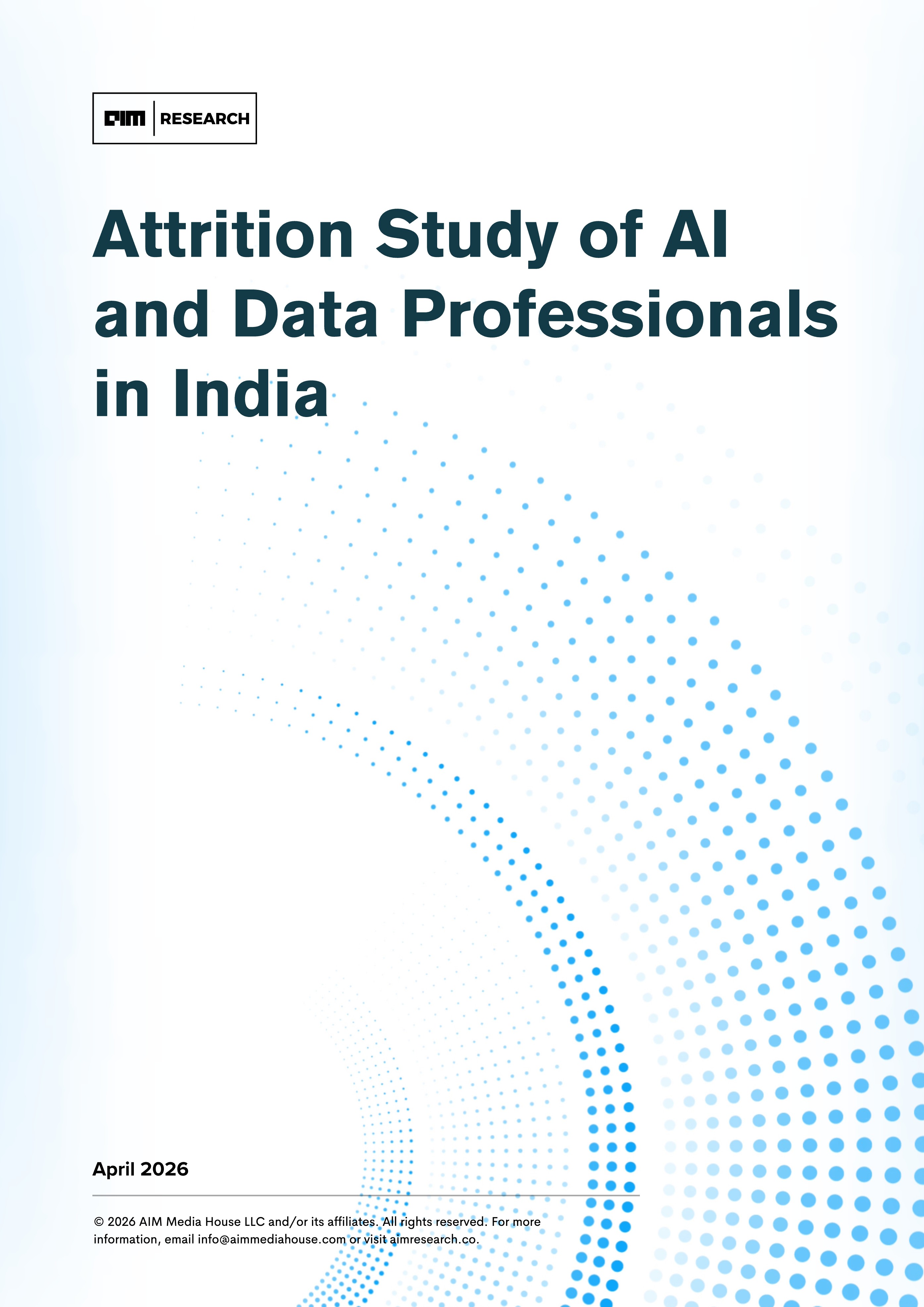
Attrition Study of AI and Data professionals in India
The report highlights that attrition among AI and data professionals in India varies significantly by role, experience, company type, sector, and geography, indicating a highly segmented workforce. Roles linked to emerging AI technologies show greater mobility, while enterprise-aligned roles demonstrate more stability. Additionally, attrition declines with experience, with early-career professionals showing the highest movement.
AIM Research ·
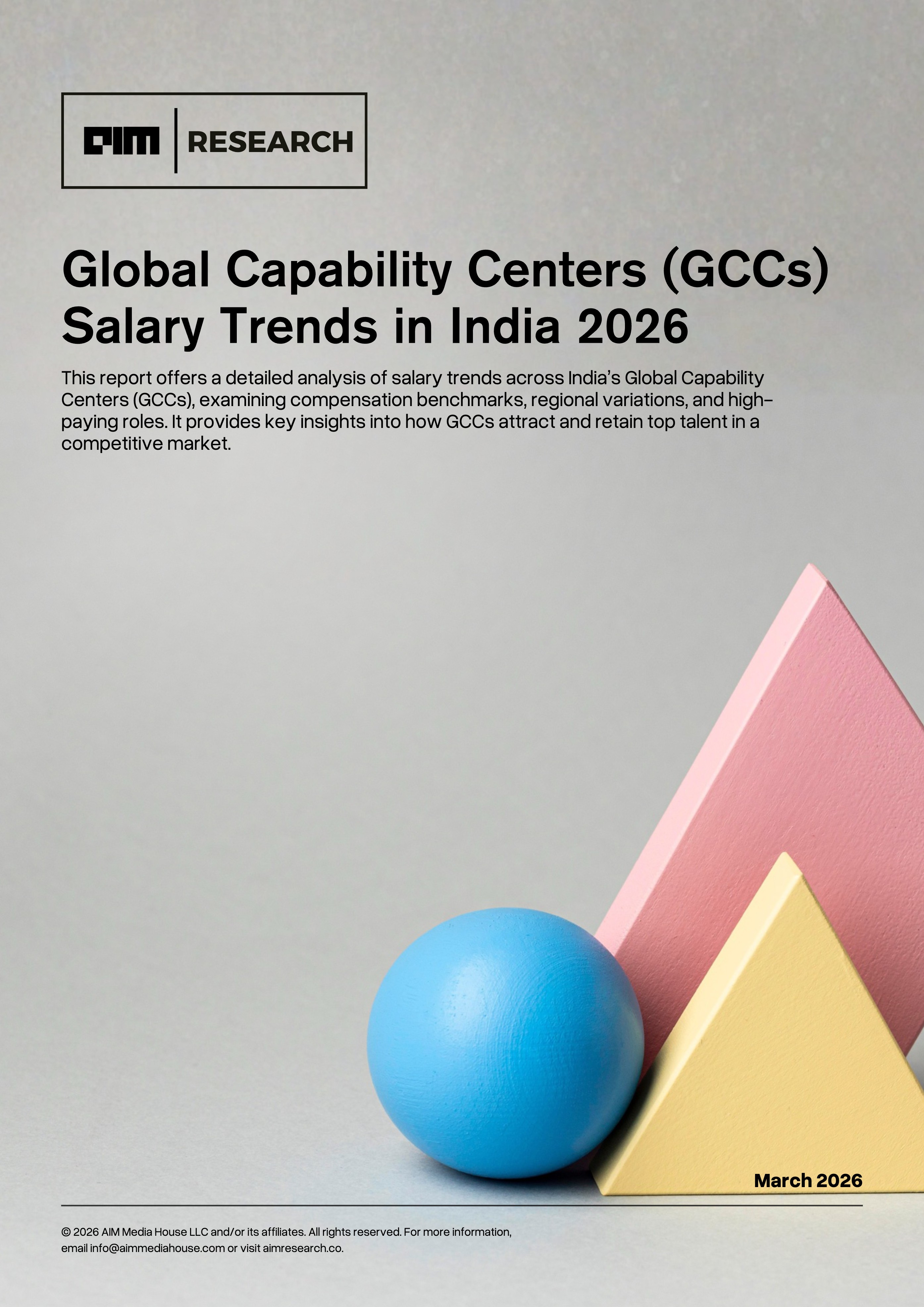
Global Capability Centers (GCCs) Salary Trends in India 2026
This report offers a detailed analysis of salary trends across India’s Global Capability Centers (GCCs), examining compensation benchmarks, regional variations, and high-paying roles. It provides key insights into how GCCs attract and retain top talent in a competitive market.
AIM Research ·
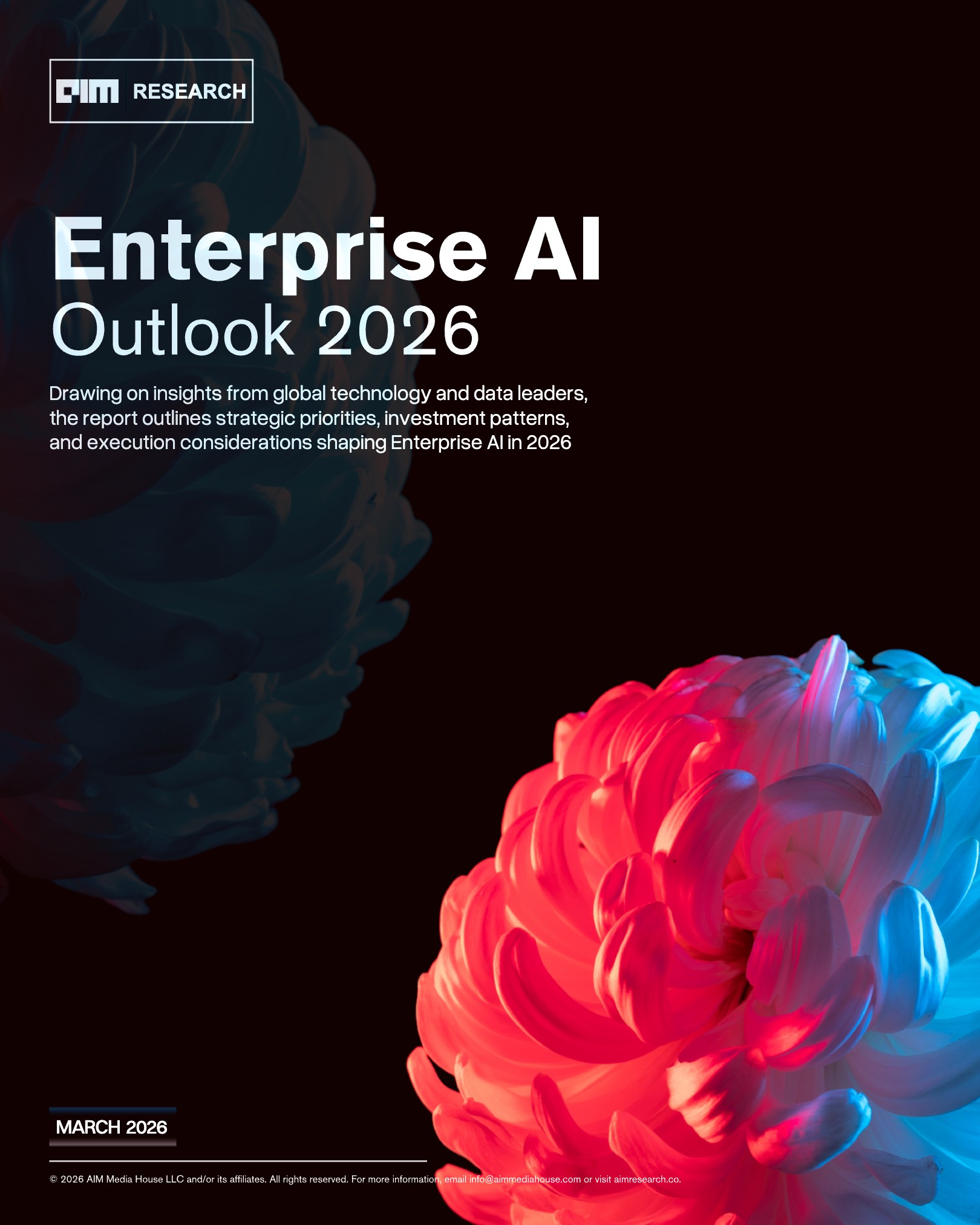
Enterprise AI Outlook 2026
Unlock All Research Reports
Get unlimited access to our complete library of research reports, plus exclusive articles and print editions.
Subscribe NowStay ahead with AI insights.
Unlimited access to premium articles, exclusive analysis, and the stories shaping India's AI economy.

Excellence in AI Journalism
AI Education
AIM Americas
1190 Miraloma Way Suite P, Sunnyvale, CA 94085
AIM India
1st Floor, Sakti Statesman, Bellandur, Bengaluru – 560103
Contact
[email protected]© 2026 AIM. All rights reserved.