Key takeaways
- Tesla has successfully developed an advanced AI chip for its vehicles, marking a significant milestone in autonomous technology.
- The new Full Self Driving Compute platform is designed to compete directly with NVIDIA's self-driving hardware solutions.
- Tesla's commitment to equipping all its cars with necessary hardware reflects its long-term vision for autonomy.
- The unveiling of the FSD platform highlights Tesla's focus on in-house development of critical technology for self-driving capabilities.
 In this article, we dive into the underlying architecture behind FSD.
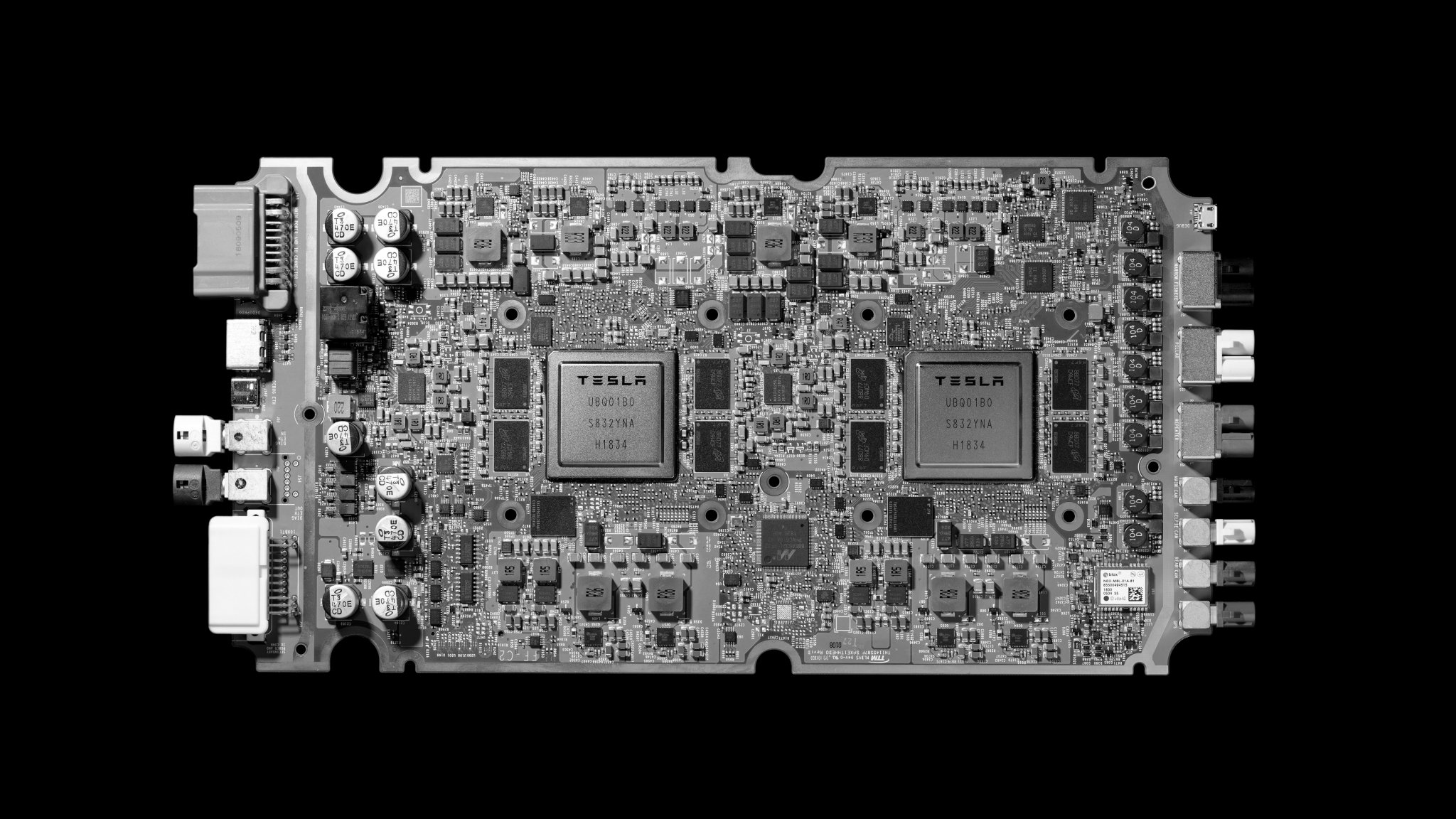
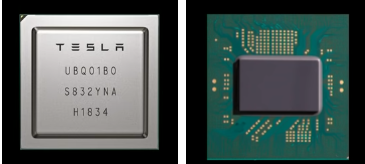
The above image is of the processing unit developed by Tesla called Tesla FSD(full self-driving) computer, which will take care of everything an autonomous vehicle requires. The board consists of two chips.
These chips can handle video from the on-board cameras and computation for a full self-driving car. The two computers on the board receive power supply and video independently. This is to keep the car running in the event of a malfunction.
Why Go For A Neural Network Accelerator?
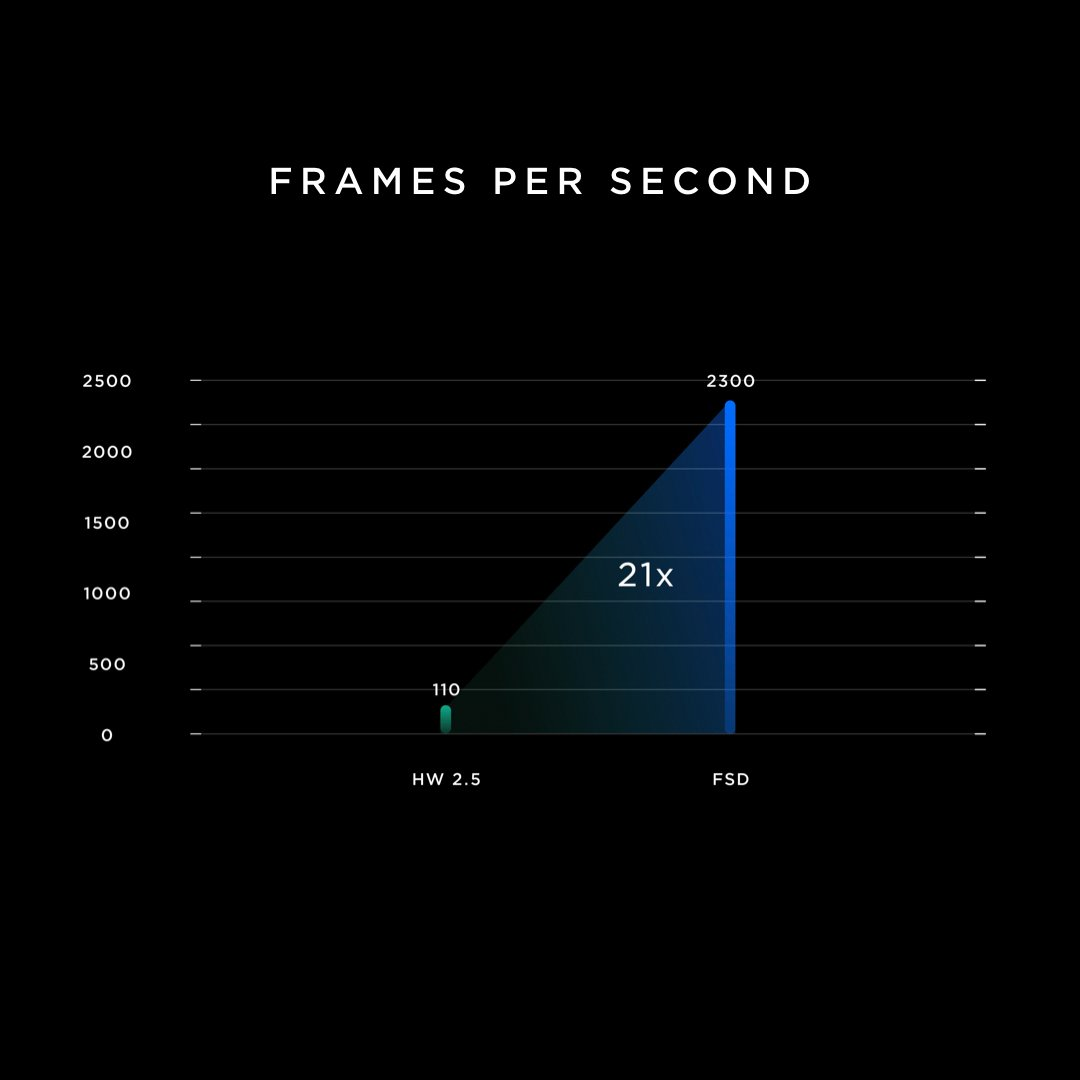
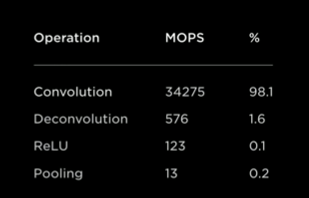 Convolution occupies major chunk of the operation in the neural network followed by deconvolution and activations. At the fundamental level, these operations are nothing but a bunch of multiplications and additions (dot product) happening on a large scale. So, the idea behind the accelerator is to be smart about the way energy is used to carry out arithmetic operations; multiplication consumes 3 pJ(pico Joule) of energy whereas addition only 0.10 pJ.
Fleeting Approach For Training Neural Nets
The real world is as weird as it can get and more so for driving amongst a bunch of other drivers with varying moods and motivations. A human annotated dataset cannot capture all the complexity of the real world scenario. The neural nets have to be automated for training as the data gets streamed through the 8 cameras. Cut ins are one of the potential candidates for accidents on highways. When a neighbour’s car switches lanes suddenly, a normal driver would have to sway smartly or crush the brake pedal in desperate situations. It gets tricky when self driving cars are presented with these kind of problems. Since the time available for taking action is very less, the AI team at Tesla took the fleeting approach. Whenever a vehicle switches lanes, the data is taken, neural networks are trained and are made to predict a potential cut in and warn the system well in advance, avoiding a probable catastrophe. Tesla enjoys the advantage having started their journey very early. They possess the world's largest customer base for semi-autonomous vehicle. Whenever a Tesla driver takes an action be it steering left or right or pressing the pedal, what they are doing is annotating the data and generating more refined data related to driver’s behaviour. As the time passes, more data will be generated and every possible driver reaction will be captured. This will give the computers more control over the steering mechanism and perhaps drop the need for having the steering wheel altogether in the future. Musk and his team have time and again amazed the world with their ability to pursue their ambitious goals in a successful yet honest way. It has been only one day since the Tesla event and one might expect the news portals to overflow with the technical details and the potential use cases of the technology used. But, unfortunately, today there is more news about Tesla’s quarterly losses than the achievement that was more than a decade in the making. The inexplicable urge of the armchair perfectionists to overshadow the triumph of a man’s passion has been depriving others of a chance to yearn for the future as a species; something which has been missing since the lunar landings. Know more about how the heuristics are designed for path predictions using shadow mode, how false positives are tackled, data annotation using RADAR and how self supervision comes into play by watching the video below: https://youtu.be/Ucp0TTmvqOE?t=6690Spotted an error? Tell our editors. Read our editorial standards and corrections.